Memory Foam VS Latex Mattress: What’s Your Bed Choice?

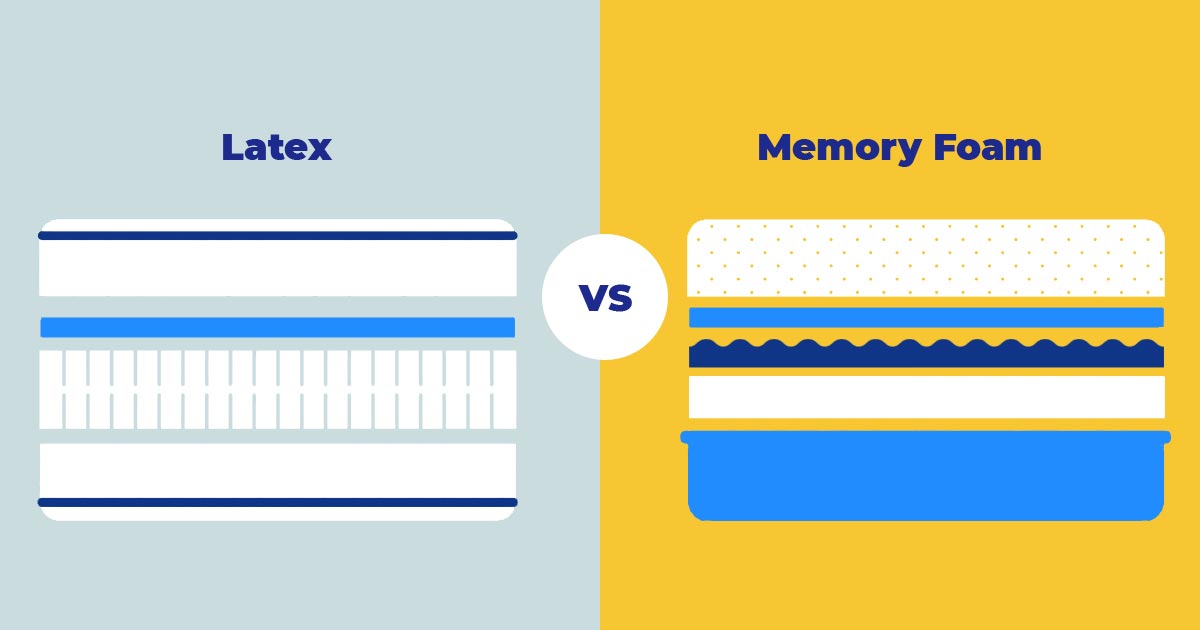
Memory Foam VS Latex Mattress

Have you been perplexed by a flurry of facts concerning the most recent mattress advancements, and are unable to tell what’s real and what isn’t?

So many manufacturers and merchants use terminology like memory foam and latex to advertise their goods and their benefits. It’s time to dispel the myths and fallacies.

Let’s clear up any misunderstandings and figure out what the differences are between memory foam and latex mattresses.

The Concepts

Memory Foam

NASA was the first to use memory foam in the 1960s. In the mid-1960s, aeronautical engineer Charles Yost invented memory foam under a NASA contract to protect pilots during accidents.

It’s polyurethane that’s been formulated using a variety of ingredients. These compounds produce a substance that is very dense and absorbent of energy.

Memory foam was originally utilized in mattresses in the early 1990s, but it was the bed-in-a-box mattress concept that made it popular. For fast and convenient distribution, companies compress and roll memory foam mattresses into boxes. This sort of foam conforms to your body’s unique contour. It’s pliable, long-lasting, and known for its capacity to absorb impact. This implies that if you share a bed with someone, you won’t be able to tell whether they’re tossing and turning all night.

The recuperation period with memory foam is substantially longer. When you press your body into the material and raise it up, the material will not rapidly return to its former shape. When memory foam is added to top layers, this fact contributes to its comfort and support. Most top mattress companies utilize some sort of memory foam in their mattresses since manufacturers realized the amazing benefits this material can provide to those who suffer from back or joint problems.

Sub-categories in the Mattress Manufacturing Process

There are three different types of memory foam mattresses:

Foam in the traditional sense: Memory foam mattresses have a closed-cell construction that retains heat and polyurethane that conforms to the body.

Open-cell foam: It is made up of “open cells” that allow air to circulate freely throughout the mattress. It has a softer and less thick feel than typical foam mattresses.

Gel pods in foam: Gel pods are put to the top layer of such mattresses to provide an extra layer of support and comfort. These gel pods also help the mattress feel more bouncy than traditional and open-cell foam alternatives. You can expect a soft, lasting feel from whatever memory foam mattress you purchase, as well as support for hurting joints. It has a medium to hard stiffness and lasts for 8–10 years on average.

Latex

Latex differs from memory foam in that it has a much faster recovery time and a lot more bounce. When you push your hand into a latex mattress and then lift your hand up, the mattress immediately returns to its previous shape.

For mattresses, there are two distinct varieties of latex.

Natural Latex: This variety is the purest of its kind, as it originates from the sap of rubber trees. It may be created at a low cost and is an excellent alternative for someone looking for an all-natural solution.

Synthetic Latex: This is a distinct sort of rubber that is made from a variety of synthetic components. The most noticeable distinction between synthetic and pure latex mattresses for consumers of synthetic latex beds is that the synthetic version has less bounce and can feel more like a memory foam choice.

Sub-categories in the Mattress Manufacturing Process

These beds are made out of two types of latex manufacturing processes: Dunlop and Talalay.

The words “Talalay” and “Dunlop” relate to the production procedures that these materials go through. The starting material is the same, but the production process is vastly different.

The Dunlop method is easier and Dunlop latex products are often less costly than Talalay latex. The Talalay technique, on the other hand, is significantly more complicated, but ultimately results in a softer, less thick latex that is better suited for particular uses.

Many mattress manufacturers employ both types of latex in their products, so you can wind up with a bed that has both Talalay and Dunlop latex. It is better for the support core of a mattress because of its higher density and firmness, whilst Talalay latex is better for the comfort layers because of its softer feel.

Dunlop Latex Manufacturing Process

Dunlop was the first latex foam manufacturing technique. It was initially created in 1929, and the method has remained mostly unchanged since then. Dunlop latex is made in the following way:

  1. To make frothy foam, liquid latex extract is manually beaten.
  2. The foamy substance is poured into a mold.
  3. In a vulcanization oven, the material is cooked.
  4. The baked latex is carefully removed from the mold and properly cleansed.
  5. To eliminate moisture, the material is baked once again.

This procedure results in thick, hard foam. The material is also unevenly distributed, resulting in a “bottom-heavy” composition with a stiffer bottom than a softer top. This composition is good for support cores in mattresses, however it is not recommended for comfort layers. However, Dunlop latex is modified and used in the comfort layers of a variety of mattress types.

Talalay Latex Manufacturing Process

The Talalay method is a little more complicated. It was created in the 1940s and has undergone several revisions throughout the years. The present procedure is as follows:

  1. To make frothy foam, liquid latex extract is manually beaten.
  2. The foam is poured into a mold, but it is only half filled.
  3. When the filled mold is vacuum-sealed, the latex expands.
  4. The filled mold is then immediately frozen, allowing carbon dioxide to pass through the latex.
  5. To set the frozen substance, it is baked.
  6. The latex is rinsed and dried after being taken from the mold.

The Talalay method produces softer, fluffier latex with a more uniform consistency. The resultant foam is softer and denser, making it appropriate for comfort layers but not support cores.

Differences between Dunlop and Talalay Latex Mattresses

Dunlop is harder and denser than Talalay. Talalay is softer, less dense, and more homogeneous in character. The following are the most visible distinctions between Talalay and Dunlop mattresses:

Neutralization of Temperature

Talalay latex is less thick and allows for better ventilation. It is more breathable than Dunlop latex. In most cases, Talalay offers significantly superior temperature neutrality as a result of this.

Cost

Dunlop is often less expensive to produce, owing to the fact that the manufacturing process is significantly less intense. This is frequently reflected in the final pricing of new mattresses, but the price difference is usually minor.

Durability

Dunlop latex is more durable than Talalay latex. This is owing to Dunlop’s substantially higher density. However, as compared to most other mattress materials, both types are quite durable.

Feel

Dunlop latex is often stronger and denser than Talalay latex. In most latex mattresses, this implies Dunlop is utilized for the support core and Talalay is used for the top comfort layers. Both variants, however, may be built to a range of firmness levels.

Environmental Resilience

Latex is regarded to be more environmentally friendly than alternatives such as memory foam, independent of the production technique. It comes from a natural, renewable source and is more durable than alternatives, resulting in a cheaper long-term environmental cost. Because the Dunlop method uses less energy, it may be more environmentally friendly than Talalay.

The Pros of Memory Foam Mattresses

Pressure Relief

Memory foam mattresses conform to the curve of the body, relieving pressure spots. Furthermore, the material adheres to the body rather than rubbing against it, reducing discomfort rather than exacerbating it..

Motion Isolation

Memory foam prevents motions from traveling across the bed due to its history as a crash material. A memory foam mattress could be a good option for restless sleepers who share a bed.

Hypoallergenic

Memory foam’s dense structure naturally resists the accumulation of dust mites and other allergens. Sleepers allergic to natural materials such as wool can also rest well on most memory foam mattresses.

Affordability

Memory foam mattresses are available at practically any price point. Many top-of-the-line memory foam mattresses are around $1000.

The Cons of Memory Foam

Retention of Heat

Memory foam’s density makes it harder for the material to dissipate body heat. Many manufacturers handle this issue by including air passages, cutouts, or conductive material infusions, like as gel memory foam, into their products.

Off-Gassing

When you first open a memory foam mattress, you may notice an unpleasant chemical odor. This is called off-gassing, caused by volatile organic compounds (VOCs) breaking down at room temperature. The aroma usually fades after three to seven days. If strong odors disturb you, search for a CertiPUR-US® certification, which indicates that the mattress has minimal levels of VOCs.

Edge Support is Inadequate

Due to the conforming nature of memory foam, most mattresses will give way to your weight if you sit on the edge. Some types firm up the sides by wrapping stiff foams around the mattress’s perimeter.

Slowness of Response

As the recipe varies by company, some memory foams are less sensitive than others. Lower-quality foams might take up to a minute to return to their original form, leaving a sleeper feeling trapped. High-quality memory foam, on the other hand, quickly returns to its original shape.

The Pros of Latex Mattress

Bounciness

Latex is a bouncy substance that makes a sleeper feel more on top of the mattress than memory foam.

Durability

Depending on the latex type, this varies. Natural latex mattresses may last up to 15 years, however mixed latex mattresses can last anywhere from 6 to 10 years. The typical memory foam mattress lasts seven years or more.

Customizable

Latex mattresses often include a side zipper that allows you to unzip the mattress and alter the firmness. This also allows you to clean the inside of the bed, which is not possible with other mattress kinds.

Organic

Natural latex mattresses are made with few to no chemicals, and collecting the ingredients has little influence on the environment. Many latex mattress manufacturers also utilize natural materials like wool and organic cotton.

Cooling

Many brands aerate the mattress for additional breathability though latex is inherently cooling. Other breathable materials, such as cotton and wool, are used in many latex mattresses.

The Cons of Latex Mattress

Too Much Bounce

When you sleep on latex, the responsive, springiness you liked may become sour. This comes true especially if you share a bed. Latex can absorb motion but not as well as memory foam at preventing it.

Initial Smell

When new, natural latex mattresses have a distinct rubbery odor. If there is wool in the bed, it may have an animal-like smell.

Weight

As a result of its density, latex is the heaviest mattress material. A queen mattress is 140 pounds on average.

A Scarcity of Supply

Latex mattresses are not commonly available in shops. Most customers must purchase one from an internet supplier. Latex mattresses are sold by fewer companies than memory foam mattresses, however the number is growing.

Price

Natural latex mattresses are one of the most costly forms of mattresses. Many queen-size models cost more than $2000.

Which Is Right for You?

Memory Foam will be the choice for folks who are:

Budget shoppers: If you’re on a tight budget, a memory foam mattress is the way to go. Synthetic latex is cheap, but it doesn’t last as long as high-quality memory foam.

Fond of a softer mattress: Memory foam is a good option if you want a softer mattress. Because of its structure, latex is firmer than memory foam.

Preferring to lie ‘in’ and not ‘on’ a mattress: Memory foam is the best choice if you want to sink into your bed.

Latex will be the choice for folks who are:

Environmentally conscious: Choose a natural latex mattress if you are concerned about the environment. Memory foam, synthetic latex, and blended latex cannot be produced without the use of petrochemicals.

Fond of a durable mattress: Choose natural latex if you want a bed that won’t sag. A natural latex mattress may last up to 15 years if properly cared for.

Preferring to lie ‘on’ and not ‘in’ a mattress: Latex is the best choice if you want to sleep on top of your mattress.
Is Your Bed Sinking In the Middle? Know How to Fix A Sagging Mattress!

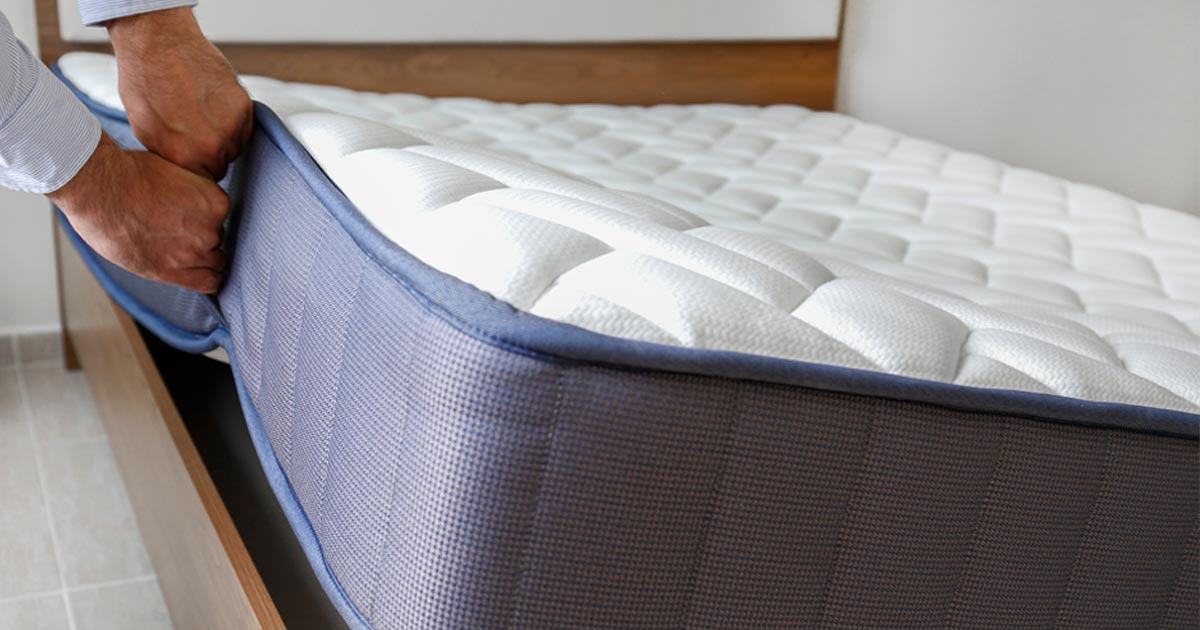
Is your mattress no longer as comfy as it used to be? Have you noticed any sagging in the places where you spend the most time sleeping? Mattress owners frequently express their dissatisfaction with sagging. All mattresses ultimately sink, and the feel and comfort of the bed will suffer as a result. There are a few things mattress owners may do to assist reduce the effects of mattress sagging.

How-to-Fix-A-Sagging-Mattress-FULL-GUIDE

What Makes a Mattress Sagging?

Normal wear and tear on your mattress is the most common cause of sagging. Mattress foam materials soften over time as they are subjected to tremendous pressure from the sleeper’s body every night. This gradual softening of foam results in a drooping sensation and less even support over time.

Sagging is also common with innerspring and hybrid mattresses. Over time, the metal coils in these beds lose tension as the comfort layers soften, resulting in less rigid support in problem areas. Sagging is more common in places that are subjected to the most pressure. This usually refers to parts that support the hips and shoulders. A sagging mattress will provide uneven support, reducing comfort and sleep quality dramatically.

Fixing a Sagging Mattress

It is difficult to “fix” a sagging mattress. The only true solution is to send it back to the manufacturer for repairs or to fully replace it.

With that stated, there are a few things owners may do to reduce mattress sagging affects. The efficiency of these treatments varies, depending on the age of the mattress and the extent of the sagging. Here are a few ideas to get you started:

1. Invest in a mattress topper

Investing in a mattress topper can help you sleep more peacefully on a sagging mattress. Mattress toppers, as the name implies, are simply placed on top of your existing mattress to provide an additional layer of comfort. Mattress toppers are typically 2 to 5 inches thick and made of foam, latex, wool, down, down alternative, or feathers, and are offered individually as accessories. Thicker toppers comprised of denser materials tend to work well when it comes to preventing mattress sinking. By providing a more equal sleep surface, a thick, high-quality mattress topper can help decrease the impacts of a sagging mattress. Toppers are a popular choice for people who aren’t ready to buy a new mattress but want to make their current one more comfortable. In other words, a mattress topper won’t solve a sagging mattress, but it’s a cheap way to increase your comfort temporarily.

2. Mattress Rotation

Most mattresses should be rotated on a regular basis unless the manufacturer specifically advises against it. You can dramatically increase the life of a mattress by rotating it and switching the foot and head of the bed. Rotating a bed on a regular basis can assist to prevent premature mattress sagging. A reasonable rule of thumb is to do so every three to six months. Even if your mattress is sagging already, moving it can assist. Excessive sagging occurs in the areas of the mattress where the sleeper’s body exerts the most pressure. The areas around the hips and shoulders are commonly affected. When you rotate your mattress, the heavier parts of your body can rest on regions of the mattress that aren’t drooping yet.

Unless the manufacturer specifically recommends it, most mattresses should not be flipped. Most modern mattresses are designed to be one-sided. Flipping them usually causes poor comfort and increases the danger of bed damage.

3. Foundation Replacement

The foundation of your bed can cause premature mattress sinking in several circumstances. Because there is less support around the core of the mattress, foundations with fewer than six legs might induce premature drooping. Similarly, slatted foundations can induce sagging in regions where the slats do not provide support, such as the gaps between the slats. Older foundations might also become brittle with age. The sort of foundation that is ideal for your mattress is determined by a number of factors. It’s recommended to consult the maker of your mattress for advice on which foundation style to use. The minimum permitted distance between the support slats is generally specified by manufacturers, and this can have an impact on your mattress’ warranty.

4. Make Use of Additional Pillows

Some may use extra pillows in the places where the mattress is sagging as a temporary remedy to combat sagging. Some folks prefer to sleep with a pillow between their hips, backs, or legs. Pillows with high shape retention are ideal for this.

5. Examine Your Warranty Options

If your mattress is sagging, it’s a good idea to double-check the terms of your guarantee. If your bed was damaged due to a covered reason, the manufacturer may be able to repair or replace it.

Prevention is Better than Cure

It’s a good idea to learn how to mend a sagging mattress, but it’s even better if you can prevent the problem from occurring in the first place.

Here are a few tips:

  1. Keep an eye on your mattress on a regular basis

Make a point of inspecting your mattress at least once a month for sags or bumps. It’s preferable to find a little indentation and try to remedy it rather than dealing with a more problematic mattress problem. Check the flatness of your mattress with a ruler or anything similar. Deep angles must be corrected as soon as possible if they are discovered.

  1. Apply some pressure evenly

From time to time, you could try sleeping in different parts of the bed. This keeps the mattress from becoming too acclimated to pressure in one location and being unable to recover once the pressure is removed. You can switch places with your partner and sleep in different positions once every two or three months. Also, make sure your bed frame has adequate support in the centre, as this is where most mattress sagging begins.

  1. Choose a metallic frame

In some circumstances, this might extend the life of your mattress by providing superior support. With the passage of time, wooden bed frames decay more quickly. This means that the wood elements grow more delicate, and they may shatter over time as your body exerts weight on them. As a result, the mattress sinks into the hole caused by the broken wood pieces, quickly forming a hole. You may avoid having to deal with a drooping mattress if you use a metallic bed frame. Metal is far more durable than wood, and it can last a lifetime regardless of your weight. Metallic frames provide the mattress more stability and help it last longer.

When to Replace Your Mattress

It’s possible that your mattress has to be replaced if it’s sagging. The solutions outlined here are intended to provide temporary relief from a sinking mattress, but they will not address the underlying issue.

Mattresses, depending on their quality and materials, should be replaced every 6 to 10 years. If your mattress begins to sag too much, it should be replaced right away.

Disturbed By Snoring? Choose the Right Mattress For A Peaceful Sleep

Best-Mattresses-For-Snoring

A good night’s sleep is essential for preserving mental and physical wellness. However, a variety of factors, including snoring, can interfere with getting a good night’s sleep. Snorers may have difficulty staying asleep, and their partners may find it difficult to sleep through the disruptions.

Snoring is caused by breathing through a partially closed airway. There are various probable explanations for snoring, which you should discuss with your doctor. Each breath causes the soft tissue around the upper airway to vibrate, resulting in the audible sound of snoring. While there is no way to completely “cure” obstructive sleep apnea, various lifestyle changes can help lessen or eliminate snoring.

One approach to find relief is to invest in a good mattress that provides the proper balance of comfort and support.

The mattress you select could have a significant impact on the quality of your sleep. By keeping your throat and neck aligned, a mattress that supports your spine can help you stop snoring.

A mattress composed of hypoallergenic materials may also help to keep dust mites at bay, as well as mold and mildew, which can all contribute to snoring.

Here is a guide to choose the right mattress.

Top 7 Best Mattresses for Snoring 2022

GhostBed Luxe

The GhostBed Luxe is a mattress made entirely of foam. It mixes pressure-relieving memory foam with supportive high-density polyfoam to create a luxurious sleeping experience. This medium-firm type should assist snorers maintain good spinal alignment while cushioning joints and pressure spots. It’s also ideal for those who sleep hot. Foam mattresses have a propensity to trap heat, but the GhostBed Luxe’s intelligent design contains a variety of materials to prevent heat build-up.

After a layer of fibre that encourages airflow and a layer of gel-infused memory foam, the cover is quilted with a phase change substance that draws heat away from the surface. A 2-inch layer of gel memory foam laminated with phase change material and a 2-inch comfort layer of high-density polyfoam are sandwiched beneath it. This comfort layer mix provides a velvety, contoured sensation with a medium amount of firmness. The bed’s velvety comfort layers form a deep cradle that provides good pressure relief for most sleepers under 230 pounds, and it’s especially well-suited to lightweight folks and side sleepers.

Within the contiguous United States, the GhostBed Luxe ships for free. A 101-night sleep trial and a 30-day break-in period are included with the bed. A 25-year warranty is also included. The price range is $1,845 – $3,990.

Saatva Classic Mattress

It is a bed that matches sleeper’s demands without straying into ultra-expensive or difficult terrain, with three firmness levels and two mattress heights (11.5 or 14.5-inch) to pick from.

The Saatva Classic Mattress offers a couple of features that may help snorers sleep better at night. It may be used with an adjustable bed frame, giving you a variety of alternatives for raising your head and neck to reduce snoring. Sleeping with the head of the bed elevated has been demonstrated to be an effective treatment for snoring caused by obstructive sleep apnea.

This mattress also offers zoned support to prevent you from “sinking” into the mattress, which may be enough to keep you comfortable while sleeping (and soundlessly). As a hybrid mattress, the Saatva Classic blends the firmness and durability of an innerspring with the comfort and cosiness of a memory foam bed. If allergens cause you to snore, this mattress’s cover has been treated with an antimicrobial to keep mold, mildew, and pathogens at bay.

This mattress is constructed in the United States with CertiPUR-certified foams, and it comes with white-glove delivery and a 180-day trial period. The price range is $1,000–$1,500

Saatva Zenhaven Latex Mattress

Natural latex, certified organic wool, and an organic cotton cover make up the Saatva Zenhaven. It is a good choice for people who are allergic to chemicals and allergens in their mattress. When you buy a 10-inch Zenhaven, you can choose between medium-firm or medium-soft firmness, and it works with adjustable bed frames.

Snorers might prefer a thick latex mattress like this one since it provides a lot of support, similar to an innerspring mattress, while still being incredibly soft and conforming to your body, similar to a memory foam bed. Latex is also generally colder than memory foam. The Zenhaven is an extravagance. You can obtain a good mattress for a lot less money. However, if you like rubber mattresses, this bed might be worth it for you.

A 180-day trial period, free white-glove delivery and setup, and a 20-year warranty are all included with this mattress. Your old mattress will be removed and disposed of for free by Saatva. The price is over $2000.

Avocado Green Mattress

Pollen, mildew, or dust in your sleeping area can narrow your airway and cause snoring. If allergens are the source of your snoring, a mattress like Avocado’s could be part of the answer.

This 11 or 13-inch mattress is constructed in the United States using certified organic wool, cotton, and latex and is produced in an environmentally friendly manner. The mattress’s outer cover is tufted, and consumers rave about how soft it is. If you value a company’s dedication to environmental sustainability, Avocado outperforms its competitors. The mattress is a 7 on the firmness scale (10 being the firmest), with zoned support system and wrapped steel coils on the inside.A pillow top can be added to your purchase if you want a softer mattress. This topper isn’t included in the package. It raises the mattress height by 2 inches and raises the price by $400. Most adjustable bed bases are compatible with the Avocado Green Mattress.

Avocado offers a one-year trial, free shipping, and a limited 25-year warranty to customers. The price range is $1,000–$1,500.

Nectar Memory Foam Mattress

The flagship mattress from Nectar was created with a wide range of sleeping demands in mind. It’s also regarded a good deal because a queen size costs less than $1,000.

The mattress has five layers, including a cooling cover that keeps you cool as you sleep and an adaptable layer that keeps you sleeping comfortably on top of the mattress. It works with adjustable bed frames as well. People who are heavier, on the other hand, may sink too far into a memory foam-only mattress, which might exacerbate snoring.

This Nectar mattress has a generous 365-day trial period when compared to other brands. There’s also a non-expiring limited warranty.

Helix Midnight Luxe

The 14-inch Midnight Luxe mattress includes a few things that the other Helix mattresses don’t. This hybrid mattress’s pillow top gives it a more traditional mattress feel and acts as a buffer between you and the foam layers underneath, keeping you cooler than sleeping directly on memory foam. A gel layer provides extra cooling, while a base layer of foam beneath the coils offers the bed more support. The coils of the mattress are organised to provide support to your lumbar region. The Helix Midnight Luxe promises to provide you with the best night’s sleep of your life while also alleviating your aches and pains.

This purchase comes with a 100-night trial, free delivery, and a 15-year warranty, among other benefits. It’s made in the United States as well. The price range is $1,501–$2,000.

Tuft & Needle Original Mattress

There are only two layers of memory foam in the 10-inch Tuft & Needle Original Mattress. It’s inexpensive and could be a good choice if you’re looking for a simple mattress. Heat-wicking materials, such as ceramic gel and graphite, are injected in the top layer to draw heat away from your body. It can be used with practically any bed frame, including those that are adjustable. CertiPUR-certified foams are utilised in the mattress, which has also received GreenGuard Gold and Intertek Clean Air certifications for clean production.

The price is below $1000.

The Takeaway

If you snore, look for features like back support, cooling, and high-quality materials when shopping for a mattress. An equal and supporting surface with foam or latex comfort layers can adapt to the body and assist relieve pressure. By encouraging excellent posture and/or side sleeping, this can help to prevent snoring. It’s also a good idea to get a mattress that works with an adjustable foundation.

While no mattress can miraculously stop you from snoring on the first night, it can play a role in resolving your snoring and determining what works best for you.

Pick your best mattress for snoring and enjoy a quieter sleep!

Can You Use A Mattress Topper On An Adjustable Bed? Here’s The Answer To Your Question

Mattress Topper On Adjustable Bed

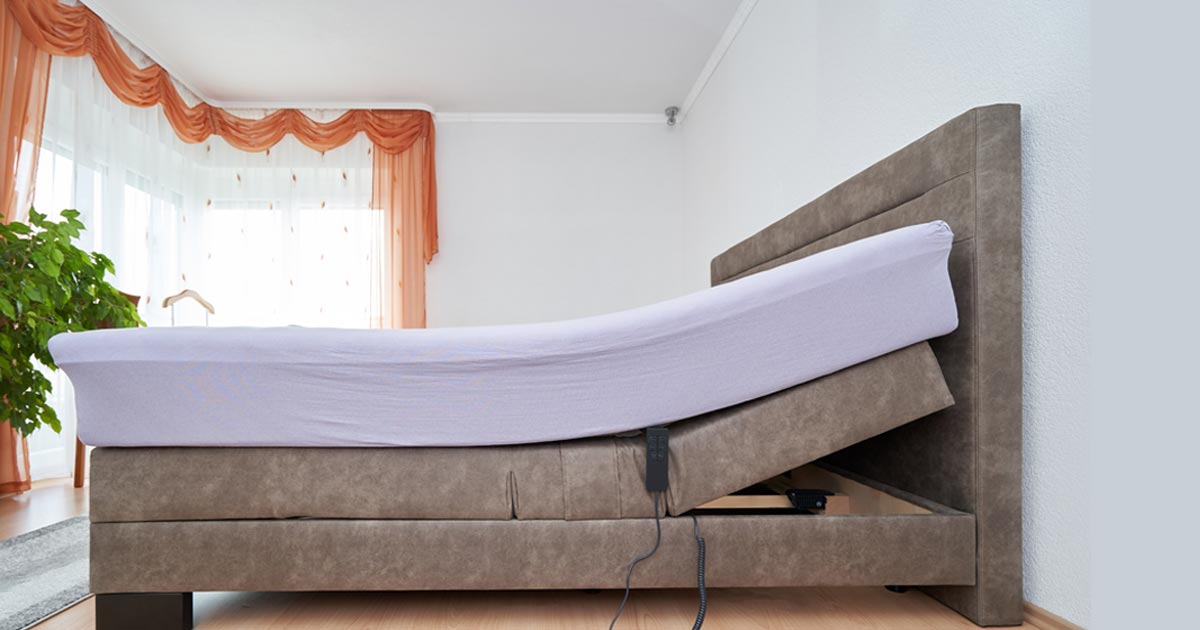
What is an Adjustable Bed?

You may use an adjustable bed to get the best night’s sleep possible. Adjustable beds have become increasingly popular, and people of all ages use them for health and lifestyle reasons. Some people, particularly those with health issues, benefit from having their heads elevated, while others like to have their legs raised somewhat higher. This is made simple by an adjustable bed. It’s not all about the sleep, as it is with other beds. Adjustable choices can help you in a variety of ways. At the touch of a button, you may relax and raise your head to the optimal comfort level to read a book or check your mobile phone and even laptop.

Adjustable Bed and Mattress Topper

As the name implies, a mattress topper fits on top of your mattress to provide additional padding and support. It’s made of a variety of materials, such as latex, memory foam, or feathers, and comes in a variety of thicknesses and densities. A mattress topper can be used with an adjustable bed frame and an adjustable mattress too.

Any mattress will not be ideal for your adjustable bed. An adjustable mattress should be used. It is thick enough to provide comfort while remaining thin enough to allow for flexibility. It must also be long-lasting to avoid excessive wear and tear from frequent movement.

The qualities of the topper used on such a mattress must also be the same. It can be used to make your adjustable bed more comfortable. Adjustable beds benefit from mattress toppers. They bend readily with the movement of the adjustable bed since they are soft and pliable.

Look for Toppers with Anchor Bands

Anchor bands are usually included to fit the topper properly over your adjustable mattress. There are four bands on a mattress topper with anchor bands, one for each corner. Each band is looped around the mattress’s respective corner. This allows the topper piece to flex and lay flat with the contours of the mattress. Toppers for normal beds may not serve your purpose best.

Depth and Quilting Size are two factors to consider before purchasing a topper for your adjustable bed. Although most toppers will fit most mattresses, this is not always the case, especially for adjustable beds. Check to see if the bands will fit the depth of your mattress. When you examine a mattress topper, you’ll see that the outer fabric is quilted or sewn into a variety of polygons. This stitching aids in the equal distribution of the filler inside the topper. Consider how plush or puffy your topper should be. The plusher and fluffier the surface, the larger the polygons. The smaller the polygons, the less soft is the surface, and the more bouncy the feel.

However, mattress toppers should not be confused with mattress pads. Mattress toppers are thicker than pads and are designed to make the existing mattress plusher and more comfortable.


Bed Size Dimensions

Mattress Size Dimensions in Inches
Twin 39″*75″
Twin XL 39″*80″
Full 54″*75″
Queen 60″*80″
King 76″*80″
Cal King 72″*84″

 Bed Size Dimensions

Varieties of Mattress Size Dimensions are as follows:

Twin Size Mattress

 These mattresses remind us of our childhood (The bunk bed sleepers will surely agree with me!). These mattresses are ideally fit for a single person, as they are slim in size and are convenient to use. The Twin Size mattresses can be easily fit or moved around and are a handy choice if you have kids or frequent guests at home. The ideal people to sleep on these mattresses are solo sleepers, teens or adults less than 6 feet in height.

Twin XL Size Mattress

How many university dorm students here?? These mattresses are a reminder of those days, though they don’t offer much in terms of width, but if you are longer than 6 feet, then definitely some area for you to sleep peacefully. These mattresses are designed to ensure that your feet don’t dangle in the air and you don’t have to curl up while sleeping (unless you are watching a horror flick!!)

Full Size Mattress

An economically priced mattress which is best suitable for growing teenagers or young adults looking to sleep comfortably in a compact space. These mattresses lie in between the Twin XL and Queen mattress, making it more comfortable than the Twin XL mattresses and at the same time not taking up too much of space. The Full size mattresses are ideal for solo sleepers or to be placed in the guest room. These mattresses are also known as Double beds, though people think it to be double the size of  a Twin mattress but virtually it is 16 inches wider and 1 inch longer than it.

Queen Size Mattress

 As the name suggests, Queen Size mattress is appropriate to sleep comfortably, without causing a dent on your pocket. These are one of the most popular options, due to their versatility and can be fit even in limited area. These mattresses are popular amongst couples and singles, who either don’t need too huge an area to sleep on or someone who won’t outgrow the mattress or don’t plan to change the mattress frequently.

King Size Mattress

King denotes luxury and this is what you get when you buy one. It’s nearly double the size of a Twin XL mattress, just imagine the space you will get to enjoy (I know you are already in your sweet dreamland!!). King mattresses are generally available in standard sizes and perfectly suits the needs of a small family (Yes, we mean pets too!!!) There is an option to purchase your King mattress, split in two halves as a Twin XL mattress, if you and your partner wish to sleep separately yet with each other. These beds are made to sit atop two twin box springs joined with each other, which help in easy movement of the mattress across different rooms of the house.

Cal King Size Mattress

These mattresses are a slightly upgraded version of the King mattress..so it’s basically 4 inches of plus minus (mathematics I know!). The Cal king is 4 inches extra wide and 4 inches smaller than the normal King mattresses. These mattresses can comfortably accommodate a small family, making it a popular choice amongst that segment of buyers. Like the normal King Size mattress, even Cal King mattresses can be adjusted and split into two, if you wish. These mattresses are a good choice if you want all the comforts of a King Size mattress but have a narrower room.

Mattress Glossary

A-Z Glossary List

A

    • Adjustable Bed: A bed built with adjustable motors to change the angle of the sleepers’ body and allows for most comfortable sleeping position.
    • Airbed: A bed built with numerous motors that pump air into the mattress bladders and allow for adjustments in the firmness level of the mattress.
    • Avena Foam: An alternative to natural latex that offers more durability.
    • Adjustable Base Compatibility: It refers to the ability of a mattress to bend.
    • Air Chamber: These are the sections inside an Airbed designed to hold air.
    • Alaska King: It is a mattress size measuring 9 feet by 9 feet.
    • Alberta King: It is a mattress measuring 8 feet by 8 feet.
    • Allergen: A substance that causes allergies.
    • Anti-Microbial: It is a mattress that has been treated in order to prevent the growth of dust, mites, fungus, bacteria and mold.

B

    • Bed in a Box: An online ordered mattress that is delivered in a box.
    • Bed Sore: A painful area on the skin caused due to prolonged lying on the bed with little movement.
    • Blended Latex: A mixture of natural and synthetic latex.
    • Bonnell Coils: The most common type of mattress spring, coiled in hourglass shape to allow for flexibility and support. It is cheap and less durable.
    • Bonnell Units: A combination of Bonnell Coils that are laced together at cross wire helical.
    • Border Rod: It is a solid wire that runs along the perimeter of a box spring.
    • Bounce: The amount in which a mattress pushes back in response to applied pressure.
    • Box Spring: The base of a mattress filled with springs to prevent frequent wear and tear.
    • Buckling Column Gel: It is a polymer which is well ventilated; used for providing good comfort and support.
    • Bamboo Fabric: It is an organic, anti-microbial and a soft feeling fabric that prevents accumulation sweat and moisture.
    • Batting: It refers to the filling that makes quilts warm and heavy. It is also known as wadding.
    • Bed Frame: It is designed to elevate the mattress from the floor and to provide support. These are generally made of wood or metal.
    • Biodegradable: It is the ability of a substance to break down into non-toxic matter after its expiry.
    • Bladder: It is the chamber in a waterbed to hold water.
    • Bunkie Board: It is a stiff, thin board that is placed under a mattress.

C

    • California King: This is the largest size of mattresses available in market. The measurements are 72”x 84”.
    • Circadian Rhythm: The natural body-clock that makes one stay alert during the day and tired at night.
    • Closed Cell Foam: These are dense foams made up of cells that are disconnected from each other. These foams offer high compressive strength.
    • Coil: They are high density steel wires that are curved. They compress and expand depending upon the pressure applied.
    • Coil Count: It is the number of coils present in the mattress.
    • Coil Density: This is the number of coils present in a mattress per square foot.
    • Coil Gauge: It is the thickness of the wire that makes up a coil.
    • Comfort Layer: The amount of cushioning that is offered on top of an innerspring mattress’ support core.
    • Continuous Coils: This is a mattress’ coil system made from a single S shaped coil; allows for the coil system to work as a single unit and provides support.
    • Contouring: The amount of conformation a mattress offers as a response to the pressure applied and shape of the body.
    • California Queen: It is a mattress size which is larger than the regular Queen size, measuring 60”x 84”.
    • Certified Organic: This refers to a product that has at least 95% of organic materials and is free of harmful chemicals.
    • Coil-on-Coil: These are two layers of coils on top of each other, designed in order to provide comfort.
    • Comfort Guarantee: This means that one may return a mattress for another, but shall not get a refund.
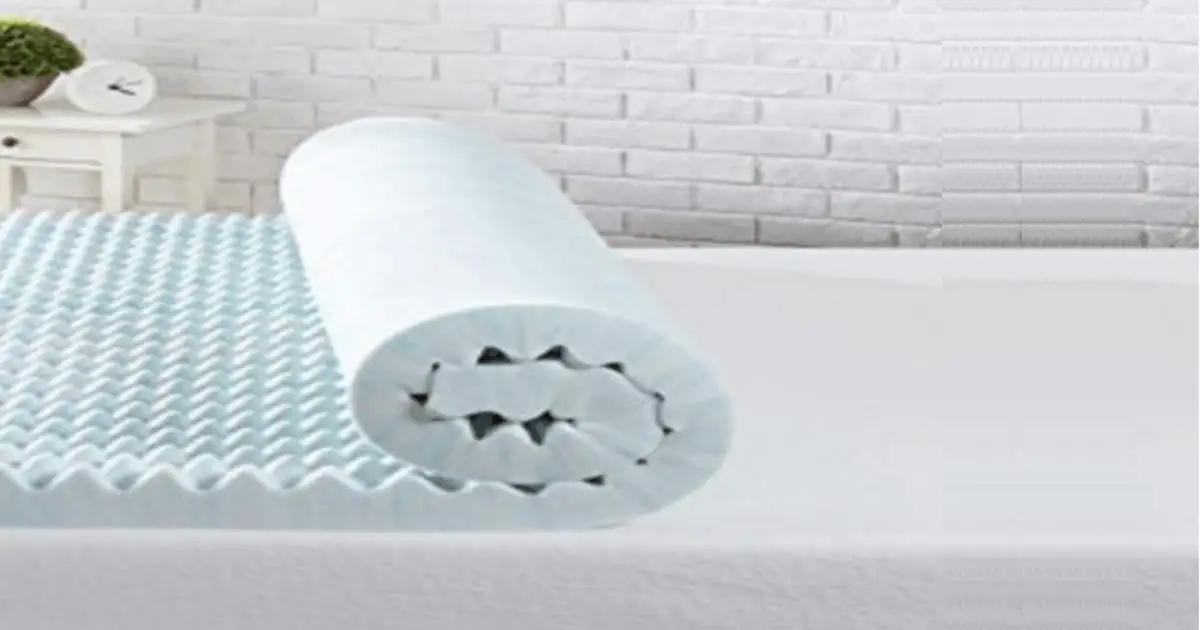
    • Convoluted Foam: Similar to the Egg Crate Foam, it is a type of foam resembling the egg cartons. It is soft and has raised bumps throughout.
    • Core: It refers to the support layer of a mattress.
    • Cotton: It is the natural fiber that is used in many mattresses.
    • Cotton Felt: It is a thin roll of carded cotton or cotton wool mix that is placed between thin paper layers.
    • Crib Mattress: These mattresses have a water-resistant cover and are used in baby cribs.
    • Crown: It is when a mattress lifts up in the center; i.e., the highest point of the mattress.
    • Cushioning: These are the layers made up of foam, cotton, latex and several other materials that are found between the insulation and quilting in an innerspring mattress.
    • Cushioning Depth: It refers to the amount of “sinking-in” feeling that a mattress offers.
D
    • Damask: It is a fabric encasing the outside of a mattress in order to protect the materials and the shape of the mattress.
    • Daybed: It is a convertible couch that can become sofa during the day and bed at night.
    • Differential Construction: A technique that differentiates between the upper and lower layers of a mattress. The upper layer provides support and comfort while the lower layer prevents the body from sinking into the mattress.
    • Double: The second smallest mattress size. Its measurements are 53” x 75”.
    • Dunlop: This is the simpler version of the latex mattress production technique. In this, latex is simply poured into a mold, fired up, cleaned and dried to produce new mattress.
    • Durability: The span of time during which a mattress performs at its peak with proper care.
    • Density: It is a measurement of weight over volume; it tells how durable or firm a mattress is. It is expressed in pounds per square foot.
    • Deep Compression Support: These mattresses are generally thicker. They measure how well a mattress adapts to a heavy sleeper.
    • Double-ended Frame: It is a frame that uses a headboard and a footboard.
    • Double Extra-Long: It is a bed size measuring 54”x 80”.
    • Double Heat Tempering: It refers to the continuous heating and cooling of coils to make them more resilient.
    • Dust Mites: These are microscopic beings that live within mattresses and pillows and feed on dead skin cells. They often cause allergies.

E

    • Edge Guard: It is the foam padding of the mattress around the perimeter that prevents the mattress from sagging.
    • Edge Support: It is the amount of firmness of a mattress near its edges that prevents the mattress from sinking in.
    • Edge Stabilization: Same as Edge Support, it is the amount for firmness of a mattress near its edges that prevents the mattress from sinking in.
    • Egg Crate Foam: A type of foam resembling the egg cartons. It is soft and has raised bumps throughout.
    • Elasticity: The ability of a material to revert to its original shape after the applied pressure is removed.
    • Electric Bed: Similar to Adjustable Bed, it is a bed built with adjustable motors to change the angle of the sleepers’ body and allows for most comfortable sleeping position.
    • Encased Springs: These are individually wrapped coils that interact with the sleepers’ body. They help in minimizing motion transfer and offer more comfort.
    • Encasement: It is an air-tight sleeve that protects the mattress from stains and prevents spilling.
    • Euro Top: This is a thin, additional padded layer attached firmly on top of a mattress.
    • Ease of Repositioning: It refers to how easily one can change positions in the bed.
    • Eastern King: It is also known as the King size of mattress measuring 76”x 80”.
    • Edge Breakdown: This refers to the loss of edge support in a mattress that increases the chances of slipping off while sitting or lying near the edges.
    • Edge Coils: These are the additional coils present near the edges of a mattress to provide more edge support.
    • Egyptian Cotton: These are the stronger and more fibrous variety of cotton that are softer than other varieties.

F

    • Firm: The feel of a mattress with lesser softness, offered to prevent the “sinking-in” feeling.
    • Firmness: The relative softness of a mattress that the user experiences under their body.
    • Foundation: This is a wooden, fabric-covered frame designed specially to support the mattress.
    • Full: Same as Double size, it is the second smallest mattress size. Its measurements are 53” x 75”.
    • Futon: It is a sack filled with padding and may be used as a sofa or a mattress.
    • Fatigue: It is when a mattress is no longer able to bear a person due to degradation of the materials.
    • Fiber Filling: It is generally used in pillows and mattress toppers. It is made by exploding polyester fibers into fluffy clusters.
    • Fill Level: It refers to the depth of the bladder in a waterbed.
    • Fire Retardant: It is a standard for fire resistance.
    • Fire Sock: It is a section near the core of a mattress that will melt when the mattress catches fire and will extinguish the fire eventually.
    • Flipping: It is the process of turning over the mattresses in order to prevent wear and tear.
    • Foam: This is an alternative to innerspring mattresses. They include memory foam, polyurethane or latex.
    • Foam Core: It is a section below the top layers of a mattress that acts as the main support system.
    • Foam Encasing: It is the stiff portion outside the edge of the mattress. It helps in providing more edge support.
    • Footboard: This is the board connecting the foot of a bed frame.
    • Free Flow: It is the waterbed that has no motion dampeners.
    • Full Extra Long: This is a mattress size that is 5” longer than the regular Full size.

G

    • Gauge: Same as Coil Gauge, it is the thickness of the wire that makes up a coil.
    • Give: The responsive extent to which a mattress compresses when weight is applied.
    • Gusset: These are the squared edges of a pillow or a comforter that add strength to the edges of the mattress.

H

    • Hand Feel: It is the sensation that is experienced upon touching the mattress by hand.
    • Heatiness: This is the amount of heat trapped in a mattress.
    • Helical Lacing: These are the wires that connect the mattress coils together.
    • Hug: This is the ability of a mattress to sink beneath the body to offer comfort while sleeping.
    • Hybrid Mattress: It is the type of mattress having features of both innerspring and foam mattresses: It has an innerspring coil base and memory foam or latex padding at the top.
    • Hypoallergenic: This feature prevents mattresses from accumulating allergens over time.
    • Headboard: It refers to the board attached at the head of a mattress at a 90 degree angle.
    • High Density Foam: It is a more durable foam type that compresses less when pressure is applied.
    • Hydraulic Waterbed: This is a type of mattress that has chambers within the bladder that enable water to move from one chamber to another, resulting in reduced motion transfer.

I

    • Indentation Load Deflection (ILD): It is the measurement of firmness of a memory foam. It is calculated by the amount of pressure required to indent a piece of 4” thick memory foam by 25% across 50 square inches.
    • Indentation Force Deflection (IFD): It is similar to ILD except for the units used in its measurement.
    • Innerspring: It is the most common variety of mattress, having coil core at the bottom and comfort layers on the top.
    • Insulator: This is the bottom most layer of a mattress. This layer separates the innerspring from the rest of the mattress.
    • Independent Coils: These are the independently functioning coils found in an innerspring mattress. They are known for reducing motion transfer.
    • Inner Quilt: This is the layer of quilting where a pillow top is attached.

K

    • King: This is the second largest mattress size, measuring 76” x 80”.
    • King Split: It is a bed having two Twin Extra Long Mattresses that measure 30”x 80”.
    • Knit: It is a type of fabric that is softer and used in mattress covers.

L

    • Latex Mattress: These mattresses are more expensive and are made either chemically or from the sap of rubber tree. It is an alternative to memory foam mattresses.
    • Law Tag: It is a tag written on the bottom side of all the mattresses reading “Do not remove this tag under penalty of law”. This statement is applied only for the manufacturers and is a proof of purchase for the consumers.
    • Loft: It refers to the height of padding in a mattress.
    • Low-Profile Foundation: It is a thin foundation used with a thick mattress to ensure the bed is of normal height.
    • Luxury Mattress: It is a mattress that generally costs $2,000 or more for a Queen size.

M

    • Manufacturing Defect: It refers to the flaw in the mattress from the manufacturers’ end.
    • Marshall Coils: These are individually wrapped coils that interact with the sleepers’ body. They help in minimizing motion transfer and offer more comfort.
    • Mattress Protector: Same as Encasement, it is an air-tight sleeve that protects the mattress from stains and spills.
    • Memory Foam: It is the second most common mattress type after innerspring mattresses. It provides more support and consists of foam layers that sink in response to heat and pressure.
    • Micro-Coils: These are minute coils used in mattress toppers along with foam.
    • Middle Upholstery: This is the largest component present in mattress’s comfort layers. It offers an increased comfort to the sleeper.
    • Migration: It refers to the displacement of mattress fibers, away from the place where the sleeper usually sleeps.
    • Motion Isolation: This refers to a mattress’s movement absorption ability.
    • Motion Transfer: This is the transfer of movement from one part to another within the mattress.
    • Memory Foam Gel: It is a gel layer added to mattresses to slow down the process of heating.
    • Mulesing-Free Wool: It is a process done to prevent infection in Merino sheep.
    • Multi-Needle Quilting: It is a quilting process that involves the use of multiple needles. It is also known as Continuous Quilting.
    • Murphy Bed: It is a type of bed that can be folded and kept vertically.

N

    • No-flip Mattress: This refers to those mattresses that do not require overturning after certain intervals.

O

    • Off-Gassing: It is the period after taking a mattress out of its box. During this time, the mattress remains smelly due to the release of certain compounds into the air.
    • Offset Coils: These are hourglass shaped coils having squared heads. They are linked together with Helical Lacing.
    • Open Cell Foam: These are less dense foam layers that are more breathable and prevent growth of molds.
    • Organic Mattress: Mattresses which are made up of natural, non-toxic materials and have fewer chemicals involved during the making.
    • Out-Gassing: Similar to Off-Gassing; it is the period after taking a mattress out of its box. During this time, the mattress remains smelly due to the release of certain compounds into the air.
    • Olympic Queen: It is a larger variant of the Queen Size mattress which measures 66”x 80”.

P

    • Pillow Top Mattress: These are mattresses having an additional padded layer on top in order to make the mattress softer and thicker.
    • Pitch: This is the angle of the coils in a mattress relative to the top of the mattress.
    • Plush: Soft
    • Pocket Coils: These are individually wrapped coils that interact with the sleepers’ body. They help in minimizing motion transfer and offer more comfort.
    • Polyfoam: They are the cheapest and lowest quality of foam, which are used as mattress toppers; (especially in egg crate mattress toppers).
    • Pounds Per Cubic Foot (PCF): It is the measurement of the density of memory foam.
    • Pressure Point: This refers to the part of body that feels uncomfortable while lying down.
    • Progressive Construction: It is a mattress design technique that makes the mattress feel firmer as one sinks deeper into the mattress.
    • Prorating: It refers to the percentage of a purchase’s original cost which is charged after certain intervals if the buyer wishes to purchase a replacement of the original product.
    • Pedestal: It is a part of the waterbed’s foundation.
    • Polybrominated Diphyenylethers (PBDEs): These are the type of chemicals that act as retardants in foams or other materials.
    • Phthalates: It is a type of chemical that is used to soften plastics used in baby mattresses.
    • Pima Cotton: It is a variety of cotton grown in the US that is softer and has an extra-long staple.
    • Pincore Holes: It refers to the holes present in latex mattresses that make the mattress softer.
    • Platform Bed: This refers to a mattress placed on a foundation. It is also called as Cabin Bed.
    • Posturized: It refers to the support at the center of the bed that prevents sagging.
    • Prorated Warranty: It is the warranty that does not cover the full price or replacement price after a certain interval of time.

Q

    • Queen: This is the most common and popular mattress size measuring 60” x 80”.
    • Quilting: This is the topmost layer of a mattress that offers breathability, fire resistance, and regulation of temperature.
    • Queen Split: This involves two mattresses each measuring 30”x 80”.

R

    • Recovery Time: The amount of time taken by a mattress to revert to its original shape after it has been compressed.
    • Resilience: It is the measure of the foam’s ability to revert back to its original shape after it has been compressed.
    • Responsiveness: It is the time taken by the foam to react to applied heat and pressure; which means how long the mattress takes to respond to the body shape of the user.
    • Recycled Content: It is the part of a product that has been re-used.
    • Recycled Material: These are the materials that have been processed to produce new materials.
    • Renewable: These are the materials that are capable of renewing themselves naturally.
    • Repositioning: It refers to the process of changing positions while sleeping at night.

S

    • Sagging: It refers to the chances of the top layers of mattresses to bend inwards with repeated use over a period of time.
    • Single:Same as the Twin size, it is the smallest size of a mattress available in the market. Its measurements are 38”x75”.
    • Sinkage: It is the tendency of a mattress to sink beneath the sleepers’ body to offer more comfort.
    • Single Coil System: It is the same as Bonnell Coils; these are the most common types of mattress spring, coiled in an hourglass shape to allow for flexibility and support. It is cheap and less durable.
    • Sleeping Hot: It refers to feeling uncomfortably hot while sleeping, which leads to poor quality of sleep.
    • Support: It is the ability of a mattress to exert comfortable pressure that helps in maintaining natural spinal alignment while lying on the mattress.
    • Support Layer: This is same as the Comfort Layer; it is the amount of cushioning that is offered on top of an innerspring mattress’ support core.
    • Safety Liner: It is the liner that surrounds the bladder in a waterbed.
    • Self-Inflating: This is a type of air or foam bed that can be compressed and folded up.
    • Semi-Fowler Position: It is a resting position with the back at 45 degree angle with the legs.
    • Semi-Waveless:It is a water bed that has a bladder made with little material in order to reduce movement of water.
    • Set: It refers to the combination of a mattress and a foundation.
    • Single Extra Long: It is a mattress size that measures 38”x 80”.
    • Slatted Base: It is a base designed to put mattress. The base is made up of wooden planks or slats.
    • Smooth Top: It is a cover that is not quilted.
    • Soft-sided Waterbed: A type of waterbed that encases its bladder in foam.
    • Spring Wire: These are the wires used in making coils for innerspring mattresses.
    • Super Single: It is a mattress size measuring 48”x 84”.
    • Synthetic: It is a man-made process involving the use of chemical.

T

    • Talalay: This is the more complex Latex Mattress production process as compared to the production of Dunlop Latex.
    • Thread Count:It refers to the number of horizontal and vertical threads in a square inch of fabric. The more is the thread count, the softer is the fabric.
    • Ticking: Similar to Damask, it is a fabric encasing the outside of a mattress in order to protect the materials and the shape of the mattress.
    • Tight Top: It is a mattress without any pillow-like padding on the top; it has a thick layer of upholstery.
    • Topper: This refers to an extra layer of padding that may be added to the top layer of the mattress to enhance comfort.
    • Trial Period:It refers to the period of time after which a mattress may be returned either for free or after paying a small amount.
    • Twin: Similar to the Single size, it is the smallest size of a mattress available in the market. Its measurements are 38”x75”.
    • Tape Edge: It is the seam running along the edges of the mattress.
    • Temperature: It is how warm a mattress can get during the night.
    • Tempering: It is the process of heating a coil to increase its strength.
    • Torsion Bars: These are the bars inside the foundation set at an angle of 90 degrees. These bars are placed to absorb pressure.
    • Trundle Bed: It is a bed that has another bed underneath it.
    • Twin Extra Long: It is a size of mattress that measures 39”x 80”.

U

    • Ultra Soft: These are the mattresses that are extremely soft in feel and rate between 2 and 3 on the 1-10 firmness scale.
    • Uncoil System: Same as the Bonnell Unit, it is the combination of Bonnell Coils that are laced together at cross wire helicals.
    • Universal Comfort Mattress: This refers to a mattress that suits nearly every sleeper’s preferences. These mattresses generally rate between 5 and 7 on the 1-10 firmness scale.
    • Upholstery Layers: Similar to Comfort Layers, it is the amount of cushioning that is offered on the top of an innerspring mattress’ support core.
    • Upward Thrust: It is the ability of a mattress to exert comfortable pressure that helps in maintaining the natural spinal alignment while lying on the mattress.

V

  • Viscoelastic: It is the main component of memory foam which softens upon getting heated.
  • Ventilator: These are the eyelets on the side of mattresses that enable movement of air.
  • Volatile Organic Compounds (VOCs): These are the products that enable off-gassing.

W

    • Warranty: It refers to the guaranteed replacement of a defective mattress by the company within the stated period of time.
    • Waterbed: It is a type of mattress that consists of water for support instead of foams or innersprings.
    • White Glove Delivery: It refers to the non bed-in-a-box online purchase of a mattress. In this system, a crew is sent to set up the mattress as per the buyer’s specifications.
    • Wrapped Coils: Similar to Pocket Coils, these are individually wrapped coils that interact with the sleepers’ body. They help in minimizing motion transfer and offer more comfort.

Z

    • Zoned Construction: This refers to the varied levels of firmness at different zones within the mattress to offer more comfort to the user while sleeping.