Your Best Mattress Buying Guide This Black Friday 2024, USA!

Your Best Mattress Buying Guide This Black Friday 2024, USA

Looking for a Dream Mattress at a Dream Price?

Black Friday 2024 is around the corner, and it’s shaping up to be the ultimate time for scoring incredible deals!

Have you been dreaming of a new mattress? Maybe your current one has seen better days, or you’re simply craving that luxurious sleep upgrade you’ve been hearing about. Either way, Black Friday sales are the perfect opportunity to invest in quality rest without breaking the bank.

In this Smart mattress guide, we’ll walk you through everything you need to know for smart mattress shopping this Black Friday, including top deals, do’s and don’ts, and a rundown on ideal mattress types for various sleeping positions. Plus, we’ll share some simple bedroom décor tips to make the most of your new mattress! Let’s dive in!

Why Black Friday? A Quick Look at Its History and Savings Potential

The tradition of Black Friday sales started in the United States, as a post-Thanksgiving shopping event and has since evolved into a global phenomenon. Originally coined in the 1960s, Black Friday was once a day of in-store-only doorbusters but has now expanded into weeks of online deals and unbeatable discounts.

For mattresses, Black Friday is like the Super Bowl of sales. You’ll find deep discounts on top brands, often with add-ons like pillows and mattress protectors. Mattress retailers know this is the time to woo you with the biggest savings, and they deliver!

Buying a New Mattress on Black Friday: Why It’s the Best Time

Buying a mattress on Black Friday makes sense if you’re looking for value without compromise. Retailers compete to offer the best deals, so you get an array of options. Plus, the added benefits of free trials, warranties, and bundled accessories sweeten the pot. Here’s why Black Friday is the best time to buy and take the leap into a better night’s sleep:

  • Deep Discounts: From memory foam to hybrids, prices drop drastically.
  • Exclusive Bundles: Many brands include freebies like pillows, sheets, or mattress toppers.
  • Flexible Returns: Black Friday deals often come with extended trial periods and easy returns.

Top Black Friday Mattress Deals of 2024

Below are some of the best deals on top-rated mattresses that cater to different sleeping positions, comfort levels, and preferences. Let’s explore which one might be best for you and the deals available on Black Friday 2024!

1. Serta

  • Deal: Save up to $800 on select mattresses and adjustable base sets.
  • Best For: Back sleepers and anyone who loves a balanced blend of support and softness.
  • Décor Tips: To enhance the comfort, layer up with plush pillows and a soft, supportive mattress topper. For a warm, inviting look, drape a subtle-toned throw blanket across the foot of the bed. This setup is perfect for the colder months, providing a cozy retreat that complements the supportive feel of a Serta mattress.

2. Beautyrest

  • Deal: Up to $1,000 off select mattresses with adjustable base sets.
  • Best For: Side sleepers needing extra pressure relief for their shoulders and hips.
  • Décor Tips: For an indulgent feel, pair the mattress with silk pillowcases and breathable, high-thread-count sheets. Add a weighted blanket for an extra layer of warmth and comfort, making it ideal for a luxurious, cocoon-like feel during colder months. The weighted blanket also enhances relaxation, helping side sleepers feel fully cradled.

3. Helix Mattress

  • Deal: 25% off sitewide.
  • Best For: Combination sleepers and couples looking for minimal motion transfer.
  • Décor Tips: Create a modern vibe with minimalist sheets and a sleek, lightweight duvet that complements Helix’s supportive versatility. To add ambiance, incorporate adjustable lighting options like dimmable bedside lamps. This is especially useful for couples with different sleep schedules, allowing each partner to create a cozy sleep space.

4. Nolah Mattress

  • Deal: 35% off sitewide.
  • Best For: Hot sleepers seeking a cool, breathable sleep surface.
  • Décor Tips: Pair your Nolah with cooling pillows and moisture-wicking sheets for an ultimate cool-sleep setup. Add a lightweight, breathable bedspread for a refreshing feel throughout the night. To elevate the cooling experience, consider a quiet bedside fan, enhancing airflow and ensuring a perfectly chilled sleep environment.

5. PlushBeds Mattress

  • Deal: Up to 50% off.
  • Best For: Eco-conscious sleepers who appreciate organic and sustainable options.
  • Décor Tips: Enhance the organic feel with natural, cotton sheets and blankets in neutral tones. A few potted plants bring a touch of greenery and purify the air, enhancing the serene, eco-friendly atmosphere. Soft, earthy lighting or salt lamps can create a calming, nature-inspired ambiance that complements PlushBeds’ natural materials.

6. Leesa Mattress

  • Deal: 25% off plus 2 free pillows ($180 value).
  • Best For: Couples and restless sleepers who need excellent edge support and motion isolation.
  • Décor Tips: Add stylish pillows and a high-quality mattress topper for extra support, especially helpful for couples. Incorporate string lights or other indirect lighting to create a peaceful and romantic atmosphere, perfect for winding down together after a busy day. The supportive setup ensures minimal disruptions, allowing you both to rest peacefully.

7. Purple Mattress

  • Deal: Up to $300 off Purple Essential Collection and up to $500 off the Restore Hybrid Collection.
  • Best For: Sleepers looking for unique pressure relief and body-contouring support.
  • Décor Tips: Go with tech-inspired décor, including geometric patterns or modern color palettes that complement Purple’s innovative look and feel. Add a sleek throw and a few lavender-scented candles to bring a calm, tech-chic vibe to the room. Lavender also promotes relaxation, working well with Purple’s pressure-relieving properties for a soothing environment.

8. Puffy Mattress

  • Deal: $1,350 off with code EARLYFRIDAY, plus 15% off accessories.
  • Best For: Stomach sleepers and anyone who favors firmer support.
  • Décor Tips: Add fluffy, supportive pillows and luxurious bedding for a cozy balance with Puffy’s firm feel. A sturdy, stylish bed frame can enhance the room’s look, while a touch of greenery adds a fresh, rejuvenating vibe. The combination of firm support and soft décor creates a cozy yet balanced space that feels both refreshing and comfortable.

Tips to Save Money This Black Friday

Saving big on Black Friday mattress deals isn’t just about grabbing the first discount you see. Let’s make sure your dollar goes further with these savvy tips:

  1. Start Early: Many brands release early Black Friday sales in November. Begin browsing now to track prices.
  2. Set a Budget: With tempting deals, it’s easy to overspend. Set a max budget to stay on track.
  3. Compare Offers: Sometimes, bundles provide better value than percentage-off sales. Compare across brands.
  4. Look for Bundles: Many brands offer bundled packages with free pillows, sheets, or adjustable bases. These can add significant value!
  5. Set Alerts: Follow brands or sign up for newsletters for exclusive discounts and reminders.
  6. Check Warranties and Return Policies: Black Friday deals can sometimes come with altered policies, so confirm you’re covered in case of any issues.
  7. Read Reviews: A great discount isn’t worth it if the mattress doesn’t suit your sleep needs. Make sure to read reviews to confirm quality.

Do’s & Don’ts for Mattress Shopping on Black Friday

Do’s

  • Check Reviews: Real customer reviews give you insights on durability, comfort, and customer service.
  • Prioritize Comfort: Choose mattresses based on your unique sleeping position and comfort preferences.
  • Compare Deals: Don’t settle on the first discount—compare deals across several brands.
  • Look for Long Trial Periods: A 100-night or longer trial allows you to ensure it’s a perfect fit.

Don’ts

  • Don’t Buy Based on Price Alone: A cheap mattress might compromise comfort, so consider what aligns best with your needs.
  • Avoid Ignoring Return Policies: Some Black Friday deals have stricter policies, so check that your purchase is refundable or exchangeable.
  • Don’t Fall for Short Trials: Some brands may offer shorter trial periods during big sales. Be cautious with these, especially if you’re unsure about the mattress.

Black Friday Special Bedroom Décor Ideas

To complement your new mattress, here are a few affordable ways to add a festive touch to your bedroom décor this Black Friday:

  1. Bedsheets & Bedding Sets: Choose breathable, high-quality cotton or linen sheets that match your mattress type. Soft colors and subtle patterns add a cozy, welcoming touch. Look for Black Friday deals on Egyptian cotton or bamboo sheets.
  2. Pillows: Black Friday deals often include pillow bundles. Look for memory foam or down pillows if you’re a side sleeper, or adjustable loft pillows if you sleep on your back. Fluffy throw pillows can add both comfort and style.
  3. Mattress Toppers: If you’re getting a firmer mattress, a plush mattress topper can soften it without sacrificing support. A cooling or memory foam topper can enhance comfort and extend the mattress’s life.
  4. Throws and Blankets: Layering with throws isn’t just about warmth. Choose textures like fleece or faux fur for a luxurious, comfy feel. A cozy throw blanket not only looks inviting but also adds warmth for chilly nights.
  5. Ambient Lighting: String lights, dimmable bulbs, or bedside lamps create a warm and relaxing atmosphere.

Wrapping It Up!

Finding your dream mattress on Black Friday 2024 doesn’t have to be overwhelming. With so many fantastic Black Friday mattress deals 2024, it’s the perfect time to upgrade your sleep experience while saving big. Remember, the key to scoring the best Black Friday deals is preparation. Check Smartmattressbuy.com for the best deals and added discounts!

Know what you need in a mattress, set a budget, and keep an eye out for added perks like free pillows, adjustable bases, and extended warranties. Whether you’re looking for luxurious comfort with a Purple or Helix mattress, supportive durability with Serta or Beautyrest, or innovative features from Leesa, Nolah, PlushBeds, or Puffy, Black Friday is truly your golden opportunity.

With your new mattress, don’t forget to enhance your bedroom’s ambiance. Choose cozy bedding, pillows, and decor that reflect your style and help create a relaxing sleep sanctuary. After all, the right mattress and bedroom setting can transform your nights and recharge you for the days ahead.

So go ahead, make your list, check it twice, and prepare to grab those deals this Black Friday 2024! Happy shopping, and here’s to many nights of restful, rejuvenating sleep.

Disclaimer:

The information in this blog is intended for general informational purposes only. While we strive to provide accurate details on Black Friday mattress deals and helpful buying tips, prices, promotions, and availability may vary by retailer and region. Always verify the details on official retailer websites before making a purchase. Individual sleep needs and preferences differ; consult with a sleep specialist if you have specific health or comfort concerns.

FAQs on Best Mattress Buying Guide This Black Friday 2024

  1. How can I choose the best mattress for me this Black Friday?

Start by identifying what you like most in a mattress. Consider the three main types—innerspring, foam, and adjustable air—as each provides a unique sleep experience. Think about Black Friday mattress sales and recall any mattresses you’ve enjoyed in the past. Ask yourself how much bounce or support you prefer, and how plush or firm you want your bed to feel.

  1. Which is a better Black Friday Deal: a 12″ or a 14″ mattress?

It depends on your sleep position. For side sleepers, a thicker mattress (12 to 14 inches) with several comfort layers can provide extra support for the shoulders and hips. Back sleepers, however, often feel comfortable on a standard-height mattress (10 to 12 inches) that supports spinal alignment and relieves pressure on the lower back.

  1. When do Black Friday mattress deals start in the USA?

Black Friday falls on November 29, 2024. Known for substantial discounts, this shopping event marks the start of the holiday season, with both online and in-store retailers offering impressive deals on mattresses.

  1. Which month offers the best deals on mattresses?

Big savings on mattresses typically appear during holiday weekends, such as Labor Day, President’s Day, Memorial Day, Fourth of July, and Black Friday. Research your preferred mattress type in advance and keep an eye on deals offered by local and online mattress stores around these times.

  1. How can I get the best price on a new mattress this Black Friday?

To snag the best deal, try a bit of negotiation. Familiarize yourself with the usual prices for different brands or models, mention competitors’ offers, or be ready to walk away if needed. Don’t hesitate to ask directly for a discount or inquire about special promotions to maximize your savings.

Sleep and Stress: Are You Stuck in the Sleep-Stress Cycle?

Sleep and Stress: Are You Stuck in the Sleep-Stress Cycle?

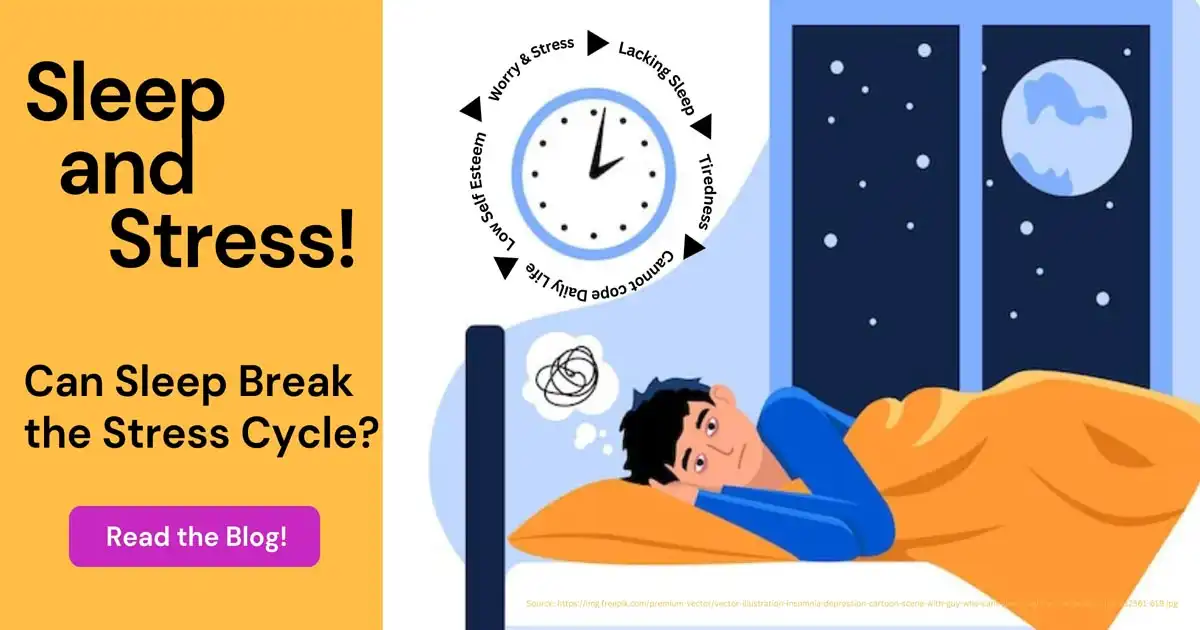
Have you ever found yourself lying awake, watching the hours tick by as your mind races with all the “what ifs” and “should haves”? We’ve all been there, caught between needing sleep and the relentless grip of stress. But what if I told you that sleep and stress are deeply intertwined and that managing one can have a profound impact on the other?

Let’s dive into the fascinating link between sleep and stress—a cycle that can either fuel our anxiety or help calm our minds. Together, we’ll explore how sleep and stress influence each other, the signs that show this cycle is affecting us, and practical tips on how to manage stress so we can finally get the rest we deserve.

The Sleep-Stress Cycle: What Is It?

The Sleep-Stress Cycle: What Is It?

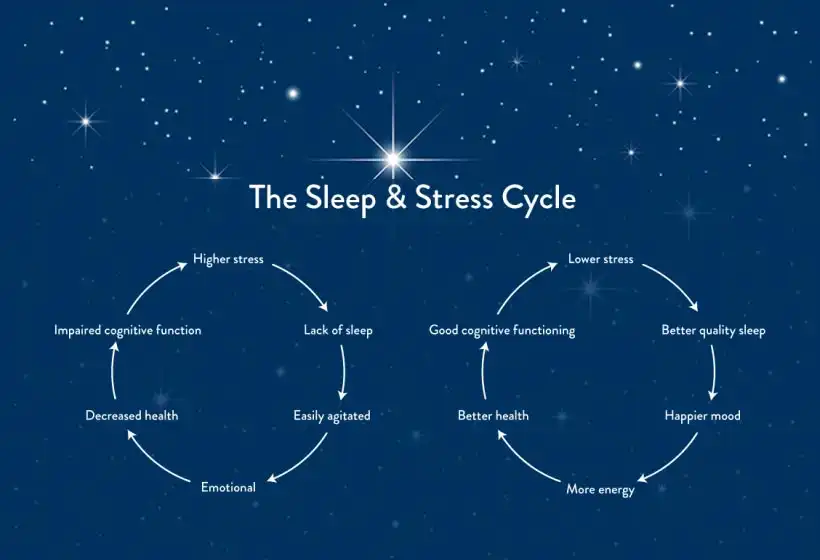
The sleep-stress cycle is essentially a loop where high stress affects our ability to fall and stay asleep, and in turn, poor sleep heightens our stress levels. When we’re stressed, our bodies go into “fight-or-flight” mode. This reaction, evolved from our ancestors’ need to avoid predators, isn’t as useful when our stressors are bills or work deadlines. This fight-or-flight response still releases stress hormones like cortisol, which make us feel alert and restless, just when we should be winding down for bed.

When this cycle repeats night after night, we end up in a situation where stress keeps us awake, and lack of sleep adds to our stress. It’s a tough loop to break, but recognizing this cycle is the first step toward a healthier relationship with both stress and sleep.

Is Sleep Good for Stress and Anxiety?

Absolutely, yes! Quality sleep is like pressing the “reset” button for our minds and bodies. Good sleep lowers stress and eases anxiety, creating a calmer, more balanced mind. During deep sleep stages, the brain actively processes emotions, clearing out negativity and reducing stress. That’s why you often wake up with a fresh perspective after a restful night.

Studies have shown that well-rested individuals can better handle stressors than those who are sleep-deprived. In fact, a sleep-stress correlation study found that people who slept poorly experienced higher levels of stress and were more likely to feel anxious during the day.Think of sleep as your personal retreat. When we’re asleep, our body repairs itself, our cortisol levels drop, and we prepare to face challenges with a clear mind.

How to Sleep When Stressed and Anxious

Easier said than done, right? If you’re battling stress and anxiety, sleep can feel elusive. Here are some tips to help you wind down:

  • Practice Deep Breathing: When anxiety strikes, focus on deep breaths. Breathing deeply slows your heart rate and signals to your body that it’s safe to relax. Try the “4-7-8” breathing technique—inhale for four counts, hold for seven, and exhale for eight.
  • Create a Calm Environment: Light and sound can affect sleep, so try to keep your bedroom dark and quiet. This could be a warm bath, gentle stretching, or reading a book.
  • Limit screen time: The blue light from devices can interfere with melatonin production. Try to avoid screens at least an hour before bed, or use a blue-light filter if you must be on your device.
  • Wind Down with a Routine: Doing calming activities like reading or listening to soothing music tells your brain it’s time to rest. This consistency can ease sleep-related anxiety.
  • Avoid Caffeine and Sugar Before Bed: Both can keep you alert and heighten stress, so try to limit these in the hours leading up to sleep.

A Relaxing Bedroom Environment Matters

Creating a calm, sleep-friendly environment can also be a game-changer. Keep your bedroom cool, dark, and quiet. Make your bed a comfortable haven by investing in quality pillows and a supportive mattress. These details might seem minor, but they can make a world of difference.

Pillow brands known for their stress-relieving and sleep-enhancing designs:

  1. Tempur-Pedic (TEMPUR-Cloud Pillow)

Tempur-Pedic pillows are made with the same memory foam as their mattresses, which conforms to the shape of the head and neck. The TEMPUR-Cloud pillow is soft yet supportive, reducing neck strain and helping sleepers relax.

  1. Purple Harmony Pillow

Purple’s Harmony pillow uses a combination of latex and their signature hyper-elastic polymer grid. The grid provides adaptive support, helping to relieve stress on the neck and shoulders, and the breathable design keeps the pillow cool for a more comfortable sleep.

  1. Layla Kapok Pillow

Layla’s Kapok pillow combines shredded memory foam and natural kapok fibers, offering a plush yet supportive feel. The pillow is designed to relieve pressure while providing a soft surface that’s gentle on the head and neck, helping to reduce stress and improve sleep quality.

  1. Brooklyn Bedding (Talalay Latex Pillow)

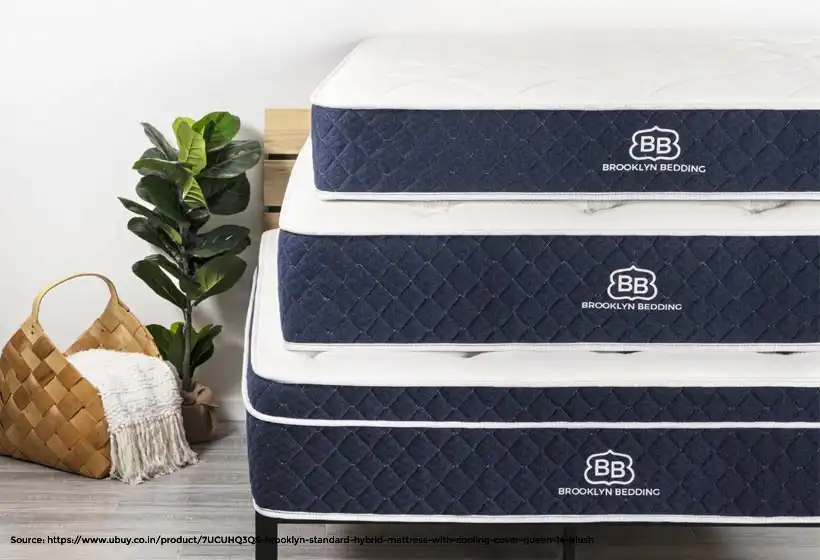
Made with natural Talalay latex, Brooklyn Bedding’s pillow provides responsive support for the neck and shoulders. Latex is known for maintaining its shape and offers gentle pressure relief, helping sleepers feel supported and reducing stress points.

  1. Avocado Green Pillow

This eco-friendly pillow is made with organic latex and kapok fibers, which provide a balance of softness and support. The sustainable, natural materials promote relaxation and are gentle on the skin, while the adjustable loft helps customize comfort.

  1. Casper (Original Pillow)

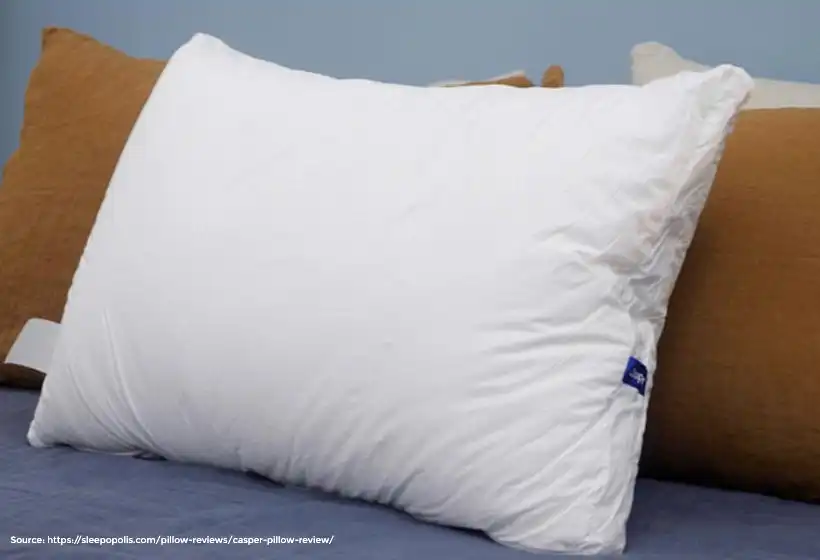
Casper’s pillow features a unique pillow-in-pillow design, with an inner supportive layer surrounded by a soft outer layer. It provides neck support and pressure relief, helping to reduce strain and create a comfortable sleep environment.

  1. Tuft & Needle (Original Foam Pillow)

This pillow is crafted from responsive foam, providing gentle support that adapts to the shape of the head and neck. Its breathability keeps it cool, and the soft foam helps reduce pressure points, promoting a more restful sleep experience.

Each of these pillows combines thoughtful design with premium materials that reduce strain on the neck and shoulders, promote proper alignment, and keep the head cool, creating a stress-relieving sleep experience.

Mattress brands designed to reduce stress and promote restful sleep:

  1. Tempur-Pedic

Known for its memory foam technology, Tempur-Pedic mattresses contour to the body, providing pressure relief that helps reduce muscle tension and stress. Their adaptive support can aid in relaxation and improve sleep quality.

  1. Casper

Casper mattresses offer zoned support, which provides targeted pressure relief, particularly for the shoulders and hips. This feature can alleviate stress in the body and help sleepers unwind.

  1. Serta iComfort

Serta’s iComfort mattresses feature gel memory foam that helps regulate temperature and provides pressure relief, making it easier to relax and fall asleep. They are particularly suited for people who feel warm at night, which can be a common source of stress.

  1. Purple

Purple mattresses use a unique grid design made from hyper-elastic polymer, which evenly distributes weight and relieves pressure points. This helps reduce tossing and turning, supporting deeper, more restful sleep.

  1. Nolah

Nolah mattresses are crafted from AirFoam, a material designed to reduce pressure on the back and joints. The material is also temperature-neutral, which can help alleviate nighttime discomfort and promote relaxation.

  1. Avocado

Avocado mattresses are eco-friendly and made with organic materials like latex, wool, and cotton. They offer a medium-firm feel with excellent support, reducing pressure and providing comfort to ease stress-related discomfort.

  1. Layla

Layla offers a flippable mattress with both soft and firm sides, allowing sleepers to find the right level of support for their needs. Copper-infused foam helps dissipate heat, which can improve comfort and help relax the body.

  1. Helix

Helix offers custom mattresses based on sleep quizzes, ensuring the right level of support and pressure relief for individual needs. Their focus on customization makes it easier for people to find a mattress that helps reduce physical and mental stress.

These mattresses are designed with various technologies that focus on temperature regulation, body contouring, pressure relief, and firmness adjustability to promote relaxation and better sleep.

Symptoms of Lack of Sleep and Stress

You might wonder: How can I tell if stress is affecting my sleep? Here are some telltale signs:

  1. Restlessness: Tossing and turning or feeling unable to relax in bed.
  2. Daytime fatigue: Waking up feeling unrefreshed or struggling to stay awake.
  3. Mood changes: Increased irritability, anxiety, or even feeling down.
  4. Poor concentration: Difficulty focusing at work or on tasks.
  5. Body aches: Experiencing headaches, muscle tension, or a “stiff” feeling.

Lack of sleep can affect not only how you feel mentally but also how your body functions. Persistent sleep deprivation can even increase the risk of conditions like heart disease, diabetes, and depression.

Can High Stress During Sleep Really Be That Bad?

Did you know stress doesn’t always go away when we sleep? When stress intrudes into your sleep, your body can’t fully recharge, leading to fragmented, restless sleep. Even if you don’t fully wake up, your body might not be getting the restorative deep sleep it needs. This leaves you feeling tired, sluggish, and even more stressed the next day.

Some signs of high stress during sleep include:

  • Frequent Nighttime Awakenings: You may find yourself waking up multiple times, even if you don’t remember each one.
  • Trouble Falling Asleep: Stress can keep your mind racing, delaying sleep and reducing the total time you spend asleep.
  • Morning Fatigue: If stress disrupted your sleep, you’ll likely wake up tired, no matter how long you were in bed.

Sleep and Stress Correlation Study: What Science Says

Research backs up this sleep-stress connection. Studies show that stress-related insomnia is not only common but also a key predictor of other health issues. For instance, a survey by the National Sleep Foundation found that about 43% of people report lying awake at night due to stress.

A study from Harvard even highlights how stress affects the very stages of sleep. When cortisol levels stay high, our REM sleep (the dream stage crucial for emotional processing) is disrupted, which means we don’t get the emotional reset that REM sleep typically offers. This interruption only compounds our stress and leaves us feeling more tense and anxious the next day.

How Sleep Reduces Stress

So, how exactly does sleep work its magic on stress? Here’s what happens when we sleep well:

  1. Lowers cortisol: During sleep, cortisol levels naturally drop, which helps your body relax.
  2. Boosts mood: Sleep promotes the release of serotonin and dopamine, the “feel-good” chemicals that keep stress at bay.
  3. Strengthens focus: With adequate sleep, we can better concentrate and face stressors calmly.
  4. Improves resilience: A well-rested body is better equipped to handle stress, which means the little things don’t rattle us as much.

This is why sleep isn’t just a luxury; it’s a necessity. The more we prioritize sleep, the better we can handle whatever life throws at us.

How to Tell if Stress Is Affecting Your Sleep

If you’re still unsure whether stress is impacting your sleep, here’s a simple self-checklist. Are you:

  • Waking up frequently during the night?
  • Feeling edgy or irritated throughout the day?
  • Experiencing trouble falling asleep, even when you’re tired?
  • Constantly thinking about stressors right before bed?

If any of these ring true, stress may be sabotaging your sleep. Identifying this connection can be incredibly empowering. Once we know what we’re dealing with, we can take steps to manage stress and improve our sleep.

Practical Tips to Reduce Stress and Sleep Better

Managing stress isn’t just good for sleep—it’s crucial for overall health. Here are some strategies that can help you relax before bed and wake up refreshed:

  • Mindfulness meditation: Spend a few minutes focusing on your breath and letting go of the day’s worries. Apps like Calm or Headspace can guide you through quick mindfulness practices.
  • Exercise: Physical activity releases endorphins that counteract stress. Just remember to keep your workout a few hours before bedtime so you’re not too energized to sleep.
  • Healthy diet: Cut down on caffeine and sugary snacks close to bedtime. These can spike your energy levels when you’re trying to unwind.
  • Social support: Talking to friends or family can help you gain perspective and reduce stress. Sometimes, just sharing what’s on your mind can lighten the load.

The Takeaway: Prioritize Sleep to Manage Stress

Sleep and stress are two sides of the same coin. Tackling one can have a powerful effect on the other. When we prioritize quality sleep, we’re actively working to manage our stress levels. And when we make efforts to reduce stress, we’re paving the way for better sleep.

Next time you’re feeling overwhelmed, remember: prioritizing your sleep isn’t selfish—it’s essential. So tonight, give yourself permission to unwind and browse Smartmattressbuy.com. Step away from your worries, and let your mind and body recharge. You might just find that a good night’s sleep is one of the best ways to keep stress at bay.

Sweet dreams!

Disclaimer: This blog is for informational purposes only and is not intended as a substitute for professional medical advice, diagnosis, or treatment. While we aim to provide helpful insights into managing sleep and stress, please consult a healthcare provider if you are experiencing chronic sleep issues, stress, or other health concerns. Individual responses to mattresses, pillows, and other sleep aids may vary.

FAQs on Sleep and Stress!

  1. How does stress affect sleep?

Stress can disrupt sleep by making it harder to fall asleep and causing more frequent awakenings. This sleep disruption can elevate stress hormones like cortisol, which further impacts restful sleep.

  1. Why can’t I sleep when I’m stressed?

Stress and sleep difficulties go hand in hand. If you’re dealing with worries or difficult situations, stress hormones may increase, and a lack of sleep can compound these effects, making it hard to unwind.

  1. How can I sleep better when stressed?

Try to avoid caffeine, alcohol, large meals, and drinks that can cause discomfort before bedtime. Regular exercise can help relieve stress and improve sleep quality, particularly for those with insomnia.

  1. How do you treat stress-induced insomnia?

Several techniques may help, including:

  • Stimulus control therapy to train the body for better sleep.
  • Relaxation methods like deep breathing and progressive muscle relaxation.
  • Sleep restriction to help reset sleep patterns.
  • Passive wakefulness to reduce anxiety about sleep.
  • Light therapy to stabilize sleep cycles.
  1. What are physical symptoms of stress?

Stress can show up in physical ways, including:

  • Breathing difficulties or panic attacks
  • Sleep disturbances
  • Fatigue
  • Muscle tension, headaches
  • High blood pressure or chest pains
  • Indigestion or heartburn
  1. What is the 3-3-3 rule for anxiety?

The 3-3-3 rule is a quick technique for grounding during anxious moments. Look around and identify three things you see, three sounds you hear, and move three parts of your body. This can help calm overwhelming feelings.

  1. How can I release stress physically?

There are quick ways to relieve stress, such as:

  • Deep breathing to lower blood pressure
  • Listening to music
  • Taking a short walk in sunlight
  • Massaging hands
  • Stretching or rolling your feet over a golf ball
  1. How can I break the cycle of stress and insomnia?

Daily exercise can build a stronger drive for sleep. Only go to bed when truly sleepy, and avoid staying in bed when awake. Limiting caffeine can also prevent added stress and jitteriness.

  1. How do I know if stress is making me sick?

Common stress-related symptoms include:

  • Headaches or dizziness
  • Muscle pain or tension
  • Digestive issues
  • Chest discomfort or rapid heartbeat
  • Sexual health problems
  1. What exercises are best for reducing stress?

Choose activities you enjoy for the best stress relief. Options include walking, jogging, dancing, biking, yoga, tai chi, gardening, swimming, and weightlifting.

5 Hidden Dangers of Sleep Procrastination

5 Hidden Dangers of Sleep Procrastination

Key Takeaways

  • Sleep procrastination happens when individuals delay sleep at the cost of their overall well-being.
  • Bedtime Procrastination leads to reduced sleep, which can negatively impact both mental and physical health.
  • Develop a consistent, relaxing nightly routine. Avoid stimulants like smartphones and caffeine, which can hinder your ability to fall asleep.

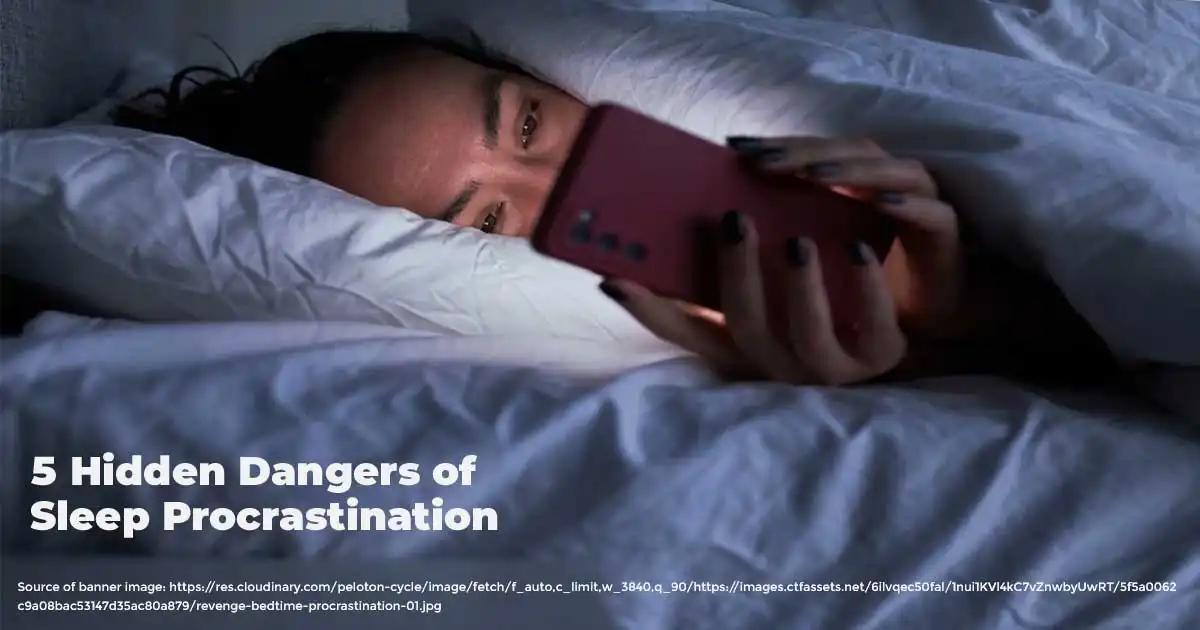
“Sleep Procrastination”, we’ve all gone through this! The clock ticks past bedtime, yet we find ourselves scrolling through social media.

This behavior is known as “sleep procrastination”. It is becoming an increasingly prevalent issue in today’s fast-paced society. According to a study, the majority of people in the U.S. (59.5%) reported procrastinating while in bed. The rest indicated they procrastinate before going to bed.

But what exactly is sleep procrastination? What impact does it have on our health?

Today, we’ll explore the world of sleep procrastination. We will discuss its causes, effects, and ways to overcome it.

What Is Sleep Procrastination?

Sleep procrastination refers to the act of delaying going to bed. It happens without a valid reason. While the need for rest is understood, sleep procrastinators engage in unessential activities. It includes binge-watching shows or mindlessly scrolling through their phones.

This delay isn’t always due to external demands like work or caregiving. However, rather a voluntary action that leads to a reduction in sleep duration.

Sleep procrastination often stems from two main reasons:

  • Revenge Bedtime Procrastination: This is when individuals, particularly those with busy schedules, stay up late. It is a form of self-care or ‘revenge’ for not having enough time for themselves during the day.
  • General Sleep Procrastination: This occurs when people put off going to sleep without an emotional or psychological motive. It is simply due to poor habits or distractions.

5 Hidden Dangers of Sleep Procrastination

5 Hidden Dangers of Sleep Procrastination

Sleep is essential for overall well-being. Delaying sleep can lead to numerous negative consequences for both mental and physical health.

Here’s how sleep procrastination can affect you:

1. Sleep Procrastination and Sleep Deprivation

  • The most obvious effect of sleep procrastination is sleep deprivation.
  • You continuously push bedtime later and later. By doing this, you lose valuable hours of restorative sleep.
  • It affects your cognitive functioning, mood regulation, and overall energy levels. Chronic sleep deprivation has been linked to a host of health issues.
  • This includes an increased risk of heart disease, diabetes, and weakened immune function.

2. Mental Health Impacts of Bedtime Procrastination

  • Lack of sleep due to sleep procrastination doesn’t just affect your physical health. It takes a toll on your mental well-being.
  • Regular bedtime procrastination can lead to irritability, anxiety, and depression.
  • A study has shown that people who experience chronic sleep issues are more likely to develop mood disorders, and their ability to handle stress diminishes.

3. Cognitive Decline due to Bedtime Procrastination

  • When you delay sleep, this has an effect on your brain. You reduce the amount of time your brain has to process information and consolidate memories.
  • This results in poorer cognitive performance.
  • You may have difficulty concentrating, impaired decision-making, and slower reaction times.
  • Over time, chronic sleep procrastination can lead to long-term cognitive issues.

4. Disruption of Circadian Rhythm and Revenge Bedtime Procrastination

  • Your body follows a natural circadian rhythm. It regulates your sleep-wake cycle. When you constantly procrastinate sleep, you disrupt this internal clock.
  • It makes it difficult to fall asleep at the right time and wake up refreshed. This can lead to insomnia.

5. Weakened Immune System due to Sleep Procrastination

  • Sleep procrastination can weaken the immune system over time. When you consistently delay sleep, your body doesn’t get the necessary rest. This reduction in sleep decreases the production of cytokines.
  • Cytokines are a protein essential for fighting infections and inflammation.
  • As a result, your immune system becomes less effective at defending against common illnesses like colds, flu, and other infections.
  • Chronic sleep procrastination impairs the body’s ability to recover. It leads to longer recovery times when you do get sick.

Study Finds How Sleep Procrastination Affects Sleep

Recent research has shed light on the impact of sleep procrastination. Sleep procrastination has an impact on the quality and duration of sleep. A study conducted by researchers from Utrecht University in the Netherlands. They have explored the relationship between bedtime procrastination and insufficient sleep. It has revealed some eye-opening results.

Key Findings:

  • Significant Sleep Reduction

The study showed that individuals who frequently procrastinate their bedtime tend to sleep 30-60 minutes less. They sleep less per night than those who stick to a regular sleep schedule.

This might not seem like much. Over time, it adds up to a significant sleep debt.

  • Reduced Sleep Quality

Participants who engaged in sleep procrastination reported lower sleep quality. They experienced more frequent awakenings. It leads to a cycle of fragmented, non-restorative sleep.

  • Higher Risk of Daytime Sleepiness

Sleep procrastinators were found to be more prone to excessive daytime sleepiness. They were more likely to feel fatigued, irritable, and unmotivated during the day. It could negatively impact their work or school performance.

  • Impact on Sleep Hygiene

The study highlighted a clear connection between sleep procrastination and poor sleep hygiene. Bedtime Procrastinators were more likely to use electronic devices in bed. They drink caffeine late in the day. Bedtime Procrastinators engage in stimulating activities right before bedtime. It hinders the ability to fall asleep easily.

What is good sleep hygiene? Read the top 10 tips to sleep better!

These findings emphasize that sleep procrastination is not just about losing a few hours of rest. It has deeper implications for both the duration and quality of sleep.

Causes of Sleep Procrastination

Sleep procrastination, sometimes referred to as “revenge bedtime procrastination,” describes the habit of delaying sleep to reclaim some sense of freedom. Experts have identified a few major reasons why people engage in sleep procrastination:

  • Night Owls Living in an Early Bird World: When night owls try to fit into an early bird schedule, they may delay sleep to spend time on personal activities they missed during the day.
  • Stress Relief: After a day filled with responsibilities, some may seek a sense of relaxation and leisure before bed. Scrolling through social media or watching shows can feel like a low-effort way to de-stress, leading to sleep procrastination anxiety as bedtime gets pushed back.
  • Self-Control and ADHD: People with ADHD may find it especially challenging to wind down at night. ADHD can cause difficulties with time perception, hyperfocus, and self-regulation, making it harder to resist staying up. Rumination or impulsivity can also contribute to revenge bedtime procrastination, especially when combined with stimulation-seeking behavior common in ADHD.

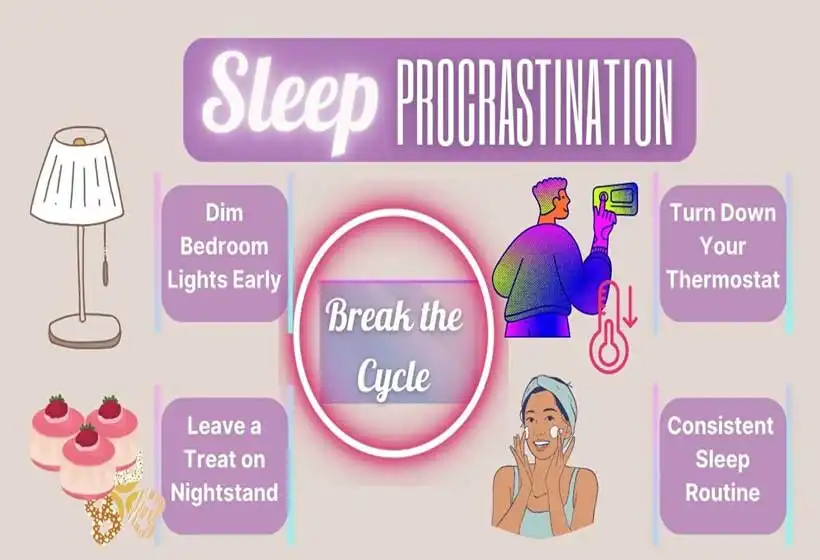
How to Break the Cycle of Sleep Procrastination

Breaking the cycle of sleep procrastination requires a combination of effective sleep hygiene practices, self-reflection, and habit building. If sleep procrastination has been affecting your health and daily functioning, these methods can help restore a sense of routine and ease sleep procrastination anxiety.

  1. Set a Consistent Routine: Start by creating a sleep and wake schedule you stick to every day, including weekends. Over time, your body’s circadian rhythm will adjust, making it easier to fall asleep and wake up consistently.
  2. Reduce Screen Time Before Bed: Screens emit blue light that can delay melatonin production, disrupting the body’s natural sleep cycle. Turn off devices at least an hour before bed to encourage melatonin release.
  3. Practice Relaxation Techniques: Engage in calming activities before bed, like reading a book, doing gentle stretches, or meditating. These activities help counteract stress and can signal your body that it’s time to wind down, reducing sleep procrastination anxiety.
  4. Create a Comfortable Sleep Environment: Optimize your bedroom for sleep by ensuring it’s dark, quiet, and cool. Use comfortable bedding and keep electronics out of the room. This can make going to bed more appealing, countering the impulse to procrastinate.
  5. Shift Your Focus During the Day: Engage in activities that leave you feeling fulfilled and relaxed, so you don’t feel the need to reclaim “me-time” late at night. Prioritizing time for yourself during the day can reduce the urge for revenge bedtime procrastination.
  6. Mindfulness and Journaling: If overthinking and racing thoughts keep you awake, consider a brief journaling session before bed. Writing down your thoughts can alleviate worries and help you sleep more peacefully.
  7. Talk to a Doctor: For those with ADHD or those whose sleep procrastination stems from underlying conditions, a healthcare provider can offer sleep procrastination treatments or adjust medication to improve sleep quality.

How to Break the Cycle of Sleep Procrastination

Smart Take!

Lasting change comes from small, consistent actions. Start by identifying a single habit you’d like to shift. Choose a “sleep cue” to signal that it’s time to unwind, whether it’s a soft alarm or a breathing exercise. Remind yourself why better sleep matters, and connect with positive emotions that bedtime brings – a sense of calm, a chance to recharge. Celebrate each night you achieve your goal, reinforcing the cycle and helping you build the confidence to create a sustainable, sleep-friendly routine.

Sleep procrastination doesn’t have to control your nights. By focusing on your sleep habits and setting boundaries, you can break the cycle, ease sleep procrastination anxiety, and embrace restful, rejuvenating sleep. For more information on Sleep & Health browse on to Smartmattressbuy.com.

Disclaimer:

The information provided in this blog is for educational and informational purposes only and should not be considered medical advice. While we aim to provide accurate and helpful insights, sleep procrastination and its related impacts may vary widely among individuals and can be influenced by underlying health conditions. For diagnosis, treatment, or personalized advice, please consult a qualified healthcare professional. This blog does not replace professional medical guidance, and readers are encouraged to seek appropriate support for their unique health needs.

FAQs on Sleep Procrastination!

  1. What is sleep procrastination a symptom of?

Sleep procrastination often signals a lack of self-regulation, leading to reduced willpower and control. People who procrastinate sleep may feel restless, disinterested, and easily distracted, often resulting in dissatisfaction and difficulty focusing.

  1. How do you break sleep procrastination?
  • Stick to a bedtime routine: Go to bed and wake up at the same time each day, including weekends.
  • Limit screen time: Avoid screens for at least an hour before bed.
  • Skip naps: If falling asleep is challenging, try avoiding naps during the day.
  1. Is sleep procrastination a symptom of ADHD?

Sleep procrastination, especially “revenge bedtime procrastination,” is common in people with ADHD. During the pandemic, it became widely discussed due to disruptions in sleep patterns caused by increased stress and irregular routines.

  1. What mental disorders can lead to procrastination?

Procrastination often relates to conditions like depression, anxiety, ADHD, and low self-esteem. It’s also tied to negative impacts on mental health, where high anxiety levels and poor impulse control are common.

  1. Is procrastination linked to ADHD or anxiety?

While procrastination itself isn’t a direct symptom of ADHD, ADHD traits, such as impulsivity and time management difficulties, can make procrastination more likely.

  1. How can I rewire my brain to stop procrastinating?

To retrain your brain:

  • Prioritize high-importance tasks that require less time.
  • Use a calendar (digital or paper) to block off time for these tasks over the next week.
  1. Why am I so tired but don’t want to sleep?

Feeling tired but not sleeping may indicate a disrupted circadian rhythm. Factors like anxiety, caffeine, blue light exposure, or even diet can cause this issue, along with conditions like sleep disorders or poor sleep habits.

  1. What is revenge scrolling?

Known as revenge bedtime procrastination, this habit involves staying up late scrolling on phones or social media, which can become an endless cycle of delaying sleep.

  1. What trauma might cause procrastination?

Trauma can contribute to procrastination, especially when rooted in early experiences of criticism or harsh treatment from caregivers. Such experiences can foster feelings of inadequacy that affect behavior.

  1. What is the root cause of procrastination?

Common reasons include:

  • Anxiety or fear, such as fear of criticism.
  • Overwhelm due to too many tasks and no clear starting point.
  • Perfectionism, often avoiding tasks that aren’t “perfect.”
  1. Who is more prone to procrastination?

Studies suggest that men are slightly more prone to procrastination. This could relate to factors like lower self-control and impulsivity, possibly influenced by evolutionary traits.

  1. What does high-functioning ADHD look like?

Adults with high-functioning ADHD may experience common ADHD symptoms, such as missing appointments, struggling with time management, and frequently procrastinating.

  1. Does Adderall help with procrastination?

Many college students take Adderall, often prescribed for ADHD, to help reduce procrastination by improving focus and task initiation.

  1. What’s the biological reason for procrastination?

Procrastination is a result of our brain’s limbic system and prefrontal cortex interaction. The limbic system, which manages automatic responses, can often overpower the prefrontal cortex, which is responsible for planning and decision-making.

  1. How can I permanently overcome procrastination?
  • Forgive past procrastination.
  • Commit to your tasks.
  • Reward yourself after completing tasks.
  • Get accountability from others.
  • Act as you go.
  • Change your internal dialogue to be more positive.
  • Reduce distractions.

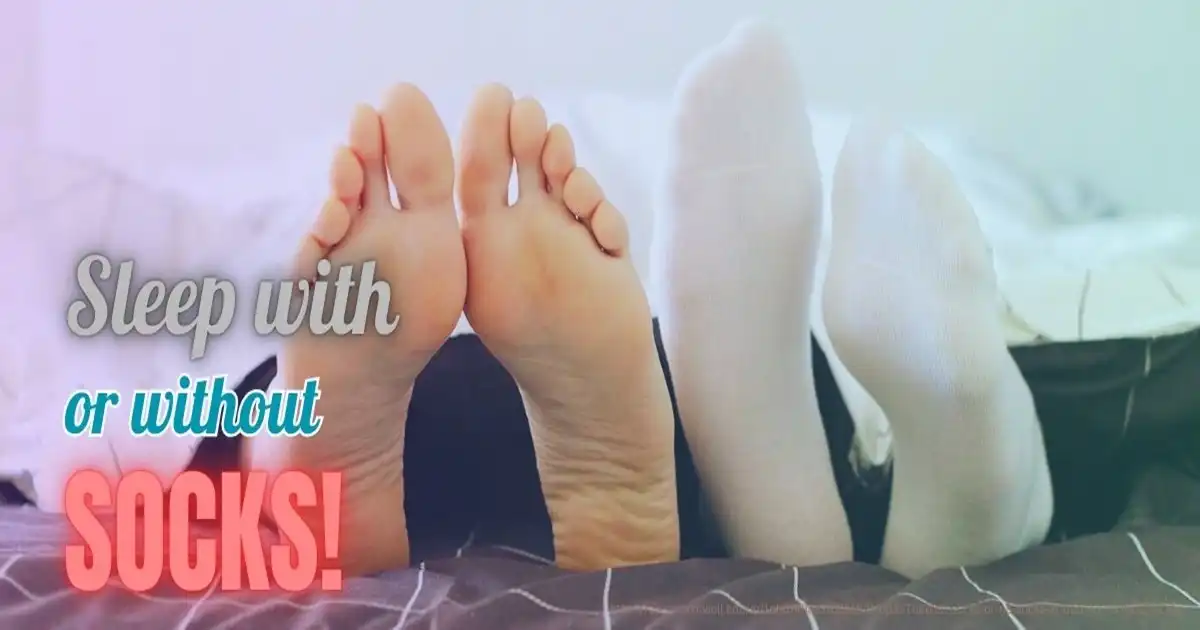
Sleep with or Without Socks?

Sleep with or Without Socks?

Key Takeaways!

  1. Sleeping with socks can help you fall asleep faster
  2. Socks may help reduce insomnia symptoms
  3. Benefits of sleeping with socks
  4. Choosing the right socks
  5. Alternative ways to warm your feet
  6. Potential side effects of sleeping with socks
  7. The science of socks and sleep
  8. Halloween sales offers

The Great Sock Debate: Do You Sleep with Socks or Without?

Alright, let’s get real: Are you team socks or team no socks when it comes to sleeping? Before you pick a side, let’s dive into the pros, cons, and some surprising science behind sleeping with or without socks. Whether you’re someone who bundles up like it’s the Arctic or enjoys the freedom of bare toes, this one’s for you. So, grab a warm blanket (or not), and let’s explore this funky yet fascinating topic—does sleeping with socks really make a difference to our sleep quality?

Why Are We Even Talking About Socks?

It might sound a little funny, but there’s a lot more to socks and sleep than just keeping your feet warm. Believe it or not, the simple act of wearing socks to bed can trigger physical changes in your body that lead to better sleep and relaxation. Yes, really! But, like most things in life, there are pros and cons. So, what’s the deal? Does wearing socks improve your “healing sleep,” or could it be causing side effects that disrupt your snooze time?

Sleep with Socks: The Science-Backed Benefits

  1. Helps You Fall Asleep Faster

One of the coolest (pun intended) things about sleeping with socks on is how it helps you fall asleep quicker. By warming your feet, you kickstart a process called distal vasodilation. This basically means that the blood vessels in your hands and feet dilate, increasing blood flow and helping your body cool down faster—an essential step for falling asleep. Studies have shown that people who wear socks to bed fall asleep 7.5 minutes faster, sleep longer, and wake up less frequently during the night. Who wouldn’t want an extra 32 minutes of sleep?

  1. Regulates Body Temperature

Let’s face it—finding that perfect sleep temperature is a struggle. Wearing socks helps by regulating your body’s temperature, making it easier to relax into sleep mode. When your feet are warm, your body doesn’t have to work as hard to balance out your core temperature, resulting in deeper, more restorative sleep.

  1. Improves Sleep Quality

Not only can sleeping with socks help you doze off faster, but it also improves your overall sleep efficiency. If you’re one of those people who toss and turn, trying to find a comfortable position, socks might be your secret weapon. Warm feet signal to your body that it’s time to sleep, leading to a higher percentage of the time you spend in bed actually sleeping.

The Downside of Sleeping with Socks

But hold up—before you rush off to grab your fluffiest pair of socks, let’s talk about the potential downsides.

  1. Overheating and Discomfort

As much as socks can help regulate your body temperature, there’s a fine line. Wearing the wrong kind of socks (we’re looking at you, thick wool socks!) in a warm room can cause you to overheat, making it harder to stay asleep. And if you’re someone who naturally runs hot, this could backfire, disrupting your healing sleep and leaving you groggy the next day.

  1. Potential Side Effects

There’s a question that pops up quite often—Does wearing socks while sleeping cause eye problems? The answer is a resounding “no.” Wearing socks doesn’t directly affect your eyes or brain. But, wearing too tight or restrictive socks could impact circulation, which might make you uncomfortable, leading to restless sleep. Always opt for breathable, loose-fitting socks to avoid this.

  1. Not for Everyone

Socks don’t work for everyone. For some people, wearing socks in bed feels restrictive or even claustrophobic. If socks keep you awake because they feel itchy or uncomfortable, ditch them! Sleep is highly personal, and you should do whatever works best for you.

Sleep Without Socks: The Barefoot Advantage

Now, if you’re team no-socks, don’t worry—there are plenty of reasons to embrace bare feet at night.

  1. Freedom and Comfort

Many people just feel more relaxed without the restriction of socks. The freedom of letting your feet “breathe” might be the thing that helps you unwind. Plus, sleeping without socks can help prevent overheating, especially in warmer climates.

  1. No Sock-Related Discomfort:

Let’s face it, not all socks are created equal. Some can be too tight, itchy, or just plain uncomfortable. If that’s the case, forcing yourself to wear socks could do more harm than good. Comfort is key when it comes to good sleep, so if socks don’t work for you, don’t sweat it (literally). You can still enjoy sleep and relaxation without them.

  1. Promotes Natural Cooling

Without socks, your body uses your feet as a natural way to release heat, which can be great for cooling down after a long day. This natural cooling process can mimic the effects of distal vasodilation but without the added fabric on your feet.

Pros and Cons of Sleeping with Socks On

Just to make things easier, here’s a quick breakdown of the pros and cons of sleeping with socks on:

Pros:

  • Helps you fall asleep faster.
  • Improves sleep quality and efficiency.
  • Regulates body temperature.
  • May reduce symptoms of insomnia.

Cons:

  • Can cause overheating if the socks are too thick or the room is warm.
  • Might feel uncomfortable or restrictive for some.
  • Doesn’t work for everyone, especially older adults with sleep disorders.

Can Socks Improve Your Sleep Hygiene?

Yes, absolutely! Sleep hygiene isn’t just about setting the perfect temperature or having blackout curtains—it’s about creating a whole bedtime routine that helps you wind down. Wearing socks can become a part of your sleep hygiene routine, especially if it helps you fall asleep faster. Pair it with a calming pre-bedtime ritual like reading, journaling, or a warm bath, and you’re on your way to better sleep.

Does Sleeping with Socks Affect the Brain?

A hot question floating around the internet is whether sleeping with socks affects your brain. While there’s no direct impact on brain function, improving sleep quality by wearing socks can benefit your cognitive health. Better sleep leads to sharper focus, improved memory, and a more refreshed brain overall. In short, if socks help you sleep, they’re helping your brain too!

Halloween Sale Sneak Peek: Get Cozy for Less!

Here’s something spooky good—many brands offer killer deals on cozy sleep essentials during Halloween sales. Whether you’re looking for the softest socks, a warm blanket, or even a new mattress to maximize your comfort, now’s the time to shop smart and grab those savings!

  • GhostBed offering 50% OFF on Adjustable Base Bundles:

Known for its cooling technology and adjustable beds, GhostBed is running early promotions for Halloween and beyond. They offer discounts on bundles, mattresses, and pillows, including the popular GhostPillow and the GhostBed Luxe

The Verdict: To Sock or Not to Sock?

So, what’s the final answer? Well, it depends on you! Sleeping with socks has undeniable benefits, from falling asleep faster to enhancing relaxation. But if you’re someone who overheats or just loves the feeling of cool sheets on your toes, then skipping the socks might be better. The key is finding what makes you feel the most comfortable and well-rested. Whether you’re rocking socks or going barefoot, the ultimate goal is to create a sleep routine that promotes healing sleep and leaves you feeling refreshed.

How to Warm Your Feet Without Socks

If you’re team no socks but still want to enjoy the benefits of warm feet, there are other tricks you can try:

  1. Take a Hot Bath:

A hot bath before bed doesn’t just feel luxurious—it also helps warm up your extremities, which triggers that same vasodilation process we mentioned earlier. Plus, who doesn’t love a relaxing soak?

  1. Foot Baths:

If a full bath isn’t your thing, a simple foot bath can do the trick. Just soak your feet in warm water for 10–15 minutes before bed and you’ll feel the warmth spread through your body.

  1. Hot Water Bottle or Heating Pad:

Place a hot water bottle at the foot of your bed or use a heating pad to keep your toes toasty. Bonus: you won’t have to worry about socks slipping off during the night!

  1. Extra Blankets:

Throw an extra blanket over your feet, especially during those cold months. This gives you the freedom of bare feet while keeping them warm.

Wrapping It Up: Sleep Your Way!

At the end of the day (literally), whether you sleep with or without socks is entirely up to you. Both options have their own sets of pros and cons, but the main thing is finding what works best for your unique sleep needs. So, next time someone asks you if socks belong in bed, you’ll have all the facts to back up your answer—healing sleep and all! Browse on to Smartmattressbuy.com for more such funky information on Sleep and Sleep accessories.

P.S. Don’t forget to check out those Halloween sales—your feet will thank you later!

Disclaimer: The information provided in this blog is for general informational purposes only and should not be considered medical advice. Always consult with a healthcare professional before making changes to your sleep habits or routines, especially if you have existing health conditions. Individual preferences and experiences with sleep may vary. The potential benefits and drawbacks of sleeping with socks are based on limited scientific research, and results may differ from person to person.

FAQs on Sleep with or without Socks

  1. Is it good to sleep with your socks on?

Sleeping with socks can be safe but may pose risks if the socks are too tight or made from non-breathable material. Tight socks can disrupt circulation, while non-breathable socks can lead to overheating or moisture buildup, increasing the risk of foot health issues like athlete’s foot and interrupting sleep.

  1. What percentage of people sleep with socks on?

In the U.S., about 64% of adults wear socks at home. When it comes to sleeping, a survey shows that 63% of people do not sleep with socks, 25% do so occasionally, and 11.5% regularly wear socks to bed.

  1. Does wearing socks to bed help neuropathy?

For individuals with neuropathy, wearing soft socks can help reduce discomfort from the touch of sheets and blankets. Diabetic socks, which are available in most drugstores, are often recommended to provide relief for foot pain at night.

  1. Why wear toeless socks to bed?

Toeless grip socks can keep your feet warm without overheating, while offering extra grip if you need to get up during the night for water or a bathroom visit.

  1. Why is it not healthy to sleep with socks?

Sleeping with tight socks may restrict blood flow, increasing the risk of foot pain, slow-healing injuries, and infections, particularly if circulation is already compromised.

  1. What kind of socks are best for sleeping?

The best socks for sleeping are made from materials like Merino wool, Viscose, cotton, cashmere, or polyester. Sleep socks usually contain a blend of these materials, providing stretch, softness, and comfort.

  1. Should you wear support socks to bed?

Wearing over-the-counter compression socks at night isn’t generally beneficial and may damage your skin if worn too long. However, if prescribed by a doctor for medical reasons, you may be advised to wear compression stockings overnight.

  1. Does wearing socks to bed improve circulation?

Yes, wearing socks to bed can warm your feet, improving blood circulation and helping lower your core body temperature. This signals your body to prepare for sleep and supports optimal blood and oxygen flow, benefiting overall health.

  1. Side Effects of Wearing Socks While Sleeping

Wearing tight socks during sleep can reduce blood circulation and may lead to higher blood pressure over time due to restricted blood flow. It’s important to choose properly fitting socks.

  1. Does wearing socks to sleep affect the brain?

No, wearing socks to bed doesn’t negatively impact the brain. In fact, a 2007 study from the Netherlands Institute for Neuroscience found that people who wore socks to bed fell asleep faster, as warm feet help signal the body to lower its core temperature, promoting faster sleep.

Sleep Deeply This Halloween with Casper, the Friendly Ghost!

Sleep Deeply This Halloween with Casper, the Friendly Ghost!

Halloween is a time for plenty of spooky fun. The days grow shorter and the nights become longer. It’s an opportunity to focus on what really matters: a good sleep.

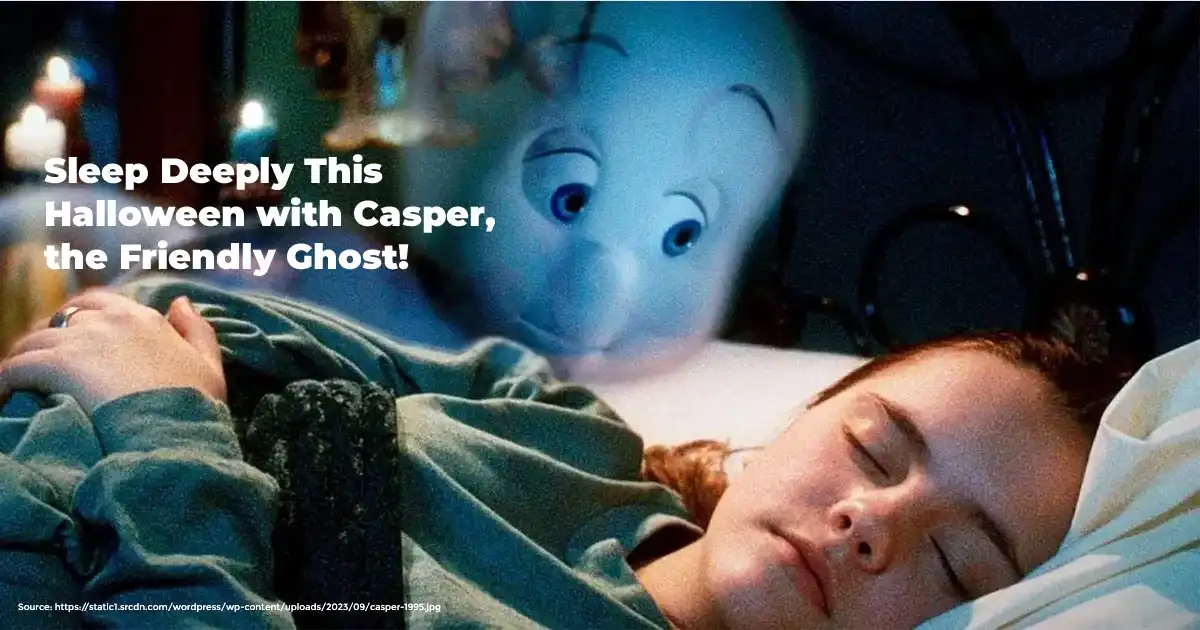
This Halloween, let’s welcome the friendly spirit of Casper. Casper, the Friendly Ghost, not only entertains but also reminds us of the importance of sleep.

Today, we will explore how you can sleep deeply this Halloween with Casper. Delve into the world of the Casper ghost, and discover some of the best Casper mattresses. It can help you sleep peacefully.

Keep reading!

The Importance of Sleep

Before you dive into Halloween sales and festivities, let’s take a moment to understand why sleep matters.

Quality sleep is crucial for both physical and mental health. It affects our mood and cognitive abilities. Here are some key benefits of sleep:

  • Physical Health: Good sleep boosts your immune system. It helps your body fight off illnesses.
  • Mental Clarity: Sleep improves concentration and cognitive function. It allows you to perform better in daily tasks.
  • Emotional Balance: Adequate sleep helps regulate emotions. It reduces stress and anxiety levels.
  • Weight Management: Poor sleep can disrupt hormones that control appetite, leading to weight gain.

Want to improve your sleep? Read 21 effective sleep tips!

With Halloween around the corner, good sleep habits are important. It keeps your energy levels high for all the spooky fun!

What if I told you that there’s a friendly ghost who can help you sleep better? Let me tell you about Casper ghost in detail!

Casper the Friendly Ghost

Casper the Friendly Ghost

A Beloved Character

Casper, the Friendly Ghost, is a classic character. Casper has entertained audiences since his creation in the 1930s. His friendly and charming personality makes him a beloved figure.

One of the most memorable portrayals of Casper is in 1997. It is in a direct-to-video film Casper: A Spirited Beginning. In this film, Casper is depicted as a kind and helpful ghost. He assists people in overcoming their fears and finding comfort.

Casper and Sleep

In Casper: A Spirited Beginning, Casper’s mission is to help children and adults to find peace and rest. This message aligns perfectly with sleep. The film illustrates the importance of feeling safe and secure. It helps both in life and during sleep.

Casper’s friendly nature serves as a reminder that sleep doesn’t have to be frightening. Sleep can be comforting and restful.

Similarly, Casper mattresses are designed to create a peaceful sleep environment. It helps you feel secure and comfortable.

Let us know more about Casper mattresses and why you need them!

Why Choose a Casper Mattress?

Casper mattresses are engineered with advanced materials. Here are some key features that make them stand out:

  • Adaptive Foam: Casper mattresses feature a combination of foam. It provides pressure relief and support. The foam adapts to your body’s shape while keeping you cool throughout the night.
  • Zone Support: With a zoning feature, Casper mattress offers firm support. It provides softness where it counts, such as your shoulders and hips.
  • Breathable Design: The breathable materials allow for airflow. Ultra-breathable open-cell foam keeps you cool and comfortable. It is especially important when you’re bundled up in Halloween costumes!
  • Durability: Designed to last, Casper mattresses come with a 10-year warranty. It ensures that your investment in good sleep is protected.

Do you know many celebrities love Casper mattresses?

Here are some of the best Casper mattresses for you this Halloween! Have a look!

Best Casper Mattresses

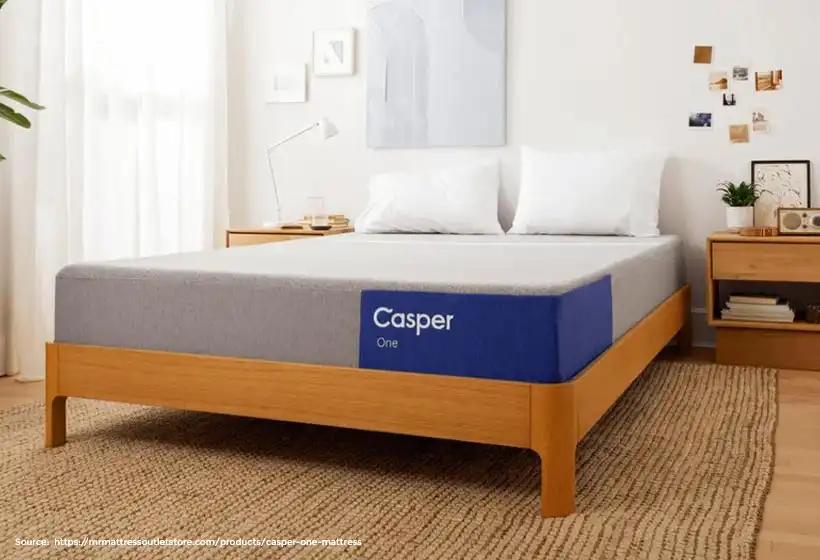
1. Casper The One Mattress

Casper The One Mattress

  • Casper The One Mattress is a premium all-foam mattress. With a medium-firm feel, it offers a balance of support and responsiveness.
  • The mattress is suitable for back and stomach sleepers. It has a four-layer construction.
  • The mattress features a breathable top foam layer to prevent overheating, memory foam to cradle your body, and a durable core to prevent sagging.
  • The soft-knit cover adds to its cozy feel.

2. Casper Dream Mattress

  • Casper Dream Hybrid Mattress gives you the sleep you’ve been dreaming of.
  • Its hybrid construction combines responsive springs with breathable, zoned foam for a balanced, supportive feel.
  • With Zoned Support, it ensures proper spinal alignment. The mattress offers softer foam around the shoulders and firmer foam for the hips and lower back.
  • This mattress helps reduce tossing and turning with its pressure-relieving foams.
  • Dream Hybrid Mattress is suitable for all sleep styles.

3. Casper Snow Mattress

  • Casper Snow Mattress is a hybrid memory foam bed. It is designed for hot sleepers who want a cool, restful night.
  • Equipped with Snow Technology, it delivers over 12 hours of continuous cooling.
  • The mattress features phase change foam and 3 Heat Delete Bands.
  • The mattress features zoned support. It combines pressure-relieving memory foam and supportive coils.

4. Casper Dream Max Mattress

  • Casper Dream Max Hybrid Mattress offers relief from aches and pains. The mattress features an innovative ergonomic design.
  • Five layers, including precisely cut foam and responsive coils, cradle your body.
  • The medium-soft mattress promotes better airflow with ultra-breathable materials.
  • Its hybrid construction combines pressure-relieving foam with durable springs.

5. Casper Snow Max Mattress

  • Casper Snow Max Mattress is a hybrid mattress. It delivers maximum cooling and support for deeper sleep all night long.
  • The mattress features Snow Technology. It ensures cooling from the moment you lie down until morning. The mattress includes Heat Delete Bands that actively remove excess heat.
  • With a medium-soft, conforming feel, this mattress is good for all sleep styles.
  • Its ergonomic design offers targeted support with pressure-relieving foams. The springs alleviate aches and pains.

For more information, read our detailed Casper Snow Max mattress review!

As we prepare for Halloween, many people look forward to parties, costumes, and candy. However, the excitement can also lead to disrupted sleep schedules.

Here are some tips for ensuring a restful night during this season:

Tips for Rest After Spooktacular Halloween Party

  1. Stick to a Sleep Schedule

Try to maintain a consistent sleep schedule. Even during the Halloween festivities, go to bed and wake up at the same time. It helps regulate your body’s internal clock.

  1. Create a Relaxing Bedtime Routine

Establish a pre-sleep routine. This could include activities such as reading a book or practicing relaxation techniques. Keep screens away an hour before bedtime.

  1. Limit Sugar Intake

While Halloween is known for its sweet treats, be mindful of your sugar consumption. Sugary snacks can cause spikes in energy. It can make it harder to fall asleep.

  1. Set Up a Comfortable Sleep Environment

Make your bedroom a sleep sanctuary. Keep the room dark, cool, and quiet. Invest in comfortable bedding and a good mattress.

As Halloween approaches, many retailers offer special promotions and sales. It is a time to invest in your sleep. While Casper may not have a Halloween sale, there are plenty of opportunities. Score great deals on mattresses and sleep products from various brands.

Halloween Sale: Embrace Comfort

  • Explore Mattress Sales

Research online deals. Many online retailers run promotions during Halloween. Take advantage of these deals to find the best mattress that fits your needs and budget.

  • Visit Local Stores

Check out local mattress stores to see if they have Halloween-themed sales. Sometimes, visiting the store allows you to try out different mattresses before making a decision.

  • Bundle Offers

Some brands offer bundle deals that include accessories like pillows, sheets, and mattress protectors. This can be a great way to save money while enhancing your sleep experience.

  • Consider Financing Options

If you find a mattress you love but are concerned about the price, explore financing options. Many retailers offer payment plans that can help you manage your budget while getting the sleep you deserve.

Visit our coupon page to get Halloween sales and earn discounts!

This Halloween, celebrate with friends and family. Don’t forget the importance of quality sleep. Let Casper, the Friendly Ghost, remind you of the comfort and peace. Choose a Casper mattress and make your well-being a priority.

Sleep off the spooks and wake up refreshed!

Strange Celebrity Sleep Story: Secrets Revealed!

Secret Insider to the Strange Celebrity Sleep Routine

Key Takeaways

  1. Celebrities’ Sleep Habits Are Unique: Many celebrities adopt unusual Sleep schedules to maximize productivity, performance, or comfort.
  2. Different Sleep Schedules
  3. Da Vinci Sleep Schedule: Inspired by Leonardo da Vinci, this polyphasic schedule involves multiple 20-minute naps every 4 hours, aimed at increasing work hours.
  4. Celebrity Sleep Story Examples:
  • Elon Musk sleeps 6 hours a night, often pulling all-nighters for work.
  • Cristiano Ronaldo uses a structured sleep schedule with 90-minute cycles.
  • The Rock and Mark Wahlberg wake up extremely early, sleeping only a few hours a night.
  • Eminem blocks out light with tin foil and uses white noise to sleep better.
  1. Custom Sleep Environments: Some celebrities create special environments for optimal sleep—like Tom Cruise’s “snoratorium” or Michael Phelps’ high-altitude sleep chamber.
  2. Polyphasic Sleep Schedules: While polyphasic sleep schedules like Uberman and Da Vinci sound intriguing, research is limited, and long, uninterrupted sleep is still recommended for most people.

Why Do Some Celebrities Have Such Strange Sleep Schedules?

Have you ever wondered why certain celebrities seem to run on completely different schedules than the rest of us?

While we struggle to get a solid eight hours of sleep, some of the world’s most famous individuals are doing things a little… differently. From polyphasic sleep schedules to blackout curtains and even building custom sleep chambers, the strange celebrity Sleep schedule might just make you question your own bedtime habits. Let’s get indulged in their sleep story, or we can precisely say sleep stories by celebrities. 

What Are These Strange Celebrity Sleep Schedules?

Many of us take extra measures to ensure we get that perfect night’s sleep. Whether it’s a white noise machine, a high-end mattress, or blackout curtains, we do our best to catch those zzz’s. But some celebrities take sleep to a whole new level. From polyphasic sleep schedules to using extreme techniques like the Uberman sleep cycle, these strange routines are not for the faint of heart.

But why? Why do some celebrities feel the need to mess with their sleep so much? 

Types of Strange Sleeping Routines Celebrities Follow

When we hear about strange sleep habits, we often think of those who barely sleep at all. But it’s more complex than just cutting back on hours. Some celebrities adopt unusual sleep schedules for various reasons—ranging from maximizing productivity to fine-tuning their bodies for peak performance.

  1. The Uberman Sleep Cycle

One of the most extreme sleep schedules out there is the Uberman sleep cycle. It involves taking six 20-minute naps spaced evenly throughout the day. That’s just two hours of sleep in total over 24 hours! It’s one of the polyphasic sleep schedules, which means people sleep in short intervals multiple times a day.

  1. Biphasic Sleep

Unlike the Uberman, biphasic sleep splits sleep into two parts. Some celebrities swear by this schedule, where they sleep in two distinct blocks: one during the night and another nap during the day. Historical figures like Winston Churchill practiced this, taking a long nap every afternoon. This strange celebrity Sleep schedule isn’t too far from how many of us feel after a heavy lunch!

  1. Da Vinci Sleep Schedule

Named after the genius himself, Leonardo da Vinci, this sleep schedule follows a pattern of napping for 20 minutes every four hours. Da Vinci was said to follow this polyphasic sleep schedule to make the most out of his creative and working hours. Though not many follow this nowadays, it’s an interesting example of how far some have gone for productivity.

  1. Polyphasic Sleep Schedule

In general, polyphasic sleep schedules are any routines where sleep is broken up into more than two periods throughout the day. This is common in animals but much less so in humans. However, some famous personalities claim it helps them stay sharp and productive. It’s strange, but these celebrities might be onto something—or maybe they just have superhuman willpower! 

10 Celebrities and Their Insane Sleep Habits

So, what are some of the strangest Sleep schedules out there? Let’s dive into some of the most well-known celebrities who have pushed the boundaries of sleep.

  1. Elon Musk

Elon Musk, the mind behind Tesla and SpaceX, claims he only sleeps about six hours a night. Despite juggling multiple billion-dollar companies, he has pulled all-nighters when big projects are on the line. Talk about dedication! But is it sustainable? Musk’s strange Sleep schedule might be proof that even the most innovative minds need a solid (if short) break.

  1. Cristiano Ronaldo

Ronaldo’s approach to sleep is very structured. He sleeps a total of 7.5 hours but splits it into five 90-minute cycles throughout the day. He even works with a sleep coach to make sure he’s maximizing his rest for optimal performance on the field. While not exactly a polyphasic sleep schedule, it’s certainly a strange celebrity Sleep schedule!

  1. Dwayne “The Rock” Johnson

The Rock is a force of nature when it comes to fitness and work ethic. He wakes up at 3:30 AM every day, giving him only around three to five hours of sleep each night. He claims this allows him to stay ahead in his career and fitness game. While most of us are still in dreamland, he’s out there crushing it!

  1. Mark Wahlberg

Another early riser, Mark Wahlberg, is known to wake up at 2:00 AM and hit the gym. His bedtime? 7:30 PM. This bizarre routine may seem a little extreme, but it fits his intense workout regimen and busy Hollywood schedule. Would you give up your evenings to follow this strange sleep habit?

  1. Eminem

The rapper Eminem has a unique trick to help him sleep: He covers his bedroom windows with tin foil to block out all light. He also falls asleep to the sound of white noise playing on the television. This strange celebrity Sleep schedule ensures that his environment is perfectly tuned to promote the best rest possible.

  1. Tom Cruise

Tom Cruise, famous for his action-packed roles, apparently needs a quiet environment to sleep. So much so that he built a “snoratorium” in his house—a soundproof chamber where he can sleep and snore without disturbing anyone. If you snore like Tom, maybe you need a room like this too! 

  1. Michael Phelps

Olympic legend Michael Phelps has a sleep chamber designed to simulate high altitudes of 8,000-9,000 feet. This forces his body to work harder and provides more oxygen to his muscles, even when he’s resting. It’s a fascinating routine aimed at optimizing his athletic performance. The next time you’re trying to catch some zzz’s, think about how Phelps is literally training his body in his sleep.

  1. Arianna Huffington

The founder of The Huffington Post, Arianna Huffington, has a more soothing approach to sleep. She turns off all her devices and enjoys an Epsom salt bath before drawing her blackout curtains and reading some poetry or philosophy. Sounds relaxing, right? This is one strange celebrity Sleep schedule we could all try!

  1. Winston Churchill

Winston Churchill was a biphasic sleeper, taking a two-hour nap every day around 5 PM with a glass of whiskey. After that, he worked until the early hours of the morning, then went back to bed for another five hours. Talk about breaking up your day in a truly unusual way!

  1. Mariah Carey

Mariah Carey requires 15 hours of sleep each night to keep her voice in top condition. Along with that, she surrounds her bed with 20 humidifiers to create a steam room effect. Talk about extra! But hey, if it helps her hit those high notes, why not?

What Can We Learn From These Sleep schedules?

These strange celebrity Sleep schedules are more than just bizarre habits. They show that sleep isn’t one-size-fits-all. While most of us adhere to a monophasic sleep schedule—one long block of sleep—others, like Churchill or Ronaldo, split their sleep into multiple cycles. It depends on your lifestyle, your needs, and sometimes your career.

Polyphasic Sleep Schedules: Are They Worth Trying?

For those of us curious about maximizing productivity, polyphasic sleep schedules, like the Uberman sleep cycle or Da Vinci sleep schedule, sound intriguing. But are they healthy?

Research on polyphasic sleep is still quite limited, and most experts agree that our bodies are naturally wired for longer, uninterrupted periods of sleep. However, for those like Elon Musk or Cristiano Ronaldo, splitting sleep into smaller chunks could provide a mental edge or fit better into their packed schedules.

Sleep Stories by Celebrities

When it comes to falling asleep, few things are as comforting as being lulled into a peaceful slumber by a good story. Enter the world of Sleep Stories, a growing trend where celebrities lend their soothing voices to help people relax and unwind. Whether through meditation apps, Audible audiobooks, or YouTube, Sleep Stories by celebrities have become a favorite bedtime routine for many. With the stresses of modern life, these tales can make drifting off to sleep much easier.

With more than 40% of people experiencing sleep issues, celebrity sleep stories have become increasingly popular. Their familiar voices, combined with the calming nature of bedtime storytelling, provide a therapeutic escape. From Harry Styles to Matthew McConaughey, some of the world’s biggest stars have lent their voices to help people find peace in their bedtime routines.

Let’s explore some of the most notable Sleep Stories by celebrities available on platforms like YouTube.

  1. Jake Gyllenhaal narrates The Great Gatsby. His calm, steady tone makes this classic novel a perfect sleep aid.
  2. Nick Jonas takes listeners through The Perfect Swing, a short story about golf, while gently easing you into rest.
  3. Benedict Cumberbatch, known for his iconic role as Sherlock Holmes, narrates the timeless detective stories for a mysterious but soothing bedtime experience.
  4. Anne Hathaway brings her charm to The Wonderful Wizard of Oz, inviting listeners into a whimsical journey.
  5. Emma Thompson breathes life into Emma for a calming, historical escape before bedtime.

Guided Meditations by Celebrities

In addition to sleep stories, many celebrities offer guided meditations to help clear the mind before sleep. Some noteworthy mentions include:

  1. Russell Brand offers a series of guided meditations for beginners on YouTube, perfect for those new to mindfulness practices.
  2. Morgan Freeman, with his iconic voice, guides listeners to relaxation in his YouTube series Go To Bed.

How Celebrity Sleep Stories Can Help?

Listening to celebrity sleep stories can be transformative. It’s not just about falling asleep; it’s about reducing anxiety, calming the mind, and providing a comforting distraction. Whether through guided meditation or a simple bedtime story, these experiences help us relax after a long day and allow us to follow a more peaceful sleep schedule.

Smart Take! Sleep Your Way to Success.

If there’s anything these strange sleep habits of famous people teach us, it’s that sleep schedules should be personal. What works for Tom Cruise may not work for you. But if you’re struggling with your own Sleep schedule, it might be worth experimenting with small changes. Maybe try a biphasic sleep schedule or use blackout curtains like Eminem.

Finding the best Sleep schedule for you might take time, but once you do, you can improve not just your energy levels, but your overall performance, just like the celebs!

So, what kind of strange Sleep schedule do you think would work for you? Read more here at Smartmattressbuy.com

FAQSs on Strange Celebrity Sleep schedules

  1. Which artist had a strange sleep schedule?

Leonardo da Vinci followed a polyphasic sleep schedule, taking a 20-minute nap every four hours. Considering his immense talent across various fields—like painting, invention, architecture, and science—this unconventional routine seemed to have worked in his favor.

  1. Why do geniuses tend to sleep less?

Many high achievers believe staying ahead requires maximizing their waking hours. For them, cutting down on sleep feels essential, as they think it offers more time to focus on their pursuits.

  1. Who took 15-minute naps every four hours?

Leonardo da Vinci reportedly adopted a schedule where he would sleep for just 15 minutes every four hours. According to Claudio Stampi’s 1992 book Why We Nap, this routine totaled about 1.5 hours of sleep per day.

  1. How much sleep did Nikola Tesla get?

Nikola Tesla, much like Leonardo da Vinci, is said to have slept for just two hours each day. He followed a polyphasic sleep schedule, taking 20-minute naps every four hours, known as the Uberman sleep cycle.

  1. Which famous people only slept four hours?

Many historical figures were known for sleeping just a few hours each night. Thomas Edison reportedly slept around three to four hours, believing sleep was a leftover trait from our prehistoric days. Benjamin Franklin also had a strict schedule, typically allowing for just four hours of sleep.

  1. What was Leonardo da Vinci’s Sleep schedule?

Leonardo da Vinci followed the Uberman polyphasic sleep cycle, which meant taking 20-minute naps every four hours, resulting in only two hours of sleep per day. This schedule allowed him to work continuously on projects like painting the Mona Lisa.

  1. How many hours does Oprah sleep?

Oprah Winfrey is known for prioritizing her sleep. She gets a solid eight hours each night, typically sleeping from 10 PM to 6 AM. Oprah also balances her busy life by practicing meditation and journaling before bed.

  1. Was Einstein a polyphasic sleeper?

Some sources suggest that Albert Einstein followed a polyphasic sleep cycle, where he would stay awake for four hours, followed by 20-30 minute naps. If this was true, he would have slept around 2-3 hours in total over a 24-hour period.

  1. Is biphasic sleep healthy?

Biphasic sleep, which splits sleep into two segments per day, has been practiced across various cultures. Research shows it could improve productivity and enhance sleep quality for some individuals.

  1. What are the side effects of polyphasic sleeping?

Polyphasic sleep can lead to sleep deprivation, disrupt circadian rhythms, cause fragmented sleep, reduce sleep efficiency, and increase REM sleep deficiency. It may also trigger sleep inertia and other adverse effects on overall health.

Screaming at Night: My Sleep Story on Night Terror

Screaming at Night: My Sleep Story on Night Terror

Aaaah! The chilling scream pierces the silent night.

It shatters the calm like a ghostly wail from the shadows. My heart was racing. I was drenched in sweat. But it wasn’t I who screamed. It was someone else. Trapped in a terror too real to escape.

Night terrors! Haunted episodes that drag me into a world of fear. It can turn a peaceful sleep into a ghostly nightmare.

Imagine the helplessness of hearing someone scream. What is it like to be lost in a night terror? Why do they evoke such uncontrollable fear?

Let’s explore!

What are Night Terrors?

Night terrors are episodes of intense fear. They often involve confusion, increased heart rate, and difficulty waking up. These episodes usually occur during deep non-REM sleep. It occurs specifically during the first third of the night.

Night terrors are more common in children. However, adults can experience them too. The person experiencing a night terror may sit up, scream, or even appear awake. However, they are still asleep. They usually have no memory of the event when they wake up.

Night Terrors vs. Nightmares: What’s the Difference?

Many people confuse night terrors with nightmares. However, they are different phenomena. Here’s a quick comparison:

  • Nightmares: Occur during REM sleep. It typically involves distressing dreams. The person can often recall them upon waking.
  • Night Terrors: Occur during non-REM sleep. It involves intense fear without a clear dream narrative. The person usually does not remember the episode.

Night terrors tend to be more physically disruptive. Nightmares are mentally disturbing. Both can cause poor sleep quality. Even so, night terrors tend to involve more pronounced physical symptoms. It includes rapid breathing, increased heart rate, and sweating.

Curious to know more about types of sleep disorders? Read now!

The exact cause of night terrors isn’t fully understood. There are several factors that are believed to contribute. They are more common in children. Adults can also experience them.

Have a look!

Causes of Night Terrors

1. Genetic Factors

Night terrors may have a genetic component. Children whose parents experienced night terrors or sleepwalking are more likely to have similar episodes. This points to a possible hereditary link in some cases.

2. Sleep Deprivation and Fatigue

A lack of sufficient sleep or disrupted sleep patterns is one of the most common triggers. Sleep deprivation can lead to deeper, more prolonged stages of non-REM sleep. It increases the likelihood of a night terror episode.

3. Stress and Anxiety

Emotional stress and anxiety can be significant contributors to night terrors. High stress levels can impact sleep quality. For some individuals, this can manifest as night terrors. Stressors in daily life, including personal, academic, or professional pressures, can disrupt sleep patterns.

4. Fever and Illness

Children experiencing fevers or illnesses are more prone to night terrors. The body’s response to fever can disrupt normal sleep cycles. It makes night terrors more likely.

5. Medications

Certain medications can influence sleep patterns and trigger night terrors. It includes those affecting the central nervous system like antidepressants or antipsychotics. This is more common in adults than in children.

6. Sleep Disorders

Other sleep disorders like sleep apnea or restless leg syndrome can also contribute to night terrors. These conditions disrupt normal sleep patterns. It can lead to frequent awakenings. This may increase the likelihood of a night terror episode.

Do you have sleep apnea? Know the right mattress!

7. Environmental Factors

Sleeping in unfamiliar surroundings, loud noises, or bright lights can disturb sleep. It triggers night terrors. Even changes in room temperature can sometimes influence sleep cycles. It provokes the episodes.

Symptoms of Night Terrors

Night terrors are marked by several distinct symptoms. Some of which can be alarming to those witnessing an episode. However, it’s important to remember that the person experiencing a night terror is generally unaware of the situation. They do not remember it upon waking.

Common Symptoms Include:

  • Screaming or shouting
  • Sitting up in bed
  • Rapid breathing and elevated heart rate
  • Sweating
  • Wide-eyed expression or staring blankly
  • Thrashing, kicking, or moving violently
  • No memory of the event the next day

During a night terror, the person might appear to be awake. They are still asleep. They are often unresponsive to attempts to calm them down. While the episode typically lasts only a few minutes, it can be distressing for those nearby.

Night Terrors in Children

Night Terrors in Children

Night terrors are most common in children. It occurs particularly between the ages of 3 and 7. For parents, it can be extremely unsettling to witness their child having an episode. The child may scream, appear frightened, or thrash about violently.

Why Are Children More Prone to Night Terrors?

Children’s sleep patterns differ from those of adults. It includes longer periods of non-REM sleep in the early part of the night. This is when night terrors usually occur.

Furthermore, children’s brains may have more difficulty transitioning between sleep stages. It makes them more susceptible to sleep disruptions like night terrors.

How Should Parents Handle Night Terrors?

The best approach is often to avoid trying to wake the child during an episode. This can sometimes cause confusion and prolong the event.

Instead:

  • Ensure their safety: Remove any objects or items that could cause harm if the child thrashes about.
  • Remain calm: Children are often unaware of their night terrors. It is more distressing for the parents than for the child.
  • Let it pass naturally: Most night terror episodes will resolve themselves within 10 to 15 minutes.

If night terrors are frequent or severely disruptive, consult a healthcare provider. In some cases, cognitive-behavioral therapy (CBT) can help.

Night Terrors in Adults

Night terrors can also occur in adults. When they do, they are often associated with other underlying conditions or stressors.

Triggers for Night Terrors in Adults

Stress and Anxiety

  • Emotional and psychological stress plays a major role in adult night terrors.
  • Work pressures, relationship issues, or significant life changes can all be triggers.

Alcohol and Substance Use

  • Excessive alcohol consumption or the use of recreational drugs can disrupt sleep patterns.
  • It increases the likelihood of night terrors.

Sleep Disorders

  • Adults with untreated sleep disorders like sleep apnea.
  • They may be more prone to night terrors.

Mental Health Disorders:

  • Night terrors can also be linked to mental health conditions.
  • It includes depression, post-traumatic stress disorder (PTSD), or generalized anxiety disorder (GAD).

Managing Night Terrors in Adults

Managing night terrors in adults often requires addressing the underlying triggers. Strategies might include:

  1. Stress management techniques: Practicing relaxation exercises like yoga or meditation can reduce anxiety and improve sleep quality.
  2. Regular sleep schedule: Establishing consistent sleep habits can help regulate sleep cycles.
  3. Avoiding alcohol or stimulants: Reducing or eliminating alcohol and other substances that can disrupt sleep may minimize night terror episodes.
  4. Seeking professional help: If night terrors are linked to mental health disorders or significant stress, therapy or counseling may be beneficial.

Night terrors are typically diagnosed based on a description of the symptoms. It depends on an evaluation of the individual’s medical history. Hence, proper diagnosis is required.

Diagnosing Night Terrors

Diagnosing Night Terrors

Sleep Study (Polysomnography)

A sleep study, or polysomnography, involves monitoring a person’s brain waves. It monitors heart rate, breathing patterns, and body movements during sleep. This can help identify if there are any disruptions in sleep stages. It can recognize sleep apnea.

Treatment Options for Night Terrors

Night terrors often don’t require medical treatment, especially in children. They tend to resolve on their own as the child grows older. However, if night terrors are frequent or disruptive, there are various treatment options available.

1. Cognitive Behavioral Therapy (CBT)

  • CBT is a type of therapy that can help individuals manage stress and anxiety. Stress and anxiety are common triggers for night terrors.
  • CBT can help people develop healthier coping mechanisms for managing stress. This in turn can improve sleep quality.

2. Scheduled Awakenings

  • Scheduled awakenings can help prevent night terrors, particularly in children.
  • This technique involves waking the individual about 15 to 30 minutes before the time they typically experience a night terror.
  • This can help disrupt the sleep cycle and prevent the episode from occurring.

3. Medication

  • In some cases, particularly for adults, medication may be prescribed to help manage night terrors.
  • These may include antidepressants or benzodiazepines. It can help regulate sleep patterns and reduce the likelihood of night terrors.
  • However, medications are usually a last resort. It is only recommended when other interventions have not been effective.

4. Improving Sleep Hygiene

  • Maintaining a consistent bedtime routine and creating a comfortable sleep environment can improve sleep quality.
  • It can reduce the frequency of night terrors.

Some tips include:

  • Establish a consistent sleep schedule: Go to bed and wake up at the same time every day, even on weekends.
  • Create a relaxing bedtime routine: Engage in calming activities before bed, such as reading, listening to soft music, or practicing deep breathing exercises.
  • Limit screen time: Avoid using electronic devices before bed, as the blue light can interfere with the production of melatonin, a hormone that regulates sleep.
  • Keep the bedroom dark and cool: A comfortable sleep environment can help promote deeper, uninterrupted sleep.

When to See a Doctor?

Night terrors are usually not a cause for concern, especially in children. However, you should consider seeking medical advice if:

  • Night terrors occur frequently (more than once a week).
  • Episodes cause injury to the person or others.
  • The person is excessively tired during the day.
  • Night terrors continue beyond adolescence.
  • There are underlying health conditions or other sleep disorders.

As the moon crept higher, my nights became haunted. I screamed echoing through the shadows. My sleep became a battlefield. I fight against an invisible terror each night.

Night after night, I battled these invisible specters. No memory to hold onto, only the whispers. Night terrors are not mere nightmares, they are the unseen phantoms of the night.

So, next time you find yourself screaming at night, remember sometimes the real horror lies within your dreams.

And once the terror finds you…it never really leaves.

FAQs on Night Terror

  1. Why am I experiencing night terrors?

Night terrors are common in children and are often linked to separation anxiety. However, adults aren’t immune. Those with post-traumatic stress disorder (PTSD) or mood disorders may be more prone to night terrors. It is due to heightened stress and emotional triggers during sleep.

  1. What type of trauma can lead to night terrors?

Night terrors are often triggered by trauma. Post-traumatic stress disorder (PTSD) is a common cause. Those affected may experience intense sleep disruptions. Supporting a loved one in finding appropriate treatment for PTSD can help alleviate these symptoms.

  1. What are the night terror medications?

Medications are rarely used to treat night terrors, even in adults. However, if episodes are frequent or severe, consult a doctor. Your doctor may prescribe benzodiazepines, selective serotonin reuptake inhibitors (SSRIs), or tricyclic antidepressants.

  1. Can night terrors affect relationships?

Absolutely. The night terrors can create stress in relationships. This is especially true with partners who share a bed. The disruptive nature of episodes may lead to emotional strain. Open communication about night terrors can help ease the tension.

  1. Can night terrors be triggered by specific sounds or smells?

Yes, certain sensory inputs like loud noises or a familiar smell can trigger night terrors. These stimuli may disrupt the transition between sleep cycles. It’s a good idea to create a calming sleep environment.

Disclaimer

This content is for informational purposes only. It is not intended as medical advice. Always consult a healthcare professional for diagnosis and treatment of night terrors.

Zodiac Sign Sleep Tales: Star Wars-inspired Celestial Journey through the Galaxy of Sleep Habits!

Zodiac Sign Sleep Tales

Key Takeaways

  1. Zodiac Signs Sleep Habits
  2. 4 Zodiac Signs That Shine at Night:
  • Cancer: Ruled by the Moon, Cancers thrive at night, preferring to sleep in their cozy, private space.
  • Scorpio: Governed by Pluto, Scorpios embrace the darkness, making them most alive during nighttime.
  • Aquarius: Influenced by Uranus, Aquarians find solace and creativity during the quiet of the night.
  • Pisces: Guided by Neptune, Pisces are natural night owls, thriving in dream-like states and needing plenty of sleep.
  1. Zodiac Sign Sleep Needs: Different signs have varying sleep requirements. For instance, Taurus and Pisces tend to sleep more, while signs like Leo and Aquarius may require less sleep but still function well.
  2. Zodiac Signs and Mattress Recommendations
  3. Zodiac Signs and Compatibility
  4. Celestial Influence on Sleep

Zodiac Signs and Their Sleep Habits

In a galaxy far, far away, the stars twinkle, much like the personalities of the zodiac signs. Each star is unique, casting a different glow on the cosmic night, influencing the sleep and rest patterns of those born under them. From the fierce Leo with its regal slumber to the dreamy Pisces who floats between worlds in their sleep, the zodiac signs reflect our nocturnal journeys. So, buckle up for a cosmic ride through the night sky where we explore the different zodiac signs’ sleep habits, sleeping positions, and how each constellation shines in the realm of rest.

The Sleeping Stars: How Each Zodiac Sign Rests

Much like a constellation, each zodiac sign has its own story to tell about how it sleeps, the ideal mattress to cradle their dreams, and whether they embrace or resist the night. So, which zodiac sign sleeps the least? Or which zodiac loves to indulge in sleep? Read on as we dive deep into the starry heavens.

1. Aries: The Restless Warrior

Zodiac Sign Dates: March 21 – April 19

As a fire sign, Aries is full of energy, and sleep is often just a pit stop before the next big adventure. While they’re known for their fiery personality, Aries doesn’t need much rest.

  • Sleep Type: Toss-and-turn sleeper
  • Sleeping Position: The warrior in Aries often opts for a side-sleeping position, ready to leap into action at any moment.
  • Mattress Type: Aries needs a mattress that supports their active lifestyle. A hybrid mattress provides the perfect balance of comfort and support for their on-the-go life.
  • Mattress Brand: Aries needs a mattress that provides firm support and can withstand their active lifestyle. A brand that matches their dynamic energy is Purple Mattress. With its responsive, pressure-relieving grid, it keeps up with Aries’ fast-paced life and promotes restful sleep after long, adventurous days.

2. Taurus: The Sleepy Bull

Zodiac Sign Dates: April 20 – May 20

Why do Taurus sleep so much? It’s because Taurus, ruled by Venus, loves to indulge in luxury and comfort, making sleep one of their favorite pastimes. They’re known to cherish every moment under the covers, making them one of the zodiac signs that sleeps the most.

  • Sleep Type: Deep sleeper
  • Sleeping Position: Like the grounded bull, Taurus prefers to sleep on their back, basking in comfort.
  • Mattress Type: A memory foam mattress suits Taurus best, allowing them to sink into a bed that feels like a warm embrace.
  • Mattress Brand: Known for their love of luxury and comfort, Taurus will appreciate Tempur-Pedic. This mattress provides the plush feel and pressure relief that Taurus craves for those long, cozy hours of sleep. It’s indulgent and perfect for the sign that treasures rest and relaxation.

3. Gemini: The Midnight Thinker

Zodiac Sign Dates: May 21 – June 20

Gemini’s mind never stops racing, even at night. They’re the ones to scroll through their phone or read until the wee hours. Gemini often needs less sleep but makes up for it with naps during the day.

  • Sleep Type: Light sleeper, prone to wakefulness
  • Sleeping Position: True to their twin nature, Geminis shift positions constantly, from side to stomach and back again.
  • Mattress Type: A responsive foam mattress that adjusts to every twist and turn will keep Gemini cozy through the night.
  • Mattress Brand: Geminis thrive on variety and flexibility, so a mattress with adjustable firmness like the iSense Adjustable Mattress suits them best. It allows Geminis to customize their sleep experience based on their ever-changing moods and preferences.

4. Cancer: The Moon Child

Zodiac Sign Dates: June 21 – July 22

Being ruled by the moon makes Cancer one of the most nocturnal signs. They love their space, and their sleep often reflects their emotional nature. Sleep is their retreat from the world.

  • Sleep Type: Deep sleeper, but sensitive to emotional dreams
  • Sleeping Position: Cancer likes to curl up into a fetal position, much like the crab’s protective shell.
  • Mattress Type: A soft mattress with plush top layers mirrors their need for comfort and emotional security.
  • Mattress Brand: Cancers, being the ultimate homebodies, prefer the comfort of a nurturing sleep environment. Saatva Classic Mattress is ideal, providing a supportive yet cozy feel that makes Cancer feel safe and at home in their sleeping space.

5. Leo: The Sleeping King

Zodiac Sign Dates: July 23 – August 22

Leos sleep like royalty – they adore comfort and demand their sleep to be uninterrupted. Leo sleeping habits often revolve around power naps during the day to ensure their mane stays perfect.

  • Sleep Type: Sound sleeper, loves to dream big
  • Sleeping Position: Leos tend to sleep on their backs, like kings lying on their thrones.
  • Mattress Type: Only the best will do – a luxury pillow-top mattress gives Leo the regal comfort they desire.
  • Mattress Brand: Leos love to feel like royalty, so they need a mattress that reflects their majestic personality. Stearns & Foster Lux Estate mattress offers luxury, comfort, and durability, making it the perfect choice for this confident and glamorous sign.

6. Virgo: The Perfectionist Dreamer

Zodiac Sign Dates: August 23 – September 22

Virgos are highly attuned to their bodies, and sleep is a critical part of their meticulous routine. They need a sleep environment that’s perfectly curated.

  • Sleep Type: Light sleeper, striving for perfect rest
  • Sleeping Position: A Virgo often sleeps on their side in a neatly arranged bed.
  • Mattress Type: A latex mattress suits Virgo, offering a clean, hypoallergenic option that fits their desire for perfection.
  • Mattress Brand: Virgos value health, cleanliness, and precision. Avocado Green Mattress, with its organic and eco-friendly materials, aligns with Virgo’s love for purity and sustainability. It offers both support and a clean, natural sleep environment.

7. Libra: The Balancer of Sleep

Zodiac Sign Dates: September 23 – October 22

Ruled by Venus, Libras appreciate beauty, harmony, and balance, which extends to their sleep habits. They seek the perfect balance between too much and too little sleep.

  • Sleep Type: Peaceful sleeper
  • Sleeping Position: Libras enjoy sleeping on their backs, arms spread wide, balancing their surroundings.
  • Mattress Type: A medium-firm hybrid mattress fits Libra’s need for equilibrium between softness and support.
  • Mattress Brand: Libra, ruled by the scales, seeks harmony and balance in all things. Sleep Number mattresses are a great fit, as they allow Libras to adjust firmness on both sides, ensuring perfect equilibrium for them and their partner.

8. Scorpio: The Mysterious Sleeper

Zodiac Sign Dates: October 23 – November 21

Scorpio, ruled by Pluto, thrives in the darkness. They are the night’s ruler, fully embodying the phrase “nocturnal soul.” For Scorpios, nighttime is when they come alive, tapping into their deep, transformative energy. Scorpio loves the mystery and allure of the night.

  • Sleep Type: Deep sleeper, but intense dreamer
  • Sleeping Position: Scorpios often sleep on their stomachs, burrowed deeply into their beds like a secret.
  • Mattress Type: A cooling gel mattress helps Scorpios stay comfortable during their intense nighttime adventures.
  • Mattress Brand: Scorpios are deep, passionate sleepers who appreciate luxury and durability. Helix Midnight Luxe mattress, known for its premium support and plush feel, fits Scorpio’s intensity and desire for a transformative sleep experience.

9. Sagittarius: The Adventurous Sleeper

Zodiac Sign Dates: November 22 – December 21

Sagittarians love exploration, even in their dreams. They may not need a lot of sleep, but when they do rest, it’s to recharge for the next journey.

  • Sleep Type: Restless sleeper, dreams of adventures
  • Sleeping Position: Sagittarius tends to sprawl out in all directions, ready for whatever comes next.
  • Mattress Type: A firm mattress that supports their active body is perfect for this traveler.
  • Mattress Brand: Sagittarius needs a mattress that can adapt to their adventurous, on-the-go lifestyle. Leesa Hybrid Mattress offers versatility with its supportive foam and spring combination, keeping up with Sagittarius’ need for comfort without being tied down.

10. Capricorn: The Disciplined Sleeper

Zodiac Sign Dates: December 22 – January 19

Capricorns take their sleep seriously. They’re practical, hardworking, and know that good sleep is the key to productivity. How many hours of sleep does Capricorn need? At least seven hours, but never more than eight – Capricorns run like clockwork.

  • Sleep Type: Deep sleeper, sticks to routine
  • Sleeping Position: They usually sleep on their side or back, in a disciplined, minimalistic position.
  • Mattress Type: A medium-firm mattress aligns with their disciplined nature and need for comfort without extravagance.
  • Mattress Brand: Capricorns value structure and support, so Brooklyn Bedding Signature Hybrid provides the firmness and reliability that suits their hardworking, grounded nature. It’s durable, supportive, and built for the long haul—just like Capricorn.

11. Aquarius: The Lone Night Wolf

Zodiac Sign Dates: January 20 – February 18

Aquarians are unique and often prefer the solitude of the night to think, create, and reflect. Which zodiac sign sleeps the least? Aquarius, for sure – they often stay up late into the night.

  • Sleep Type: Light sleeper, filled with nocturnal inspiration
  • Sleeping Position: Aquarians typically sleep in a free-form position, changing often based on their independent thoughts.
  • Mattress Type: A customizable mattress, like those with adjustable firmness, is ideal for Aquarians who like things just the way they want them.
  • Mattress Brand: Aquarians love innovation and forward-thinking designs. Eight Sleep Pod Pro with its smart technology, temperature control, and sleep tracking features, matches Aquarius’ love for cutting-edge tech and their unique sleep preferences.

12. Pisces: The Dreamer

Zodiac Sign Dates: February 19 – March 20

Pisces live in a world of dreams, and sleep is their favorite escape. Why do Pisces sleep so much? Their ruling planet, Neptune, connects them to fantasy and imagination, which means they need plenty of rest to fuel their creativity.

  • Sleep Type: Deep sleeper, loves naps and late mornings
  • Sleeping Position: Pisces tend to sleep on their stomach, floating between the real world and their dreamscapes.
  • Mattress Type: A plush memory foam mattress is the ideal choice to help Pisces drift off into their dream world with ease.
  • Mattress Brand: Pisces need a mattress that supports their dream-like sleep state. The Nolah Signature 12” Mattress, known for its soft, pressure-relieving foam, is perfect for Pisces’ need for deep, restorative sleep that fuels their creativity.

4 Zodiac Signs That Shine When The Sun Goes Down

Some zodiac signs thrive when the moon rises. These signs are the true nocturnal creatures of the zodiac, coming alive in the calm and magic of the night. Let’s spotlight the four stars that shine the brightest when the sun dips below the horizon:

  1. Cancer – The Moon’s Guardian

Cancer finds peace at night, ruled by the very celestial body that governs the darkness. They relish the quiet hours to reflect on emotions and recharge their sensitive soul.

  1. Scorpio – The Dark Phoenix

No sign embraces the night quite like Scorpio. The midnight hours offer Scorpios a sense of power, introspection, and the chance to let their hidden sides thrive.

  1. Aquarius – The Night Owl Innovator

Aquarians are often awake when others are asleep, dreaming up new ideas, inventions, and plans. The silence of the night fuels their innovative spirit.

  1. Pisces – The Dream Weaver

The Pisces’ love for sleep and dreams makes them true night dwellers. They live in the liminal space between wakefulness and sleep, thriving as the world quiets down.

Smart Take: A Cosmic Sleep Awakening

Each zodiac sign holds a special relationship with sleep. Whether you’re a night owl like Cancer, embracing the moon’s glow, or an early riser like Aries, always ready for action, understanding your zodiac sign’s sleep habits can help you tailor your sleep environment. Consider your sign’s natural tendencies and choose a mattress that aligns with your unique needs.

Curious to explore how your zodiac sign influences your sleep habits? Dive deeper into the Tales of the Zodiac’s Nocturnal Stars! Let your zodiac guide your way to the perfect night’s rest! For more such sleep blogs browse on to Smartmattressbuy.com.

Disclaimer:

The sleeping habits of each zodiac sign discussed in this blog are inspired by astrological traits and should be viewed for entertainment and reflection purposes

FAQs!

  1. Which zodiac sign sleeps the least?

Aquarius and Aries are known to sleep the least. These signs tend to be more energetic and restless, preferring to stay active late into the night or wake up early to start their day.

  1. Which zodiac sign sleeps the most?

Taurus and Pisces are the zodiac signs that sleep the most. Taurus loves to indulge in comfort and relaxation, while Pisces, as dreamers, often need more sleep to recharge.

  1. Which zodiac signs get tired easily?

Pisces, Taurus, Cancer, and Libra are often prone to feeling sleepy. Whether they’re indulging in imaginative daydreams or taking a moment to recharge from life’s stresses, these signs truly appreciate the value of a good nap. So, if you catch them snoozing, don’t think they’re lazy – they’re just giving their body and mind the rest they need!

  1. Which zodiac signs love the night?

Certain zodiac signs are natural night owls, thriving in the late hours when the world is quiet. Aries, Taurus, and Gemini are among those who love staying up late, whether it’s to focus on projects, enjoy delicious food, or engage in stimulating conversations and intellectual pursuits. These signs feel most productive when the sun goes down.

  1. Why do Taurus sleep so much?

Taurus is ruled by Venus, the planet of luxury and comfort. As a result, they value rest and recuperation, making them more likely to indulge in long, restorative sleep.

  1. What is the typical sleep position of a Leo?

Leos are known for their regal and bold nature. They tend to sleep sprawled out, taking up space as they love to feel in control and confident, even during sleep.

  1. How many hours of sleep does each zodiac sign need?

While sleep needs vary for everyone, typically:

  • Taurus and Pisces: 8-10 hours.
  • Cancer and Scorpio: 7-9 hours.
  • Aries and Aquarius: 5-7 hours.
  • Leo and Sagittarius: 6-8 hours.
  • Virgo and Capricorn: 7-8 hours.
  • Gemini and Libra: 6-9 hours.
  1. Which zodiac sign has the most trouble falling asleep?

Gemini tends to struggle with sleep due to their restless mind. Their thoughts are constantly racing, making it hard for them to wind down at night.

  1. Do zodiac signs influence sleep quality?

Yes, zodiac signs can reflect certain personality traits that influence sleep quality. For example, water signs (Cancer, Scorpio, Pisces) may need a calming, peaceful sleep environment, while fire signs (Aries, Leo, Sagittarius) may have more restless sleep due to their active nature.

  1. What sleeping habits are common in Sagittarius?

Sagittarius often prefers freedom in everything they do, including sleep. They tend to have irregular sleep patterns, sometimes staying up late pursuing passions and other times sleeping in to recover from their adventures.

THE NUN: Know Their Mysterious Sleep Schedules

THE NUN: Know Their Mysterious Sleep Schedules

Imagine walking through silence. Dimly lit convent in the middle of the night, where shadows seem to move. The air feels heavy with mystery.

Nuns, known for their quiet and disciplined lives, have always fascinated us. Their strict routines, including their unusual sleep schedules, stand out.

It is much like the eerie atmosphere. Darkness hides secrets. Sleep habits of nuns carry an air of intrigue.

The movie, THE NUN, takes us into a world filled with supernatural fear. In real convents, daily lives of nuns revolve around devotion and rituals. It influences how and when they sleep.

Let’s explore the mysterious and sacred sleep schedules of nuns!

Before that, if you want to understand sleep habits of nuns, you must look back at the history of monastic life. Let’s find out!

What is the Historical Origin of Monastic Sleep Patterns?

As a way of life, monasticism began to grow in the early centuries of Christianity. The first monks and nuns lived very simple lives. Fasting for long periods of time, sleeping very little, and praying for long periods of time were part of their life.

Their goal was to give up all comforts of this world. They focus only on their spiritual journey.

In the third and fourth centuries, a group of early Christian hermits called Desert Fathers. They lived in the Egyptian desert. They thought that sleep was a sign of a weak body. So, they would often wake up in the middle of the night to pray.

This practice set the stage for what would later become the normal sleep routine for nuns.

Know more about the origin and purpose of the monastic movement!

Sleep schedule of nuns is deeply rooted in monastic traditions. Their day and night are divided between sleep and prayer. Let’s talk about their sleep schedule!

Sleep Schedules of Nuns

Sleep Schedules of Nuns

How Nuns Divide Their Day? The Canonical Hours

Sleep schedules of nuns revolve around Canonical Hours. These are specific periods of prayer. They provide the framework for the nun’s entire daily routine, including sleep.

The structure of Canonical Hours varies slightly among different religions. This ancient tradition goes back to the early centuries of Christian monasticism. The hours are as follows:

  • Matins (Vigils) – Midnight or very early morning
  • Lauds – Early morning, often around sunrise
  • Prime (optional) – Mid-morning
  • Terce – Midday (around 9 a.m.)
  • Sext – Noon
  • None – Mid-afternoon (around 3 p.m.)
  • Vespers – Early evening
  • Compline – Nightfall, before bed

Nuns’ sleep is often segmented around these times of prayer. Let’s explore how this schedule impacts their sleep patterns.

1. Nighttime Disruptions: Matins and Early Morning Lauds

The most unique aspect of a nun’s sleep schedule is the nighttime prayer known as Matins This prayer typically takes place in the middle of the night, often around 3 a.m.

It naturally disrupts a nun’s sleep. After finishing prayers, nuns might return to their cells (dormitories) for a few more hours of rest. They rise again for Lauds, the early morning prayer that takes place at or before sunrise. Hence, the nuns’ total amount of sleep is often split between the time before Matins and the period before Lauds.

This biphasic sleep pattern is a hallmark of monastic life. It sets it apart from typical continuous sleep most people experience.

2. The Evening Routine: Compline and Sleep

The nun’s sleep schedule begins with evening prayer. It is known as Compline. This prayer is held just before bedtime.

After Compline, nuns retire to their cells for sleep. The amount of rest they get before the first interruption for Matins can vary. It is usually between two to four hours. This is the first segment of sleep in their nightly routine.

The nuns aim to balance their need for rest with their spiritual obligations. It is often a shorter and more broken form of rest.

3. Daytime Rest: Naps and Short Breaks

Despite fragmented nighttime schedule, nuns may take short naps. These naps are often aligned with the periods between the daytime prayers. It is after Terce (mid-morning) or before Vespers (early evening).

These short periods of rest are not long enough. However, they help the nuns to maintain their energy levels throughout the day.

Unlike a traditional siesta, these naps are often very brief. It lasts 15-30 minutes. These are taken when time allows between prayers, work, and study.

In this way, the nuns’ sleep schedule is polyphasic. Their total sleep is spread across multiple segments throughout the day and night.

4. Special Religious Seasons: Adjustments to Sleep

During religious seasons like Lent or Advent, nuns may further adjust their sleep schedules These periods often require even more sacrifice. The nuns may sleep even less than usual.

During Lent, nuns may rise earlier for additional prayers. This reduces their total hours of sleep. This increased focus on prayer and spiritual discipline This can lead to a schedule where sleep becomes an even smaller portion of the day.

For more information, read about the superior sleep of healthy elderly nuns!

The Role of Sleep in Monastic Life Today

Sleep schedules of nuns have remained rooted in tradition. Many convents now allow nuns to get longer periods of sleep during the night. Though it is still fragmented by canonical hours.

The intensity of sleep schedule may also vary depending on religious order. It depends on the nun’s level of spiritual maturity.

Health Implications of The Nun’s Sleep Schedule

The fragmented sleep schedule of nuns raises questions about the health implications Interrupted sleep, as experienced by nuns, can lead to sleep deprivation. This may impact cognitive function, mood, and immune health.

However, nuns often report that their spiritual practices provide them with a sense of peace. It offsets any physical discomfort from lack of sleep. Their deep sense of purpose and inner calm may serve as protective factors.

To learn more about sleep and health, read on!

Comparing Sleep Schedules: Nuns vs. Laypersons

The average person’s sleep schedule is guided by circadian rhythm. Most people follow a monophasic sleep pattern. They sleep for one continuous period at night.

In contrast, nuns adhere to a biphasic or polyphasic sleep pattern. Nun’s sleep is broken into shorter segments throughout the day and night.

This difference highlights the unique nature of monastic life. While average person’s day surrounds work, family, and personal leisure, a nun’s day revolves around prayer.

THE NUN: A Journey Through Haunted Dreams

THE NUN: A Journey Through Haunted Dreams

THE NUN, directed by Corin Hardy, a chilling tale of faith and fear. The film features a cast, including Taissa Farmiga as Sister Irene, Demián Bichir as Father Burke, and Bonnie Aarons reprising her role as the sinister Valak, the demon nun.

While the movie captivates with its spine-tingling moments, it also highlights the rigorous lives of nuns. Strict schedules of prayer and devotion bind their lives.

Midnight vigils and early morning Lauds disrupts the sleep of nuns. This haunting portrayal immerses us in the eerie atmosphere of the film. It invites us to understand disciplined sleep schedules.

In the quiet solitude of convent life, sleep schedules of nuns remain a mystery. Their sacred prayers and rituals interrupt their sleep. While most of us chase uninterrupted sleep, nuns embrace the stillness of night. It deepens their connection with the divine.

So, the next time you settle into your evening routine, remember that somewhere, a nun is rising in the dark.

The mystery of nun’s sacred sleep, where devotion never sleeps!

Disclaimer

Sleep schedule of nuns is a unique practice. It roots in religious commitment. Do not replicate in your everyday life. If you are considering changes to your own sleep schedule or routine, please consult a healthcare professional.

Always prioritize your personal health and sleep needs over traditional practices that may not suit your lifestyle.

10 Best Pillows 2024

10 Best Pillows 2024

As a quality mattress is essential, the right pillow is just as important for good sleep. Over the years, I’ve tried many pillows. I have understood, that what works for one person might not work for another.

There are so many to choose from. That’s why I’m eager to show you a list of the best pillows. From soft, down-filled pillows to firm, solid memory foam options, you will get as per your need. It will help you find the one that will help you sleep better.

Find below a list of the 10 best pillows for 2024. Keep reading!

10 Best Pillows 2024: Top Picks

  • Saatva Latex Pillow – Best Overall
  • Brooklyn Bedding Talalay Latex Pillow– Most Comfortable
  • Helix GlacioTex™ Cooling Memory Foam Pillow – Best for Back and Stomach Sleepers
  • Layla Kapok Pillow – Best Luxury Pillow
  • Luxome LAYR Pillow – Best Luxury Pillow
  • TEMPUR-Cloud Pillow – Best Pillow for Back Sleepers
  • Puffy Pillow – Best King Size Pillow
  • Original Casper Pillow – Best Down Alternative Pillow
  • Tuft & Needle Original Foam Pillow – Best Foam Pillow
  • Coop Sleep Goods Eden Pillow – Best Hypoallergenic Pillow

Shopping Guide: 10 Best Pillows 2024

1. Saatva Latex Pillow

Saatva Latex Pillow

Features

Material: Latex

Height: Standard Loft/High Loft

Size: Standard/Queen/King

Description

Saatva Latex Pillow offers luxurious, hotel-quality comfort. Its breathable, hypoallergenic shredded natural latex core provides responsive support. The plush, down-like microdenier fill adds extra softness. The pillow is encased in a soft, moisture-wicking organic cotton cover.

The removable fill layer is machine washable. The pillow is chiropractor-recommended.

Pros

  • The latex core provides good support for your head and neck.
  • Latex is naturally breathable and doesn’t retain heat.
  • The pillow is resistant to dust mites, mold, and mildew. It is suitable for people with allergies.
  • It comes with a removable inner layer. This allows you to customize the loft to your preferred height.

Cons

  • Saatva products are generally known for being premium-priced.
  • Some sleepers may find the latex core to be too firm.
  • There are limited options for customizing the firmness or softness of the pillow.

2. Brooklyn Bedding Talalay Latex Pillow

Features

Material: Latex

Height: Low Loft/High Loft

Size: Queen/King

Description

Brooklyn Bedding Talalay Latex Pillow offers 100% natural latex. It creates a durable and responsive pillow. The cover is made from 100% TENCEL™ Lyocell fibers. With natural cooling properties, it draws excess heat through breathable airways. The pillow accommodates all sleep positions, Resilient latex ensures you’ll never need to fluff it.

Pros

  • Latex is a naturally resilient material. It provides good support for your head, neck, and shoulders.
  • The pillow tends to last longer than other pillow materials.
  • Brooklyn Bedding Latex Pillow is naturally resistant to mold and mildew.
  • The pillow’s cover is machine-washable for easy cleaning and hygiene.

Cons

  • Latex pillows can be more expensive than other pillow materials.
  • Some people may find latex pillows too firm, especially if they prefer a softer feel.
  • The pillows can be heavier than other pillow materials.

3. Helix GlacioTex™ Cooling Memory Foam Pillow

Features

Material: Foam

Height: High/Low Loft

Size: Standard/King

Description

Helix GlacioTex™ Cooling Memory Foam Pillow offers personalized comfort. Its GlacioTex™ cooling fabric uses phase change material. It pulls heat away from your body. The pillow comes in high loft (5.25 inches) and low loft (4.75 inches) to suit your preferred sleeping style.

The premium memory foam core molds to the shape of your head and neck. The copper-infused memory foam adds durability. The cool-to-the-touch fabric ensures your coolest night’s sleep.

Pros

  • GlacioTex™ fabric effectively dissipates heat.
  • The pillow’s height can be customized to your preferred sleep position.
  • Memory foam provides good support for your head and neck.
  • The pillow is free from allergens.

Cons

  • Memory foam pillows may emit a slight odor. It typically dissipates over time.
  • Some users may find the pillow too firm.

4. Layla Kapok Pillow

Features

Material: Foam

Height: Adjustable Loft

Size: Queen/King

Description

Layla® Kapok Pillow combines comfort with support and cooling technology. It features a unique blend of Kapok fibers and reactive memory foam. This pillow offers a plush, airy feel with just the right amount of loft. Its moldability allows it to conform perfectly to your head and neck.

The soft, breathable cover, with Layla’s signature hexagon stitching, promotes airflow. Layla® Kapok Pillow delivers a balance of softness and support.

Pros

  • The adjustable loft allows you to customize the height to your preference.
  • The Kapok fiber and copper-infused cover help regulate temperature.
  • It is resistant to dust mites and allergens.
  • Offers good support for side and back sleepers.

Cons

  • The pillow may need regular fluffing to maintain shape.
  • It may be too firm for stomach sleepers.

5. Luxome LAYR Pillow

Features

Material: Foam

Height: Adjustable Loft

Size: Standard/King

Description

Luxome LAYR Pillow offers ultimate customization. It comes with a combination of one side ultra-soft down alternative and the other gel-infused shredded memory foam. You can flip it for comfort. Swap out inserts for extra firmness using the solid memory foam provided. The LAYR is fully adjustable in both firmness and height.

With a cooling bamboo cover and CertiPUR-US® memory foam, it provides advanced cooling technology. The pillow cover and insert covers are machine washable for easy care.

Pros

  • The pillow offers three adjustable inserts (soft, medium, and firm).
  • It features gel-infused memory foam and a breathable bamboo cover.
  • The pillow can be adjusted to provide optimal support for back, side, and stomach sleepers.

Cons

  • The pillow is expensive compared to some other pillow options.
  • LAYR pillow can be quite bulky.
  • It might not be ideal for smaller beds or those who prefer a thinner pillow.

6. TEMPUR-Cloud Pillow

Features

Material: Foam

Height: Medium Loft

Size: Queen/King

Description

TEMPUR-Cloud® Pillow offers personalized comfort. It has extra-soft TEMPUR-Material™. The pillow is suitable for back and stomach sleepers seeking an ultra-conforming feel. The hypoallergenic, 100% polyester knit cover is removable and machine washable.

Its compact design allows you to roll it up for easy travel. TEMPUR-Cloud® Pillow delivers a restful night’s sleep with convenience and premium quality.

Pros

  • The soft, moldable memory foam contours to your head and neck.
  • It has the ability to reduce pressure points and promote proper spinal alignment.
  • TEMPUR-Pedic products are known for their durability. TEMPUR-Cloud pillow is no exception.
  • The pillow’s cover is machine washable, making it easy to keep clean.

Cons

  • TEMPUR-Pedic products are generally more expensive than traditional pillows.
  • Some users may find the pillow to be too warm.
  • TEMPUR-Cloud pillow comes in a limited number of loft options.

7. Puffy Pillow

Features

Material: Foam

Height: Adjustable Loft

Size: Standard/King

Description

Puffy Signature Pillow offers adjustable memory foam. It contours to your head, neck, and shoulders. Its high-density foam maintains its shape. The pillow features a cooling, hypoallergenic cover made from a premium bamboo rayon blend.

You can easily customize its firmness by adding or removing foam. The machine-washable cover makes it easy to maintain. Experience relief from stiffness, pain, and pressure with this luxury pillow.

Pros

  • The pillow allows you to customize the height and firmness to your preference.
  • It offers good head and neck support, especially for back and side sleepers.
  • The bamboo rayon cover and shredded foam filling help to keep cool.

Cons

  • The pillow can be more expensive compared to other pillow options.
  • The shredded foam filling provides a firm feel. It may not be ideal for those who prefer a plush pillow.
  • The breathable, memory foam pillows can retain heat. It may be uncomfortable for hot sleepers.

8. Original Casper Pillow

Original Casper Pillow

Features

Material: Foam

  • 100% cotton cover.
  • Polyester fabric lining.
  • Polyester microfiber fill.

Incline:

  • Mid-loft pillow, measuring 9 inches uncompressed with a 2-inch gusset.

Washable Cover:

  • Machine washable for easy care.

Description:

Original Casper Pillow offers the perfect balance between soft comfort and firm support, making it one of the best luxury pillows for all sleep positions. Its innovative pillow-in-pillow design ensures adaptability for every sleeper, whether you’re a side, back, or stomach sleeper. With nearly a billion tiny fibers blown into the pillow, it conforms to your movements and keeps you supported throughout the night. If you’re prone to waking up warm, its breathable cotton cover will keep you cool on both sides.

Pros:

  • Soft yet supportive due to its dual-layer design.
  • Cool to the touch with its breathable cotton cover.
  • Pillow-in-pillow design for both support and plushness.
  • Clump-resistant fill that maintains shape after fluffing.
  • Easy to maintain with a machine-washable cover.
  • Works for all sleep positions, making it the best pillow for side sleepers as well.

Cons:

  • Some users may find it too plush if they prefer a firmer pillow.
  • The pillow may flatten slightly over time.

9. Tuft & Needle Original Foam Pillow

Features

Material: Foam

  • Made of T&N Adaptive® foam infused with graphite and cooling gel.
  • Cover: Micro Polyamide & Polyester.

Incline:

  • Flat surface with a 5-inch height, ideal for neutral neck alignment.

Washable Cover:

  • The pillow cover is washable, making it easy to keep clean.

Description:

Tuft & Needle Original Foam Pillow combines comfort and support with its proprietary T&N Adaptive® foam. This pillow stays cool thanks to the infusion of cooling gel and graphite, making it perfect for hot sleepers. Its flat, medium incline provides a neutral alignment for your neck, making it one of the best pillows for side sleepers who need extra neck support. The pillow’s responsive foam helps to keep its shape all night, ensuring consistent comfort for any sleep position.

Pros:

  • Stays cool all night due to the cooling gel and open-cell foam.
  • Highly supportive yet soft, ensuring comfort for all sleep positions.
  • Durable with a shape that doesn’t flatten easily.
  • Designed for all sleep positions (back, side, and stomach).
  • Highly breathable and temperature-regulating foam.

Cons:

  • Some may find it too firm if they prefer a softer pillow.
  • The foam may have an initial off-gassing odor.

10. Coop Sleep Goods Eden Pillow

Features

Material: CertiPUR-US certified Memory foam.

  • Shredded memory foam and polyester fiber fill.

Incline:

  • Adjustable loft allows you to customize the pillow’s height, perfect for personal preference.

Washable Cover:

  • The cover is washable, and the pillow comes with easy-care instructions.

Description:

Coop Eden Pillow is a fantastic option for those who want a customizable sleep experience. It is filled with a mix of shredded memory foam and polyester fibers, giving you the freedom to adjust its loft based on your preference. Whether you’re a side sleeper or stomach sleeper, this pillow adapts to your needs, making it one of the best pillows for all sleep positions. It’s CertiPUR-US certified, ensuring the materials are safe and free from harmful chemicals.

Pros:

  • Adjustable loft with removable filling makes it versatile for all sleep positions.
  • Removable filling allows for custom comfort.
  • CertiPUR-US certified, ensuring it is free from harmful chemicals.
  • Medium-to-soft fill for comfort and adaptability.

Cons:

  • Some users may find the foam too soft or lacking in support.
  • Removing or adjusting the filling can be a bit tedious.

What to Consider When Choosing a Pillow?

When selecting the best pillows 2024, there are a few important factors to keep in mind to ensure you find the perfect fit:

  1. Sleep Position

Your sleep position heavily influences the type of pillow you should choose. If you’re a side sleeper, you’ll need a pillow with a higher loft to keep your neck aligned, like Helix GlacioTex™ Cooling Memory Foam Pillow or Layla® Kapok Pillow. Stomach sleepers typically prefer softer, flatter pillows, while back sleepers do well with medium-loft pillows.

  1. Material

From down alternatives to memory foam, the material can make or break your comfort. The best luxury pillows often feature premium materials like shredded memory foam or cooling gel. If you’re looking for softness, a best down pillow option like the Original Casper Pillow is ideal, while memory foam provides firmer support.

  1. Loft and Firmness

Loft refers to the height of the pillow, which can affect your neck’s alignment. Adjustable pillows, like Luxome LAYR Pillow or Coop Eden Pillow, allow you to modify the loft to your liking. Firmness is also important, as some people need more support while others prefer a soft, plush feel.

  1. Cooling Features

If you tend to sleep hot, cooling features like gel-infused foam or breathable covers can keep you comfortable. The best luxury pillows, like Saatva Latex Pillow, Puffy Pillow, TEMPUR-Cloud® Pillow, or Tuft & Needle Original Foam Pillow, often incorporate cooling materials to regulate temperature.

  1. Washability

For long-term use, you’ll want a pillow with a washable cover to keep it fresh and clean. All three pillows featured in this blog offer machine-washable covers, making maintenance a breeze.

Smart Take!

Choosing the right pillow can greatly enhance your sleep quality, and the options available in 2024 offer something for everyone. Whether you’re looking for the best pillows for 2024 or the best pillows for side sleepers, these top contenders provide exceptional comfort and support.

Saatva Latex Pillow takes the crown for being the best overall, while Brooklyn Bedding Talalay Latex Pillow earns its place as the most comfortable. If you’re a back or stomach sleeper, Helix GlacioTex™ Cooling Memory Foam Pillow and TEMPUR-Cloud Pillow are excellent choices, offering the ideal loft for proper alignment. For those seeking luxury, both the Layla Kapok Pillow and Luxome LAYR Pillow provide plush comfort, making them among the best luxury pillows on the market.

If you need more hypoallergenic options, the Coop Sleep Goods Eden Pillow stands out as the best hypoallergenic pillow, while the Original Casper Pillow remains a top pick for a best-down alternative pillow. For foam lovers, the Tuft & Needle Original Foam Pillow remains a go-to for its balanced support. Even if you’re after the best king-size pillow, the Puffy Pillow will meet your needs. With such diverse options, you’re sure to find the best pillow for all sleep positions to enjoy restful nights ahead.

For more updates on mattress accessories like the best mattress toppers, cooling bed sheets, and best pillows browse Smartmattressbuy.com. Happy pillow hunting!

FAQs on Best Pillows 2024

  1. What is considered the best pillow?

The best pillows of 2024 include a variety of top-rated options. Leading the list is Saatva Latex Pillow, considered the best overall. Other standout choices include the Sleep Is Foundation Shredded Memory Foam Pillow for memory foam lovers and Brooklyn Bedding Talalay Latex Pillow for ultimate comfort. The Silk & Snow Pillow offers the best value, while side sleepers rave about the Eli & Elm Cotton Side-Sleeper Pillow. If you’re seeking something luxurious, the Cozy Earth Silk Pillow tops the list of best luxury pillows.

  1. What pillow do chiropractors recommend for side sleepers?

Chiropractors typically recommend a firm, tall pillow for side sleepers to keep the head aligned with the spine. Pillows like Eli & Elm Cotton Side-Sleeper Pillow are great for this, as they provide the necessary support. For those who prefer adjustable options, you can try a water core pillow or stack softer pillows like down or polyester to achieve the perfect height.

  1. What type of pillow is best for all sleep positions?

For those who switch between sleep positions, an adjustable pillow is the ideal choice. It allows you to customize the loft, making it the best pillow for all sleep positions. Pillows like Casper Original Pillow and the Qutool Cooling Shredded Memory Foam Pillow offer the flexibility to accommodate different sleeping styles, from side to back to stomach.

  1. How often should you replace pillows?

According to the Asthma and Allergy Foundation of America, you should replace your pillow every two years. Over time, pillows accumulate dust mites, allergens, and even mold, so swapping them out regularly ensures a healthier sleep environment. This is true for all types, from the best down pillows to memory foam options.

  1. What type of pillow should a side stomach sleeper use?

Side and stomach sleepers benefit from a medium-firm pillow made from materials like memory foam or latex. These materials offer enough support to prevent sinking while keeping the spine aligned. A pillow with a firmer fill is ideal for stomach sleepers, especially those who sleep off to the side.

  1. Do side sleepers need a firm or soft pillow?

Medium-firm to firm pillows are the best option for side sleepers. These pillows help keep the head aligned with the neck and spine, preventing it from sinking too far into the mattress while sleeping.

  1. What kind of pillow is best for neck pain?

Cervical pillows are specifically designed to relieve neck pain by providing optimal support. These pillows conform to the natural curve of your neck and help maintain proper spine alignment while you sleep.

  1. What is the healthiest pillow to sleep on?

Natural latex pillows are considered one of the healthiest options. They offer excellent support, regulate temperature, and inhibit the growth of mold and mildew. These pillows are also long-lasting and eco-friendly.

  1. Is the Purple pillow good for side sleepers?

Yes, Purple Harmony Pillow is one of the best pillows for side sleepers. Its unique grid construction distributes weight evenly and stays cool throughout the night, making it a great choice for those who sleep on their side.

  1. What is the best pillow for someone who sleeps in every position?

Casper Original Pillow is one of the best pillows for people who sleep in all positions. Its plush feel and supportive design offer comfort for any sleep style. The Qutool Cooling Shredded Memory Foam Bed Pillow is another great option for those who need versatility on a budget.

What Is Worse? Degenerative Disc or Herniated Disc

What Is Worse? Degenerative Disc or Herniated Disc

Do you experience back pain? Is it getting worse?

You may be suffering from degenerative disc disease or a herniated disc.

However, which is more painful? I’ve been through both in different ways. I can say, both have their own problems. The signs and symptoms can have various impacts on daily life.

A herniated disc can hit you hard with quick pain. On the other hand, disc degenerative disc disease causes slow damage. I’ve talked to people who have been through similar things.

Today, I will try to figure out how these conditions are different. I will help you with the best mattresses to ease the pain.

Keep reading!

What is a Herniated Disc?

A herniated disc is all about the disks, which are the soft cushions between your vertebrae bones. These plates keep everything in place. The nucleus is the soft, jelly-like part in the middle of each one.

When some of that jelly pushes out through a hole in the annulus, you get a herniated disc. This is when the pain starts. That same thing might also be called a slipped or burst disc. I remember being confused by all of these words at first. However, it all made a lot more sense after I learned what was going on in my spine.

What is Degenerative Disc Disease?

Degenerative disc disease is something many of us experience. It happens when the spinal discs start to wear down. These discs act like shock absorbers. It helps us move, bend, and twist without discomfort. Over time, it’s natural for them to lose some of their flexibility.

I didn’t realize how important these discs were until I started noticing the stiffness. It’s something that can affect anyone.

The Key Differences

Both herniated disc and degenerative disc disease affect the spinal discs. The difference really lies in how they start. When I dealt with a herniated disc, it was because the disc material ruptured or got displaced. It usually occurs from a sudden injury or strain.

On the other hand, with degenerative disc disease symptom, it’s more of a gradual thing. It is caused by the discs wearing down over time. It’s like the body is aging naturally. You start feeling those effects over the years.

Both are tough in their own way. However, the causes and how they impact are different.

Now, let us explore the best mattresses for degenerative disc disease!

Best Mattress for Degenerative Disc Disease: Top Picks

Shopping Guide: Top 5 Mattress for Degenerative Disc Disease

1. Amerisleep AS2

Amerisleep AS2 Mattress

Mattress Type: Foam

Firmness: Medium

Warranty Period: 20 Year

Trial Period: 100 Night

Shipping: Free

Features:

  • Bio-Pur® Memory Foam provides pressure relief and contours to your body.
  • HIVE® Technology offers targeted support for your head, shoulders, hips, and legs.
  • Durable base foam provides a supportive foundation for your body.
  • The mattress is made with plant-based materials and is fiberglass-free.
  • Cooling technology helps to regulate temperature during sleep.

For more information, read our detailed mattress review!

2. Helix Dawn Luxe

Mattress Type: Hybrid

Firmness: Medium

Warranty Period: 10-15 Years

Trial Period: 100 Night

Shipping: Free

Features:

  • The mattress combines the comfort of memory foam with the support of pocketed coils.
  • Helix Dawn Luxe features medium-feel responsive foam.
  • The Pillow Top offers a plush and luxurious feel.
  • Zoned support provides targeted support for the head, shoulders, and lumbar region.
  • It helps with degenerative disc disease symptom.
  • GlacioTex™ cooling cover helps regulate body temperature.
  • The mattress prevents sagging and ensures stability around the edges.

To learn more, check out our in-depth mattress review.

3. Nolah Evolution 15

Mattress Type: Hybrid

Firmness: Plush/Luxury Firm/Firm

Warranty Period: Lifetime

Trial Period: 120 Night

Shipping: Free

Features:

  • The 15 inches thick mattress provides ample support and pressure relief.
  • Zoned AirFoam™ HD offers targeted support for different body areas.
  • HDMax™ Tri-Zone™ Coils provide responsive support and flexibility.
  • The mattress features an ArcticTex™ cover and an AirBreath™ Heat Escape Gusset to keep cool.
  • Euro Topper provides a plush and comfortable sleeping surface.

For more information, read Nolah Evolution 15 mattress review!

4. PlushBeds Organic

Mattress Type: Latex

Firmness: Medium

Warranty Period: Lifetime

Trial Period: 100 Night

Shipping: Free

Features:

  • The mattress is crafted from GOTS-certified organic cotton, wool, and GOLS-certified organic latex.
  • Organic wool helps regulate body temperature.
  • The organic cotton cover and latex core promote airflow. It prevents heat buildup and ensures a comfortable sleep environment.
  • GOLS-Certified Organic Arpico Latex adjusts the level of softness and support.
  • The plush pillowtop and latex layers provide good pressure relief.
  • Organic materials are naturally hypoallergenic. It reduces the risk of allergies and irritations.

Read PlushBeds Organic mattress review!

5. Brooklyn Bedding Signature Hybrid

Brooklyn Bedding Signature Hybrid

Mattress Type: Hybrid

Firmness: Soft/Medium/Firm

Warranty Period: 10 Year

Trial Period: 120 Night

Shipping: Free

Features:

  • Hybrid construction combines the comfort of memory foam with the support of pocketed coils.
  • 5″ Premium Quilted Top provides moisture-wicking breathability and resists body impressions.
  • 5″ Supreme Response Comfort Foam is a hyper-elastic foam. It quickly responds to your movements. This can ease degenerative disc disease symptom.
  • 1″ VariFlex™ Transition Foam offers comfort and deep compression support.
  • 8″ Ascension® Individually Encased Coils provides exceptional contouring, motion isolation, and edge support.
  • .25″ Flex Base ensures a stable foundation for the mattress.

If you are curious to know about the best mattresses for herniated discs, read on!

Are you eager to know, how I managed to improve my degenerative disc disease? Let’s discuss it!

How Did I Cure My Degenerative Disc Disease?

  1. Physical Therapy

Degenerative disc disease therapy like exercises helps to strengthen my core and back muscles. It helps to reduce pressure on the spine.

  1. Posture Correction

I made a conscious effort to improve my posture. I did it especially while sitting or standing for long periods. This helped relieve strain on my lower back.

  1. Low-Impact Exercise

Regular low-impact activities like walking, swimming, and stretching are important. It keeps the body active without stressing the discs further.

  1. Pain Management

A combination of over-the-counter medications, like ibuprofen, and occasional heat therapy helps. It manages pain and inflammation during flare-ups.

  1. Dietary Changes:

Eating anti-inflammatory foods and staying hydrated is a way. It helps with overall body inflammation and disc health.

  1. Weight Management

Losing a few pounds helped reduce the pressure on the spine. This lessens the pain.

  1. Ergonomic Adjustments

I made changes to my workspace. Getting a supportive chair and adjusting my desk setup is helpful. It reduced discomfort during long hours of work.

  1. Mind-Body Techniques

Practicing yoga, mindfulness, and meditation helped manage stress. It reduces tension in back muscles.

  1. Supplements

I took supplements like glucosamine and chondroitin, which some believe may support joint health and relieve pain.

By combining these strategies, I saw significant improvement in my symptoms over time. Here’s a pointwise breakdown of how long it may take for a herniated disc to heal.

How Long Does A Herniated Disc Take To Heal?

  • Symptoms often improve within a few days to a few weeks with rest and non-surgical treatments. It can improve if best pain medication for herniated disc is taken.
  • Healing typically takes around 4 to 6 weeks with proper care. Exercise and herniated disc are correlated. It includes physical therapy, medication, and lifestyle changes.
  • Recovery may take several months (up to 12 weeks or more). This is especially true if surgery is required for treatment for herniated disc.
  • The healing timeline can vary based on age and overall health. It depends on the severity of the herniation and adherence to treatment plans.

Some patients may continue to manage mild discomfort or undergo therapy even after the main symptoms subside.

Both degenerative disc disease and herniated discs have their own set of challenges. The real question isn’t necessarily which is worse, but which one is impacting your life the most. Understand your symptoms. You can find the right path to relief and recovery.

FAQs on Degenerative Disc or Herniated Disc

  1. Which is worse: a degenerative disc or a herniated disc?

A herniated disc is generally viewed as more serious by the medical community. It involves the inner disc material pushing out and pressing on nearby nerves. Herniated discs often cause significant pain or discomfort.

  1. How long does it take to recover from degenerative disc disease?

For most people diagnosed with degenerative disc disease, over 90% will experience significant relief from lower back pain. People relief from other symptoms within three months.

  1. How quickly does degenerative disc disease progress?

Degenerative disc disease typically progresses slowly over time. Once a disc is damaged, it can’t heal itself. This process can take anywhere from 20 to 30 years. As the condition worsens, the affected area of the spine becomes increasingly unstable. This causes further discomfort and mobility issues.

  1. Is a herniated disc the same as degenerative disc disease?

Degenerative disc disease involves a gradual process where the disc wears down over time. It involves losing water and gel components, which support your back. On the other hand, a herniated disc occurs when the disc material is still intact but bulges out. It often leads to a different type of pain.

  1. Is it possible to become paralyzed from degenerative disc disease?

While it’s unlikely, paralysis can occur due to degenerative disc disease. A serious condition known as cauda equina syndrome can arise from a severe lumbar disc herniation. This leads to symptoms such as saddle anesthesia, mobility problems, and urinary and fecal incontinence. If not treated promptly, this condition could result in permanent paralysis.

What Causes Parasomnia? Can a Change in Bedding Help?

Parasomnia and Sleep Health

Ever wondered why you act out your dreams on some nights?

Today at SmartMattressBuy, we’re going to center our discussion on parasomnia –unusual behaviors or dreams that disrupt sleep.

The big question is are you displaying symptoms of parasomnia; and if so what are its triggers and causes? Are children affected by this sleep disorder too or does it typically affect adults alone? Does bedding/mattress play a role in treating it?

Join us as we resolve the mysteries of parasomnia, one question at a time.

What Is Parasomnia?

Often parasomnia is defined as a sleep disorder where unusual behavioral events cause you to wake up in the middle of the night.

The National Institute of Health (NIH), states that unusual events may occur before or during sleep. It may involve actions like sleepwalking, talking, abnormal dreams, perceptions, movements or night-time terrors. Even though you’re genuinely asleep, you may talk or walk during sleep which may give an impression like you are awake to others.

It gives me creeps to think of someone acting out during sleep. In order to address the fear and stigma associated with it, we need to know the reasons causing it.

Now, What Is Parasomnia Sleep Disorder?

The term “parasomnia” covers a range of unusual sleep-related behaviors, such as sleepwalking and sleep paralysis, arising during the different sleep stages and transitions. Sleep disorder or Parasomnias, occurring during the transition between sleep stages, vary in characteristics and frequency. While more prevalent in children, these behaviors can affect individuals of any age.

Let’s now talk about the causes of parasomnia.

What Are The Potential Causes of Parasomnia?

I’ve categorized the causes of parasomnia into factors like health issues or sleep disruptions. Let’s now discuss these common causes of parasomnia to help with timely prevention.

Health Factors

  1. Physical Conditions: Fever, head injury, pregnancy, menstruation
  2. Psychological Factors: Stress, alcohol or substance abuse, psychiatric illnesses like depression, anxiety.
  3. Genetic Predisposition: Family history of parasomnias increases the likelihood of getting affected.
  4. Inflammatory and Neurological Diseases: Conditions like Parkinson’s disease, Lewy body dementia, stroke, multiple system atrophy, multiple sclerosis, brain tumors, migraines, and spinocerebellar ataxia Type III, can eventually cause parasomnia if left untreated.

Let’s now venture into the types of Parasomnia and learn whether children are more susceptible to the disorder than adults.

Sleep Disruption

  1. Incomplete Transition to Sleep: Difficulty moving from wakefulness to all the sleep stages.
  2. Sleep Disruption Factors: Lack of sleep, irregular schedules, and sleep patterns (e.g., jet lag, shift work).
  3. Medications: Certain medications (e.g., benzodiazepines, antidepressants, antipsychotics, blood pressure drugs, anti-seizure medications) can lead to parasomnia.
  4. Medical Conditions: Restless leg syndrome, sleep apnea, pain, narcolepsy, sleep deprivation, circadian rhythm disorders, or periodic limb movement disorder can disrupt the sleep cycle and cause parasomnia.
  5. Sleep-Wake Cycle: In children with parasomnias, an immature sleep-wake cycle may play a role in causing this sleep disorder.

Can a Bad Mattress Disrupt Sleep and Cause Parasomnia?

Symptoms of Parasomnia

Poor mattress support can lead to spinal misalignment, increased discomfort, and inadequate support for preferred sleeping positions, all of which negatively impact sleep quality. A bad mattress can significantly disrupt sleep and contribute to parasomnias, which are abnormal behaviors during sleep such as sleepwalking, night terrors, and restless leg syndrome.

Certain mattresses can really help alleviate sleep disorders like parasomnia by providing proper spinal alignment, enhancing comfort, and supporting various sleeping positions. The best mattress for improving sleep varies for each individual, depending on factors like body type, sleeping position, and specific comfort needs.

Let me guide you on how to choose a supportive and comfortable mattress for yourself. You need proper sleep for maintaining healthy sleep patterns and preventing parasomnia.

Here’s my curated list.

5 Best Mattresses For Parasomnia – Quick Look

  1. Stearns & Foster Estate: Best Overall Mattress for Parasomnia
  2. iSense Hybrid Premier: Best Mattress For Back Pain
  3. Helix Dawn: Best for Stomach Sleepers
  4. Purple Rejuvenate: Best Mattress For Combination Sleepers
  5. Avocado Green Mattress: Best Eco-friendly Mattress For Parasomnia

Short Reviews – Top 5 Mattresses For Parasomnia

An uncomfortable mattress can lead to poor sleep quality.

Here are top 5 mattresses that will help you sleep even with parasomnias and associated sleeping problems. I’ve listed the features of all the models below.

1. Stearns & Foster Estate Mattress

Best in Overall Features to Combat Sleep Issues Related to Parasomnias

  • Type: Hybrid
  • Thickness: 15 Inches
  • Firmness: Soft, Medium, Firm, Pillow Top Feel
  • Size of Mattress: King, California King, Queen, Twin XL, Full

Smart Mattress Buy’s Review

Stearns and Foster Estate Mattress stands out as a decent luxury mattress in overall features for parasomnias. Its luxurious design and high-quality materials offer exceptional support and comfort, promoting better spinal alignment and reducing discomfort. This mattress is particularly effective for those suffering from sleep disorders, providing a stable and supportive sleep surface that can help minimize disturbances.

Feel

When lying on Stearns and Foster Estate Mattress, you’ll experience a plush, supportive feel that adapts to your body. The combination of gel-infused foam and innerspring coils ensures a balance of comfort and support, providing a soothing sleeping surface that enhances relaxation and reduces pressure points.

Pros

  • Good Core Support:The hybrid design with innerspring coils and gel-infused foam offers excellent support and spinal alignment.
  • Luxurious Comfort:Plush pillow top and high-quality materials provide a luxurious feel.
  • Durability:High-density foams and reinforced edges enhance durability and longevity.
  • Cooling Technology:Gel-infused memory foam helps regulate temperature and keep you cool throughout the night.
  • Motion Isolation:Reduces motion transfer, making it ideal for couples.

Cons

  • Price:Higher price point compared to other mattresses.
  • Weight:Heavier than many mattresses, which can make moving and setup more challenging.
  • Firmness:May be too firm for those who prefer a softer sleeping surface.

If you’re curious to know more about the features read our detailed Stearns & Foster Review.  

2. iSense Hybrid Premier Mattress

Best Mattress For Back Pain in Parasomnia Patients

  • Type: Hybrid
  • Thickness: 13.5 Inches
  • Firmness: Adjustable via phone app
  • Size of Mattress: King, California King, Queen, Twin XL

Smart Mattress Buy’s Review

iSense Hybrid Premier Mattress stands out as a versatile choice for customizable comfort. Combining pocket coils with iSense® open-cell foam, it offers exceptional pressure relief and support. Available in Standard, Flexhead, and Split variants, it caters to diverse sleep preferences and needs.

Feel

iSense Hybrid Premier Mattress provides a balanced feel with responsive coils and plush foam layers. It ensures comfort without excessive sinkage.

Pros

  • Customizable firmness settings (20 options)
  • Good pressure relief and support
  • Cooling properties with gel-infused foam
  • Responsive coil system for motion isolation
  • CertiPUR-US® certified materials

Cons:

  • Higher price point
  • Heavier weight may make moving or adjusting difficult

Read more about the Hybrid Premier and its smart features in our Isense Mattress Review.

3. Helix Dawn Mattress

Mattress For Stomach Sleepers With Parasomnias

  • Type: Hybrid
  • Thickness: 16 inches
  • Firmness: Firm
  • Size of Mattress: Twin, Twin XL, Full, Queen, King, CA King

Smart Mattress Buy’s Review:

Helix Dawn Mattress is tailored for stomach sleepers and those experiencing parasomnias, combining targeted support and comfort. Engineered with premium materials, it aims to enhance sleep quality through personalized design and firmness options.

Feel:

Helix Dawn Mattress offers a firm feel, providing robust support to maintain spinal alignment for stomach sleepers. It contours enough to relieve pressure points without excessive sinkage, ensuring a balanced and comfortable sleep surface.

Pros:

  • Tailored for stomach sleepers with a firm feel that supports spinal alignment.
  • Customizable options to match individual preferences and sleep styles.
  • Enhanced pressure relief and motion isolation for undisturbed sleep.

Cons:

  • May feel too firm for those who prefer softer mattresses.
  • Initial off-gassing odor reported by some users.
  • Limited availability in physical stores, primarily sold online

For more information, head on to our Helix Dawn Mattress Review page.

4. Purple Rejuvenate Mattress

Best Mattress For Combination Sleepers

  • Type: Hybrid
  • Thickness: 15 inches
  • Firmness: Firm
  • Size of Mattress: Twin XL, Queen, King, Cal King, Split King

Smart Mattress Buy’s Review

The Purple Rejuvenate Mattress is hailed as the ideal choice for combination sleepers, offering a unique blend of support and comfort. Its innovative Purple Grid™ technology adapts dynamically to various sleeping positions, ensuring a restful night’s sleep.

Feel

When lying on the Purple Rejuvenate Mattress, sleepers experience a balanced feel of responsiveness and support. The Purple Grid™ contours gently to the body, providing pressure relief where needed while maintaining a buoyant and comfortable surface.

Pros

  • Versatile Support:Adapts well to different sleeping positions.
  • Pressure Relief:Effectively relieves pressure points.
  • Cooling Technology:Promotes airflow and temperature regulation.

Cons

  • Firmness:Might feel too firm for those preferring a plush feel.
  • Edge Support:May lack robust support around the edges compared to traditional mattresses.

Check out our detailed Purple Rejuvenate Mattress Review for more features.

5. Avocado Green Mattress

Best Eco-friendly Mattress for Parasomnia

  • Type: Hybrid
  • Thickness: 11 inches
  • Firmness: Firm
  • Size of Mattress: Twin, Twin XL, Full, Queen, King, California King

Smart Mattress Buy’s Review

Avocado Green Mattress is highly recommended by Smart Mattress Buy for allergy sufferers and parasomnia patients. It combines organic materials with a natural latex comfort layer, providing excellent support and comfort while minimizing allergens and disturbances that can affect sleep quality.

Feel

Avocado Green Mattress offers a firm feel with a gentle bounce, thanks to its latex and coil hybrid design. When lying on it, you’ll experience a supportive yet responsive sensation that conforms to your body’s contours, offering pressure relief and a balanced sleep surface.

Pros

  • Made with organic materials, including GOTS-certified organic cotton and natural latex.
  • Provides excellent support and comfort for all sleep positions.
  • Minimizes allergens with its natural materials and non-toxic certification.
  • Features a durable construction with reinforced edge support.
  • Offers optional pillow-top for added comfort.

Cons

  • May feel too firm for some sleepers who prefer a softer mattress.
  • Higher price point compared to some conventional mattresses.
  • The natural latex may have a slight odor initially.
  • Heavyweight due to its organic and durable materials.

To learn about more features of the Avocado Green read our mattress review.

Avocado Green Mattress

Mattress prices fluctuate based on demand, supply, and seasonal promotions, for the latest offers and discounts, visit our “Best Time to Buy a Mattress” page. Don’t miss out on the most lucrative mattress deals this season!

Now that we’ve covered everything about sleep and mattresses, let us detail parasomnia types and their treatment strategies.

Are There Several Types of Parasomnia?

1. REM-Related Parasomnia

REM sleep, or Rapid Eye Movement sleep, is a phase where the brain is highly active, eyes move rapidly, and muscles are briefly paralyzed. We dream mostly during REM sleep. REM-related parasomnias involve sleep disruptions like muscle paralysis irregularities.

REM Sleep Behavior Disorder (RSBD)

In RSBD, people act out their dreams with unusual movements or vocalizations during REM sleep. It’s often linked to actions like kicking or yelling, commonly observed in individuals with Parkinson’s disease.

Sleep Paralysis

During sleep paralysis, individuals briefly lose the ability to move while falling asleep or waking up. This may be accompanied by hallucinations or a feeling of suffocation. While not harmful, it can cause anxiety in the later stages.

Nightmare Disorder

Nightmare disorder involves recurrent, vivid nightmares leading to fatigue and distress. Those with PTSD often experience this condition. While occasional bad dreams are normal, persistent and distressing nightmares may indicate nightmare disorder. Even this can lead to parasomnia and lack of revitalizing sleep.

2. NREM-Related Parasomnia

Non Rapid Eye Movement (NREM) sleep encompasses the initial 3 stages of sleep, occurring during the first half of the night. NREM sleep disorders, often termed as arousal disorders, involve physical and verbal activities without complete awareness. These typically affect individuals aged 5 years to 25 years, and manifest in those with a family history of similar issues.

Parasomnias during NREM sleep include,

Sleepwalking (Somnambulism)

Sleepwalkers, though seemingly awake with open eyes, engage in activities while asleep. This may include complex tasks or unusual actions, posing risks such as injury due to lack of wakefulness or awareness of surroundings.

Night-time Terrors

These terrors are characterized by sudden awakening in a terrified state, accompanied by screaming or crying. Brief but intense, they last up to a few minutes and involve features like racing heart, dilated pupils, breathlessness, and sweating.

Confusion-related Arousals

Individuals with this disorder appear partially awake but may experience confusion and disorientation regarding time and space. Episodes may involve sitting up, open eyes, slurry speech, and difficulty understanding or responding coherently. Common in childhood, these tend to decrease with age.

Sleep-related Eating Disorder

It involves eating and drinking while partially awake during sleep. Individuals may consume unusual or inappropriate foods, posing risks such as ingesting toxic substances, overeating, or sustaining injuries during food preparation.

Non-REM parasomnias reflect a complex interplay of genetic and environmental factors, with potential dangers arising from unaware and partially awake behaviors during sleep.

3. Other Types of Parasomnia

Apart from the aforementioned types of parasomnias, we have discussed a few more types below.

Hallucinations

This disorder involves experiencing hallucinations while falling asleep or waking up. Individuals may see, hear, feel, or sense movement that isn’t real, and in some cases, they may even leave their bed to escape the perceived experiences.

Sleep-Related Groaning

This is also referred as Catathrenia and people produce repetitive episodes of groaning noises during sleep. These may consist of long groans followed by sighs or grunts.

Sexsomnia

This sleep disorder involves engaging in sexual behaviors during sleep. These behaviors can include intercourse, masturbation, sexual assault, fondling of a bed partner, or sexual vocalizations. Sexsomnia poses challenges not only to the individual experiencing it but also to those sharing a sleep environment.

Exploding-Head-Syndrome

Individuals with this sleep disorder perceive a loud noise or explosive crashing sound in their head as they fall asleep or wake up. This may be accompanied by an imaginary flash of light or a sudden muscle jerk.

Sleep Enuresis

Unlike common bedwetting in young children, parasomnia-related bedwetting occurs in children aged 5 and older, happening at least two times a week for a stretch of 3 months.

Each of these parasomnias reflects distinct disturbances in sleep patterns and can impact the overall quality of sleep, as well as the well-being of those affected and those around them.

Is There An Interrelation B/w Parasomnia and Children?

You may wonder if parasomnias affect children and even if it is so, how prevalent is the occurrence in children.

Well, parasomnias have a higher prevalence in children compared to adults.

  • Among children under the age of 15 years, non-REM sleep disorders are more prevalent than REM disorders.
  • The most frequently observed parasomnias in this age group include confusion-based arousal, sleepwalking, sleep terror, and nightmares.
  • Notably, children with neurological or psychiatric health conditions, such as epilepsy, Attention-Deficit Hyperactivity Disorder (ADHD), or developmental issues, are more prone to experiencing parasomnias.

Thus we can clearly see a connection between certain health challenges and the occurrence of parasomnias in children.

Are Parasomnias Related to Gender Too?

The prevalence of parasomnias exhibits gender-specific patterns.

  • Nightmares tend to occur more frequently in females, while sexsomnia is observed more commonly in males.
  • REM sleep behavior disorder is predominantly reported in males aged 50 years and above.
  • On the other hand, sleep terrors, confusion-based arousals, and sleepwalking exhibit similar occurrences in both males and females.

These variations underline the distinct ways in which parasomnias may manifest across genders.

Symptoms of Parasomnia
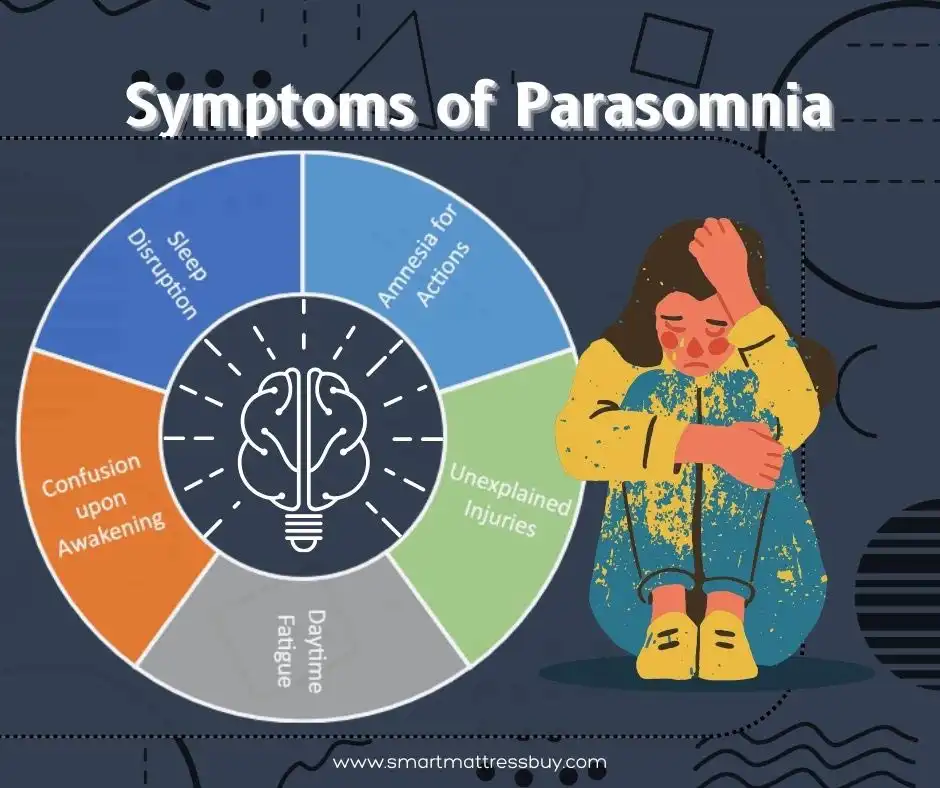
Symptoms of Parasomnia

In the above sections we discussed about several types of parasomnia and the causes behind it. Do these types have some symptoms in common?

Yes, there are some symptoms common to all these types of sleep disorder & parasomnia. Timely identification of these parasomnia symptoms can help you identify the person at risk and take the necessary treatment measures.

These are some common symptoms that individuals with parasomnia may experience:

Difficulty in Sleeping Through the Night

Persistent challenges in maintaining uninterrupted sleep.

Wake up Disoriented

Another frequent symptom involves waking up with a sense of confusion or disorientation.

Daytime Fatigue

Experiencing tiredness and fatigue during the day, often due to disrupted sleep patterns.

Unexplained Cuts and Bruises

Discovering injuries on the body for which there is no recollection of the cause, indicating certain physical activity during sleep.

Unaware Movements, Expressions, Vocalizations, or Activities

Engaging in movements, facial expressions, vocalizations, or activities during sleep, as reported by a sleep partner, without personal recollection of these actions.

These parasomnia symptoms collectively reflect the diverse and often puzzling nature of parasomnias. This type of sleeping disorder can impact both your quality of sleep and daily life functioning.

Now, that we have learnt about the parasomnia symptoms lets guide you through the diagnostic procedures and treatment involved.

How Can We Diagnose Parasomnia?

The diagnosis involves a comprehensive assessment by a sleep medicine specialist. The procedure involves several elements to gain a thorough understanding of an individual’s sleep symptoms.

We have detailed the diagnosis process for your help and understanding.

Clinical Evaluation

A medical practitioner interviews the concerned individual and their sleep partner in order to gather information about sleep symptoms. Details about medical history, family history, alcohol use, substance abuse, and current medications are further explored.

Sleep Diary

Individuals are asked to maintain a sleep diary of their own to document their sleep patterns and any parasomnia related events. Additionally, the sleep partner may be requested to keep track of observed sleep events.

Sleep Study (Polysomnogram)

Conducted in a sleep laboratory, this study monitors an individual during sleep. Parameters such as brain waves, heart rate, eye movements, and breathing are recorded, while video captures movements and behaviors. Although some sleep studies can be conducted at home, a medical practitioner can recommend in-lab study if there is concern for parasomnia.

Video Electro-Encephalo-Gram (EEG)

Healthcare providers can now visualize and record brain activity during specific events. This aids in the diagnosis of parasomnias.

Neurologic Tests and Imaging

Additional tests, such as a neurologic exam or imaging scans (CT scan or MRI), are also often employed to detect any degeneration of the brain. Medical practitioners can thus detect any underlying neurologic cause contributing to symptoms of parasomnia.

A combination of these diagnostic tools enables sleep specialists to draw a comprehensive understanding of parasomnia. By identifying potential causes of this sleep disorder, a practitioner can finally formulate an appropriate treatment plan.

Parasomnia & Its Treatment

How is Parasomnia treated? Can parasomnia be cured completely?

Well, the treatment of parasomnia involves a comprehensive approach. It starts with identification and management of underlying sleep problems, addressing associated health issues, and reviewing medications that may trigger parasomnia.

Non-REM and REM Related Treatment

I. Good Sleep Hygiene Habits

  • Aim for 7-9 hours of sleep per night.
  • Turn off lights, TV, and electronic devices before bedtime.
  • Maintain a cool room temperature conducive to sleep.
  • Avoid caffeine and strenuous exercise close to bedtime.

II. Consistent Sleep-Wake Schedule

  • Establish and adhere to a regular bedtime and wake-up time.

III. Limit Alcohol and Recreational Drugs

  • Restrict or avoid the use of alcohol and recreational drugs.

IV. Take Prescribed Medications

  • Adhere to the prescribed medication regimen under the guidance of a healthcare provider.

Additional Parasomnia Treatments & Management Strategies

Non-REM Parasomnia

  • Medication-based Treatment: Benzodiazepines, particularly for long-lasting or potentially harmful parasomnias. Tricyclic antidepressants may also be considered.
  • Psychological Treatment: Hypnosis, relaxation therapy, cognitive-behavioral therapy, or psychotherapy may be employed.

REM Parasomnia

  • Medication-based Treatment: Clonazepam and melatonin are commonly used to manage REM sleep disorders.

Safety Measures & Helpful Tips

Environment Modification

  • Remove dangerous or sharp items from the bedroom.
  • Secure tableside lights and pad the edges of bedside furniture.
  • Use plastic bottles and cups if water is needed at the bedside.
  • Install alarms on windows and doors for sleepwalkers.

Sleeping Arrangements

  • If aggressive behaviors are displayed, such as punching or kicking, consider sleeping in separate beds for safety.

It is up to a medical practitioner to select an appropriate treatment strategy – be it medications or psychological approaches, and tailor it depending on the specific type of parasomnia.

Additionally, a practitioner takes into account an individual’s unique health history and medical conditions. However, you need to remember that regular communication with a healthcare provider is crucial for ongoing evaluation and adjustment of the prescribed treatment plan.

What Are The Treatment Procedures of Parasomnia in Children?

In children, occurrences of parasomnia, especially Non-REM parasomnias are most prevalent during childhood and often naturally resolve during adolescence.

In many cases, the primary intervention process involves providing calming reassurance to the child from their parents, assuring them that everything is okay. Medications are rarely deemed necessary in parasomnia treatments or in the management of childhood parasomnias.

However, if medication is considered, it is typically prescribed for a limited duration, ranging from 3 to 6 weeks. Benzodiazepines or anti-anxiety drugs are common medications that are tried to mitigate the symptoms and better sleep quality.

Medications should be used cautiously understanding that childhood parasomnias often have a transient nature and may resolve with time and family reassurance.

Overall, the treatment of parasomnia in children emphasizes on conservative and supportive measures. Medication is recommended only in specific cases and for a limited duration under the supervision of healthcare professionals.

Further, regular communication with healthcare providers is essential to monitor a child’s progress and make any necessary adjustments to the treatment plan.

Prevention of Parasomnia

While some causes of parasomnias, such as those stemming from neurological diseases, mental health issues, or heredity, may be challenging to prevent, there are proactive measures that you can adopt to mitigate the risk of developing or exacerbating parasomnias.

Preventive Strategies

These preventive measures align with the treatment approaches that we discussed earlier. Let’s discuss.

Adequate Sleep Duration

Aim for seven to nine hours of sleep per night to support overall sleep health.

Consistent Sleep Schedule

Maintain a regular sleep-wake schedule with consistent bedtime and wakeup times, promoting a stable sleep routine.

Limiting Substance Use

Restrict or avoid the use of alcohol and drugs, as these substances can interfere with sleep patterns.

Medication & Assessment

Consult with a healthcare provider to review and assess the impact of current medications on sleep. Certain medications may disrupt sleep, and if identified, alternative drugs or adjustments to the prescription may be considered.

By incorporating these preventive measures into one’s lifestyle, individuals can create a sleep-friendly environment and potentially reduce the likelihood of experiencing parasomnias.

Proactive management, along with regular communication with healthcare providers, can play a crucial role in minimizing the impact of parasomnias and promoting overall sleep quality.

When to Consult Medical Practitioner?

It is advisable to consult a medical practitioner if you or a family member experiences any abnormal sleep-related behaviors, particularly those associated with injuries or disruptions in sleep.

Some key signs that warrant a discussion with a doctor include:

Injuries During Sleep

If there are unexplained injuries, cuts, or bruises on yourself or a family member, especially those that occur during sleep.

Disruption of Sleep Patterns

Are you suffering from persistent disruptions in sleep? Sleep disruptions like frequent awakenings, nightmares, or unusual movements during the night must be given importance to.

Changes in Behavior

Observable changes in behavior during sleep, as reported by a bed partner, including movements, vocalizations, or activities that are not remembered upon waking.

Sleep-Related Distress

If abnormal sleep-related behaviors are causing distress, impairment in daily functioning, or negatively impacting your overall quality of life.

Family History

A family history of sleep disorders or parasomnias may also trigger parasomnia. Ensure to have a discussion with a medical practitioner. Timely consultation with a healthcare professional is essential to assess the nature of the sleep-related behaviors.

Acting on time can help you to identify potential underlying causes, and determine an appropriate course of action.

Addressing these concerns promptly can lead to effective diagnosis and management of parasomnia or any other sleep disorders.

Disclaimer:

The information provided is for general informational purposes and should not be considered a substitute for professional advice. It does not aim to treat, diagnose, or cure any sleep or mental health conditions. Before making any changes to your sleep or mental health regimen, it is recommended to consult with a qualified healthcare professional.